

 2 days ago
3
PROTECT YOUR DNA WITH QUANTUM TECHNOLOGY
Orgo-Life the new way to the future Advertising by AdpathwayUnmanaged plastic waste, which accumulates extensively in informal settlements where formal waste management is often limited, has emerged as a significant but poorly understood public health challenge. A recent comprehensive review published in One Health Outlook synthesizes current evidence linking discarded plastic to the transmission of pathogenic bacteria, specifically those transmitted via the faecal-oral route. While the environmental and chemical risks of plastic pollution—such as toxic emissions from burning and the leaching of additives—have been widely documented, this investigation prioritizes the role of plastic surfaces as persistent microbial reservoirs. The study highlights that discarded plastic provides a stable substrate, or “plastisphere,” that supports the colonization and survival of various pathogens, including antimicrobial-resistant strains. By bringing together perspectives from clinical, environmental, and spatial surveillance, the review clarifies the limitations of existing monitoring systems and identifies critical research priorities necessary to assess whether reducing waste accumulation could measurably decrease the burden of enteric disease.
The sheer scale of plastic accumulation in environments lacking safe disposal systems is profound, with plastics often accounting for approximately 50% of the total surface area in unregulated waste piles. Since 1950, global plastic production has surged by more than 2,000%, driven largely by single-use packaging and medical disposables. Once discarded, these materials undergo slow fragmentation, persisting in soils, water bodies, and drainage networks for decades. These waste piles create high-risk zones where human, animal, and environmental health intersect, demanding an integrated One Health approach. However, despite their scale and environmental persistence, these sites remain largely overlooked in traditional urban planning and public health discourse, necessitating a shift in how these environments are perceived and managed.
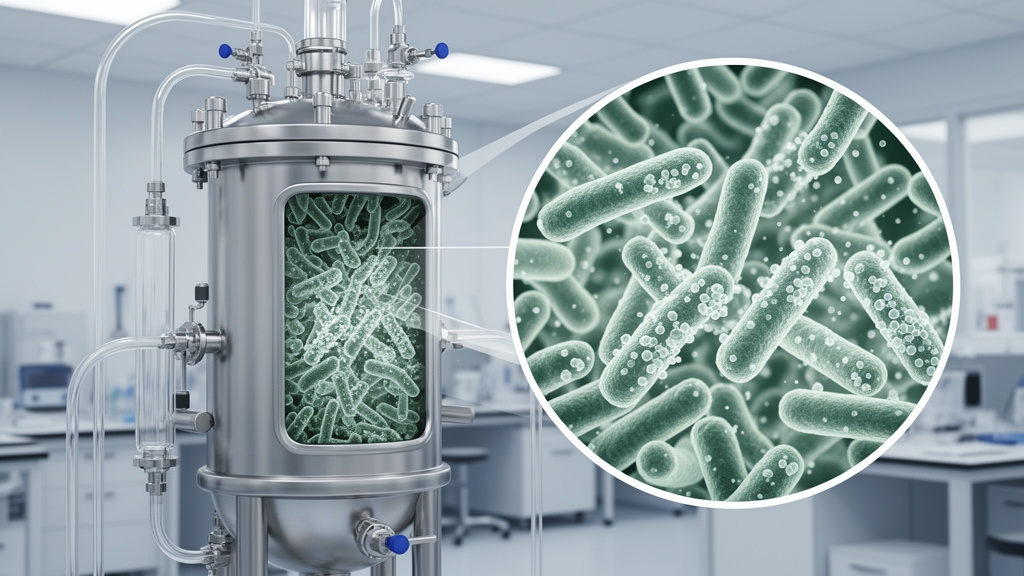
The evidence that discarded plastics act as a viable habitat for microorganisms is compelling, as plastic surfaces facilitate the development of complex, multispecies biofilms. These biofilms can harbour a variety of bacteria, such as Salmonella species, Escherichia coli, Klebsiella pneumoniae, and Vibrio cholerae. Research indicates that these pathogens are not only capable of surviving on plastic surfaces for prolonged periods but may also retain their virulence even after extensive environmental exposure. Furthermore, the plastisphere serves as a site for the accumulation and exchange of antimicrobial resistance (AMR) genes. Horizontal gene transfer between microbes within these biofilms provides a plausible mechanism for the amplification of resistance determinants. Consequently, these persistent reservoirs are particularly concerning in settings where waste accumulation occurs in close proximity to human residences, creating an ongoing risk for the dissemination of drug-resistant infections.
Current clinical surveillance programmes for these infections, particularly in resource-limited settings, face significant shortcomings that hinder our understanding of the true disease burden. Surveillance is often passive, relying on data from healthcare facilities that only capture individuals who are symptomatic enough to seek care. This approach inherently overlooks asymptomatic carriers or paucisymptomatic individuals who, despite not seeking treatment, may continue to act as reservoirs and contribute to community-level transmission. Furthermore, in many LMICs, barriers such as distance to medical facilities, transport costs, and limited access to care result in a substantial undercounting of enteric disease cases. When healthcare facility records are used to link disease patterns to locations, the lack of standardized addressing systems in many informal settlements further complicates the ability to perform fine-scale geographical tracking, leaving crucial transmission pathways hidden.
To overcome the limitations of clinical surveillance, environmental monitoring has been proposed as a vital, albeit challenging, alternative. Environmental surveillance aims to detect and quantify pathogens in sources such as soil, surface water, and waste piles, offering a lower-cost approach that does not require individual-level consent. While this approach has been used to track enteric pathogens for decades and gained prominence during the COVID-19 pandemic through wastewater monitoring, its application remains largely tied to centralized infrastructure. In settings where sewer systems are absent, domestic waste is discarded into open spaces, and drainage is managed via informal systems, these centralized methods are often inapplicable. Consequently, there is an urgent need to adapt environmental monitoring to account for the specific ways in which waste accumulates and disperses in these dispersed, unmanaged environments.
Remote sensing technology, including satellite and aerial imagery captured by drones, offers a promising but currently limited tool for mapping waste accumulation at scale. While advances in artificial intelligence and pattern recognition have enabled the automation of waste detection on beaches and in marine environments, these models are not yet validated for the heterogeneous, mixed-material waste piles found in urban and peri-urban settings. In these environments, waste piles consist of complex mixtures of plastic, organic matter, and soil, creating textural patterns that current algorithms struggle to identify. Furthermore, drone operations in these areas are often constrained by the presence of buildings, power lines, and trees, which limit the ability to capture the fine-resolution imagery required to distinguish waste from the surrounding landscape effectively.
The complexity of linking environmental waste to human infection is further exacerbated by the inadequacy of current exposure metrics. Simple proximity measures, such as calculating the Euclidean or straight-line distance between an individual’s home and the nearest waste pile, serve as a pragmatic but flawed proxy for exposure risk. These distance-based associations assume that exposure risk declines uniformly in all directions and treat waste piles as static points. In reality, waste piles are dynamic, growing and shrinking with human activity, seasonal rainfall, and flooding. More importantly, these metrics ignore the environmental pathways that actually move bacteria through the landscape. Research evidence suggests that hydrological processes, such as storm-water runoff, can transport contaminated waste and pathogenic bacteria downstream, potentially exposing communities far from the original source of the waste.
Hydrological connectivity and surface drainage patterns are increasingly recognized as essential factors for a realistic representation of potential exposure. For instance, populations living downstream or near drainage networks may face elevated risks through contact with contaminated water or run-off, independent of their distance from a primary waste pile. In many informal communities, river water is frequently used for domestic purposes, including bathing and washing, thereby creating high-risk transmission pathways that simple distance-based models fail to capture. Incorporating terrain and drainage models into spatial analyses is therefore a research priority, as it provides a more nuanced understanding of how environmental hazards like waste sites redistribute pathogens across space and time.
Beyond environmental and physical transport pathways, human behaviour plays a decisive role in determining actual exposure, a dimension that neither proximity nor hydrological models can account for. Residents in informal settlements often engage in activities that bring them into direct contact with waste piles, such as sorting materials for resale or construction, walking through waste sites during daily commutes, and water-related activities in waste-affected areas. The frequency and nature of these interactions are stratified by age, household role, and gender, with women and children often facing more frequent contact due to domestic responsibilities like water collection. Effectively capturing these interactions would require integrating direct behavioural data—such as time-activity studies—with spatial models, providing a more comprehensive understanding of who is most at risk and how these risks can be mitigated.
Ultimately, addressing the emerging public health concern of plastic waste-associated infections requires a coordinated, interdisciplinary research agenda. The review concludes by outlining three foundational research priorities: developing validated pattern-recognition models for mapping waste in complex urban environments; characterizing the spatio-temporal dynamics of how waste piles form, persist, and disperse; and building novel exposure metrics that incorporate both hydrological transport and direct human-environment interactions. By integrating these advances within a One Health framework, the scientific community can better quantify the disease risk posed by unmanaged waste. Such knowledge is essential for moving beyond environmental management alone to inform public health policies, guide the design of targeted interventions, and ultimately interrupt the transmission pathways that contribute to the persistent burden of drug-resistant enteric infections in vulnerable populations.
Subject of Research: Plastic waste as an environmental reservoir for pathogenic bacteria and its implications for public health.
Article Title: Does plastic waste present an infection hazard? Current evidence, surveillance challenges and research priorities
Article References: Kalonde, P. K., Mkoola, K., Ormsby, M., Mwapasa, T., Mastala, P. I., Mphasa, M., Tonthola, K., Bickton, F. M., Nambala, P., Robertson, T., Quilliam, R. S., Chidziwisano, K., Morse, T., Jones, C. M., Stanton, M. C., Atkinson, P. M., Henrion, M. Y. R., & Feasey, N. (2026). Does plastic waste present an infection hazard? Current evidence, surveillance challenges and research priorities. One Health Outlook, 8(1), Article 41. https://doi.org/10.1186/s42522-026-00237-0
Image Credits: AI Generated
DOI: 10.1186/s42522-026-00237-0
Keywords: One Health, plastic waste, enteric disease, pathogenic bacteria, plastisphere, antimicrobial resistance, environmental surveillance, remote sensing, spatial epidemiology, informal settlements, hydrological transport, biofilm formation, disease transmission, public health risk, wastewater surveillance, exposure metrics

















 English (US) ·
 French (CA) ·