

 1 day ago
1
PROTECT YOUR DNA WITH QUANTUM TECHNOLOGY
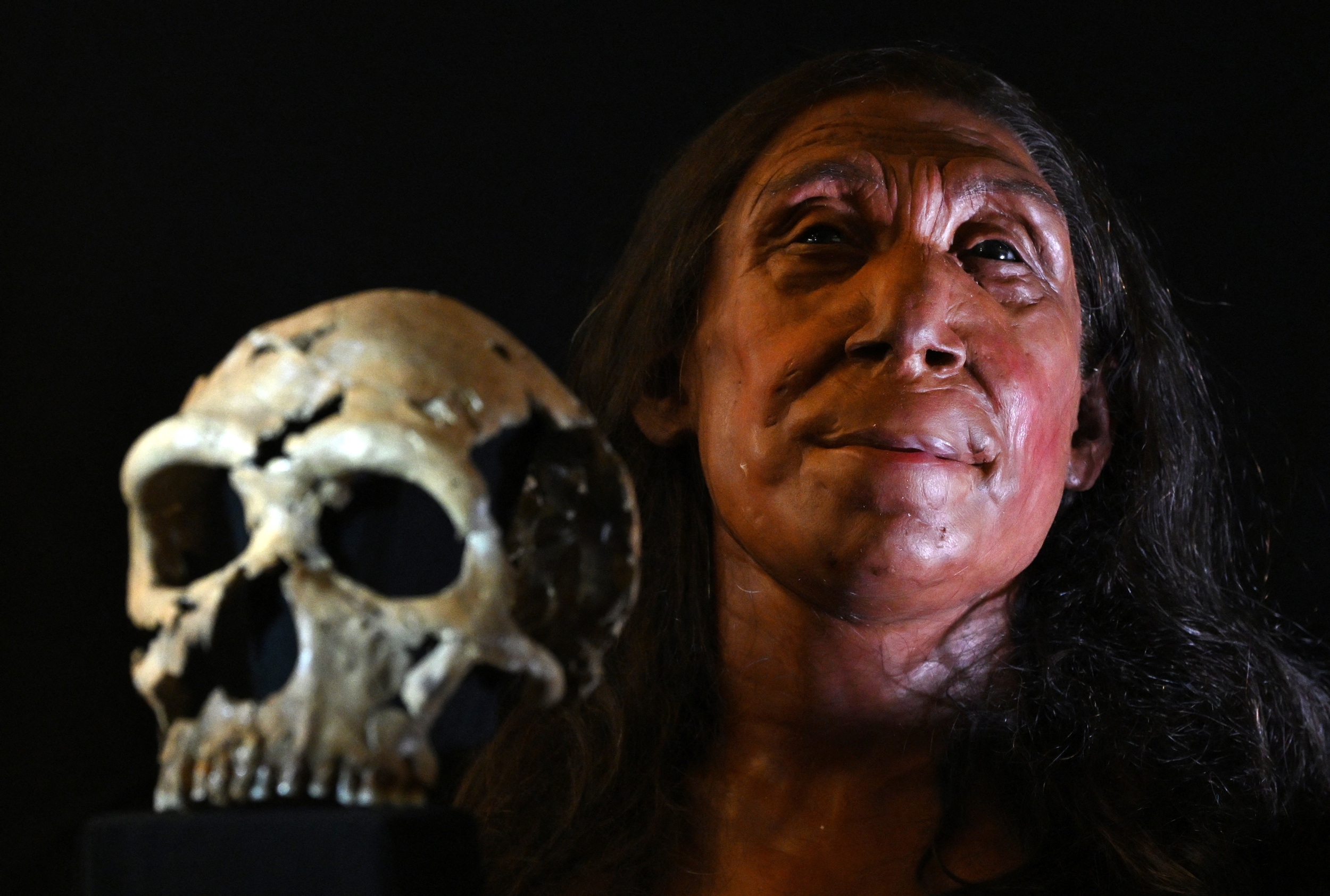
Orgo-Life the new way to the future Advertising by AdpathwayNine ancient teeth from two caves in southern China suggest that Homo erectus, one of humanity's longest-lived relatives, held on in the region far longer than scientists believed and did so in dense rainforest. Two companion studies published in Nature on 18 November 2026 date the teeth to between about 324,000 and 184,000 years ago.
The fossils come from the Baxian and Naxian caves near Chongzuo in Guangxi, close to China's border with Vietnam. According to Macquarie University's summary of the research, written by geochronologist Kira Westaway and co-authors, that is 100,000 to 200,000 years later than the species was thought to have survived in China.
The findings matter for two reasons. They give the youngest securely dated evidence of H. erectus in mainland China, and they offer the first direct evidence that the species lived in rainforest, a habitat long thought to be beyond it. The evidence still rests on a small number of teeth, and one tooth does not fit any known human species, which leaves an open question about who else lived in these forests.
What the teeth revealed
Homo erectus first appeared about two million years ago and was the first member of the human genus known to spread from Africa into Asia. For decades, its Chinese record appeared to end several hundred thousand years ago. A 2026 review of the species' Chinese record put the known range at roughly 2.1 to 1.6 million years ago at the start and 400,000 to 300,000 years ago at the end. On the Indonesian island of Java, the species may have lasted until about 100,000 years ago.
The new teeth push the Chinese timeline much later. The research team identified eight of the nine teeth as H. erectusfrom their shape. To check that identification, they also studied ancient proteins preserved in tooth enamel. Sci.News, which summarised both papers, reports that proteins from five teeth showed no features of orangutans, a common source of confusion in Asian cave fossils, and that four of the five carried an enamel-protein variant seen in older Chinese H. erectus.
That protein link builds on earlier work. In May 2026, a separate team led by Qiaomei Fu of the Chinese Academy of Sciences described enamel proteins from six Chinese H. erectus teeth about 400,000 years old and identified a protein variant that may mark East Asian populations of the species.
How scientists dated the fossils
Dating fossils from caves is difficult because sediments can shift and mix over time. According to the Macquarie summary, the team used five different dating techniques on the teeth themselves, on the surrounding cave sediments and on mineral formations in the caves.
Combining methods allowed the researchers to cross-check results. The authors write that the results confidently place these humans in the landscape at a time when the species was thought to be regionally extinct. Because the two caves sit close together and their age ranges overlap, the team suggests a single H. erectus population lived within a radius of roughly 15 kilometres (about 9 miles) during that period.
The 184,000-year figure is the young end of an age range, not an exact date of the last individual. Readers should treat it as the latest point the current evidence supports.
Living in a "demanding" forest
The most surprising part of the study concerns habitat. H. erectus is usually linked to open woodland and savannah. Rainforests are hard places to live: food can be scarce and scattered, and dense vegetation makes travel slow. The spread of rainforest in Southeast Asia has even been linked to the disappearance of some ancient human groups.
The teeth were buried with more than 19,000 other animal fossils. Chemical signatures in the teeth, including carbon isotopes that reflect the plants at the base of the food chain, point to a diet drawn from shaded forest plants. The Macquarie summary says the signatures show these people were eating and drinking within dense rainforest conditions.
The team also measured strontium, an element whose chemical signal reflects local rocks. Strontium is locked into enamel only during roughly the first seven years of life, so it records childhood movement. The results suggest some individuals moved widely as children, possibly across forested land that today stretches toward northern Vietnam and mainland Southeast Asia. The authors caution that this tells us nothing about how far adults travelled.
The tooth that does not fit
One of the nine teeth, catalogued as PA1796, does not match H. erectus, Neanderthals or modern humans, according to the published research summaries. That suggests at least two kinds of humans may have lived in the region at about the same time.
Some coverage, including Live Science, has raised the possibility that the tooth belonged to Denisovans, a little-known group of archaic humans identified mainly from DNA. The studies do not confirm that. One unusual tooth is not enough to name a species, and the identity of PA1796 remains an open question.
Why this changes the story of human evolution
If H. erectus could cope with rainforest, scientists may need to rethink why it eventually disappeared. In Java, researchers have often assumed the species died out when open woodland gave way to forest. Westaway and colleagues write that the Chinese evidence raises a new question: if forests were not the problem, what was?
The work also adds to a growing picture of ancient humans as more flexible than once assumed. Skills and adaptations once thought unique to Homo sapiens, our own species, are increasingly being found in older relatives. CNN's report on the studies and National Geographic also framed the result as a challenge to the idea that only modern humans could thrive in tropical forest.
Limits and what comes next
The sample is small: nine teeth in total, with protein results from five. Teeth can show what someone ate and where they grew up, but they cannot reveal behaviour such as tool use or whether different human groups met. The age range is broad, spanning roughly 140,000 years.
The authors say the questions raised here can only be answered by similar chemical studies of human and animal teeth from other regions, including Java. Further excavation in the Guangxi caves, and more protein work on the unusual PA1796 tooth, could help show who else shared these forests with H. erectus.
What readers need to know
1. What did scientists find? Nine human teeth from the Baxian and Naxian caves in Guangxi, southern China. Eight were identified as Homo erectus, dated to between about 324,000 and 184,000 years ago.
2. Why is the date important? It is 100,000 to 200,000 years later than H. erectus was thought to have survived in China, making these the youngest securely dated fossils of the species on the Chinese mainland.
3. How do scientists know they lived in rainforest? Chemical signals in the teeth, including carbon isotopes linked to diet, point to food from shaded forest plants. The teeth were also found with more than 19,000 animal fossils from the same setting.
4. Did Homo erectus meet Denisovans? Nobody knows. One tooth, PA1796, does not match H. erectus, Neanderthals or modern humans. Some reports have raised Denisovans as a possibility, but the studies do not identify the tooth.
5. What are the main limitations? The sample is small, protein data came from only five teeth, and the age is a range rather than a precise date. Strontium results describe childhood movement only.
© 2026 NatureWorldNews.com All rights reserved. Do not reproduce without permission.

















 English (US) ·
 French (CA) ·