

 2 hours ago
3
PROTECT YOUR DNA WITH QUANTUM TECHNOLOGY
Orgo-Life the new way to the future Advertising by AdpathwayThe United States held its first-ever auction of seabed mineral leases on Thursday, 19 November, and only one company placed a bid. According to the Associated Press, both lease areas in federal waters off American Samoa went to the startup Wetstone U.S. Ventures for the minimum bid of US$3 million each. Two bidders had registered, but only Wetstone bid.
The sale went ahead three days after a federal judge in Hawaiʻi ruled that the government's wildlife review for it broke the Endangered Species Act. That ruling, covered by NatureWorldNews on 18 November, did not stop the auction itself.
The result is a milestone, but a limited one. The leases do not allow mining. They allow a company to survey the seafloor. Any commercial extraction would need further environmental approval, and lawsuits against the sale are still pending.
What Was Sold
The auction, officially called Pacific Mineral Lease Sale 1, was run by the Interior Department's Marine Minerals Administration (MMA). The final notice in the Federal Register set the date, the bidding rules and the venue in Thousand Oaks, California.
The two lease areas lie on American Samoa's outer continental shelf, the federally controlled seabed beyond the territory's own 3-nautical-mile waters. In October, S&P Global reported that the sale would offer two areas covering a combined 31.5 million acres, about 12.7 million hectares.
A report syndicated from The Hill quoted an MMA spokesperson as saying Wetstone had "provisionally acquired" both leases. "Provisionally" matters: the agency still has to complete its review before the leases are final.
Why the Seabed Here Matters
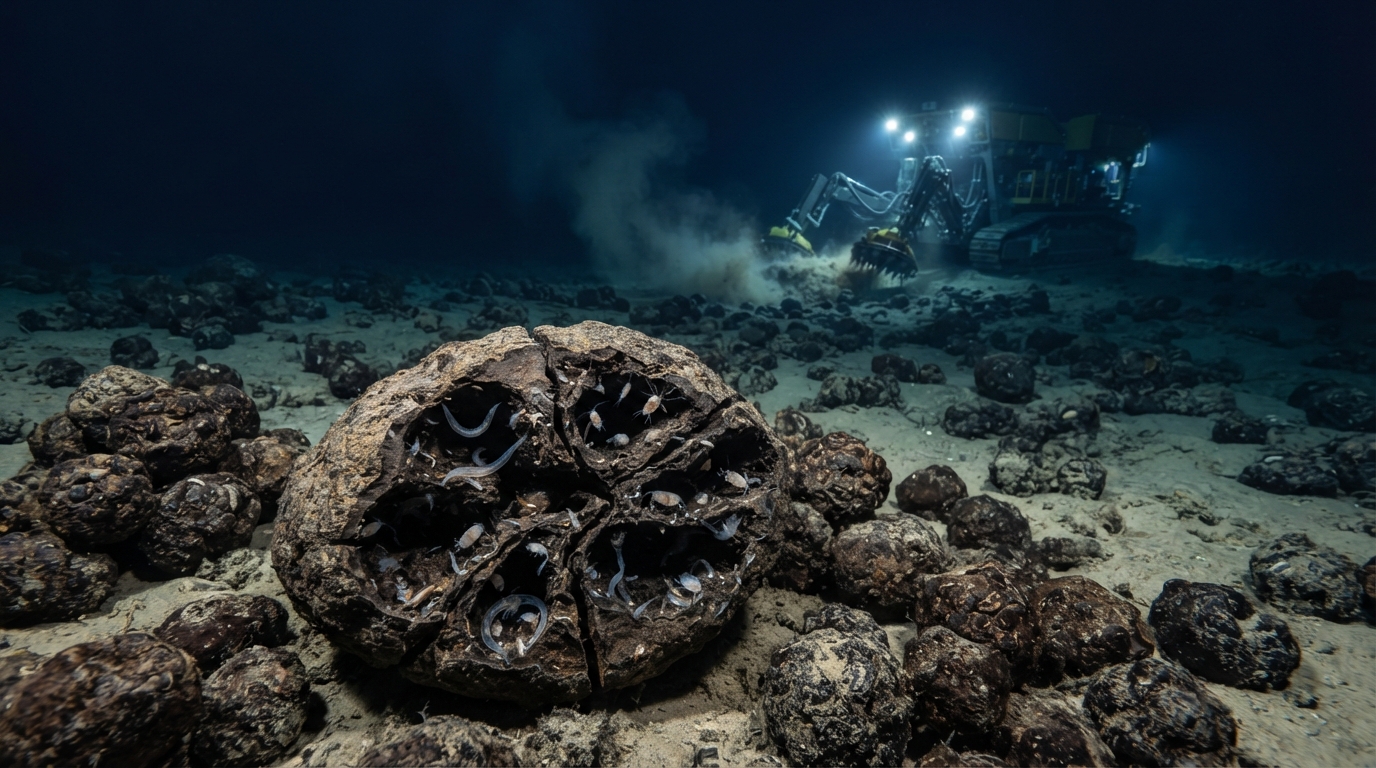
The target is polymetallic nodules. These potato-sized lumps on the deep seafloor contain metals such as nickel, cobalt and manganese, which are used in batteries and electronics. Supporters say mining them could reduce the need for mines on land.
Scientists and conservation groups warn that the deep sea is one of the least understood places on Earth. Nodule fields are home to animals that grow and reproduce slowly, and some live attached to the nodules themselves. Inside Climate News reported that the proposed site sits directly next to a national wildlife refuge. That refuge is Rose Atoll, which is also part of a marine national monument.
American Samoa's own government has opposed commercial extraction. In a public comment submitted in September, Governor Pulaali'i Nikolao Pula said he "does not support commercial deep-sea mineral extraction at this time", while acknowledging that the final decision rests with the U.S. government. In 2024, the territory banned deep-sea mining in its own waters, but that ban does not cover the federal seabed further out.
The Court Ruling That Came First
On 16 November, a federal judge in Honolulu sided with community and conservation groups. Earthjustice, which represented the plaintiffs, said the court found the National Marine Fisheries Service had violated the Endangered Species Act. In the court's view, the agency's conclusion that the sale was "not likely to adversely affect" any protected species was unlawful.
The core problem, according to reporting on the ruling, was scope. The agency looked only at early surveying work. It did not consider the possible effects of later exploration, development and mining.
The ruling invalidated the wildlife consultation but did not block the auction. The AP reports that three lawsuits against the sale are now under way. In theory, they could still undo the leases.
Why So Few Bidders?
The AP's account confirms that two bidders registered and only Wetstone placed bids, both at the minimum price. Reports do not name the second registered bidder, and NatureWorldNews has not been able to identify it.
The thin turnout does not, on its own, explain how the industry views the leases. Uncertainty may play a part: the legal challenges, the lack of an approved mining method, and the international dispute over seabed mining outside national waters all affect the risk a company takes on. But no company has publicly given its reasons, so any explanation is speculation for now.
A Global Fight Over the Seafloor
The American Samoa sale is part of a much larger dispute. Most of the deep seabed lies in international waters, where mining is governed by the International Seabed Authority under the UN Convention on the Law of the Sea. That body has not yet agreed rules allowing commercial mining.
The United States has never ratified that convention. As a regional report on the sale explains, it regulates deep-sea mining within its own exclusive economic zone under a U.S. law, the Deep Seabed Hard Mineral Resources Act. That is why Washington can auction seabed off a U.S. territory without waiting for international rules.
The move has drawn criticism abroad. The Taipei Times reported that more than 43 countries have called for a moratorium or ban on deep-sea mining. Scientists have warned that it could unleash noise, light and suffocating plumes of sediment that would affect fragile marine life. Supporters counter that the metals are needed for the energy transition and national security, and that the U.S. process includes environmental review.
What Happens Next
There are three things to watch.
First, the MMA must finish reviewing the bids before the leases become final. Second, the pending lawsuits could change or void the outcome. Third, the AP reports that the MMA is considering further lease sales near the Northern Mariana Islands, Virginia and Alaska. That means American Samoa is likely to be the first of several such tests rather than a one-off.
For marine life, the practical effect in the short term is limited to surveys: mapping and sampling the seabed. Mining machinery would come only after further permits, environmental review and, almost certainly, more litigation.
The question this auction leaves open is whether a single, minimum-price bidder is the start of a U.S. deep-sea mining industry, or a sign of how uncertain that industry still is.
What a "Survey Lease" Actually Allows
The word "lease" can suggest that mining is about to begin, but these leases come first and allow only early work. The MMA said when it announced the sale that it does not permit deep-sea mining right away. Instead, it allows "preliminary" activities such as mapping. In practice, that means ships using sonar to chart the seabed, cameras and remotely operated vehicles to photograph it, and small samples of nodules, sediment and animals.
Even this early stage has value for science. Very little of the deep Pacific seabed has been mapped in detail, and baseline surveys record what lives there before any disturbance. Critics, however, see surveys as a first step that builds momentum toward extraction. Reporting on the original proposal described two 20-year leases. That long horizon is one reason conservation groups are fighting now, rather than waiting for a mining application.
Frequently Asked Questions
Does this mean deep-sea mining will start off American Samoa? No. The leases allow surveys of the seafloor only. Commercial mining would need further environmental approval, and the AP reports that three lawsuits against the sale are pending.
Who won the leases? The AP reports that both lease areas went to Wetstone U.S. Ventures for the minimum bid of US$3 million each. An MMA spokesperson said the company had "provisionally acquired" them, so they are not yet final.
Why did the auction go ahead after a judge ruled against it? The 16 November ruling found the wildlife review for the sale unlawful but did not order the auction to stop. The legal challenges continue.
What is being mined for? Polymetallic nodules, lumps on the deep seafloor that contain metals such as nickel, cobalt and manganese, which are used in batteries and electronics.
Does American Samoa support the sale? No. Its governor said in September that he does not support commercial deep-sea mineral extraction at this time. The territory banned seabed mining in its own waters in 2024, but the auction covers federal waters further offshore.
© 2026 NatureWorldNews.com All rights reserved. Do not reproduce without permission.















 English (US) ·
 French (CA) ·