

 1 day ago
11
PROTECT YOUR DNA WITH QUANTUM TECHNOLOGY
Orgo-Life the new way to the future Advertising by AdpathwayBhutan has become the first country ever to win the Earthshot Prize, one of the world's best-known environmental awards. The small Himalayan kingdom took the Protect and Restore Nature category at the sixth Earthshot Prize ceremony in Mumbai, India, on 17 November 2026, Euronews reported.
Each of the five winners receives £1 million (about €1.2 million). Bhutan's prize will support Restore Bhutan, its national nature coalition, which aims by 2030 to restore 50,000 hectares (about 124,000 acres) of damaged land, revive forests and rivers, save nearly 2 million tonnes of carbon dioxide and secure 133 billion litres of water.
The award puts a national approach to conservation on a global stage. Past winners have mostly been companies, community groups and start-ups. This year, judges chose an entire country, recognising both what Bhutan has already protected and what it promises to restore. Those 2030 figures are goals, not results, and the prize money is small compared with the scale of the work.
Why a whole country won
Bhutan has written the protection of nature into its national constitution, which requires that a minimum share of the country stay under forest cover. According to the Earthshot Prize's citation, as reported by Euronews, Bhutan's forests protect Himalayan water systems that help sustain 1.6 billion people downstream across South Asia.
The prize organisers put it starkly: a country of about 800,000 people is helping to protect the water security of nearly a fifth of humanity. Healthy mountain forests slow rainwater, reduce erosion and help feed the rivers that flow from the Himalayas into the plains of India and Bangladesh.
Restoration is the next step, and it builds on decades of protection rather than starting from scratch. Damaged land can include degraded forest, eroded slopes and areas affected by grazing, fire or development. Restoring it can mean replanting native trees, protecting areas so they recover naturally and repairing river banks and wetlands.
A ceremony with a global audience
The awards night in Mumbai was the prize's biggest yet, Euronews reported. The Prince and Princess of Wales were joined by sports, Bollywood and film stars, and Earthshot ambassadors Robert Irwin, the Australian conservationist and TV presenter, and Nomzamo Mbatha, the South African actor and humanitarian, appeared on stage. Holding the event in India, a country that shares rivers with Bhutan, gave the Himalayan water story a natural audience.
The prize has five categories, or "Earthshots": Protect and Restore Nature, Clean Our Air, Revive Our Oceans, Build a Waste-Free World and Fix Our Climate. One winner is chosen in each.
The other 2026 winners
The five winners were chosen from 15 finalists by a panel that included Prince William, former UN climate chief Christiana Figueres, German climate activist Luisa Neubauer and Kenyan environmentalist Wanjira Mathai, Euronews reported. Prince William founded the prize through his Royal Foundation in 2020 as a 10-year programme.
- Fix Our Climate: Ørsted. The Danish energy company, once known as DONG Energy and one of Europe's most coal-intensive utilities, sold its oil and gas business and moved into offshore wind. Euronews reports it has cut its direct carbon emissions by more than 98 percent. It aims to build 8.1 gigawatts of new offshore wind by 2030, including the UK's Hornsea 3.
- Build a Waste-Free World: PFAS-Free France. A citizen campaign backed by more than 140,000 people that helped secure France's 2025 law to phase out many uses of PFAS, the long-lasting "forever chemicals". By 2030 it wants the French law fully enforced and similar bans adopted in five other major countries or regions.
- Clean Our Air: Mahindra Last Mile Mobility. The Indian company has sold more than 400,000 electric rickshaws and aims to put one million electric vehicles on India's roads by 2030, starting with cities such as Mumbai, Ahmedabad, Bengaluru and Delhi.
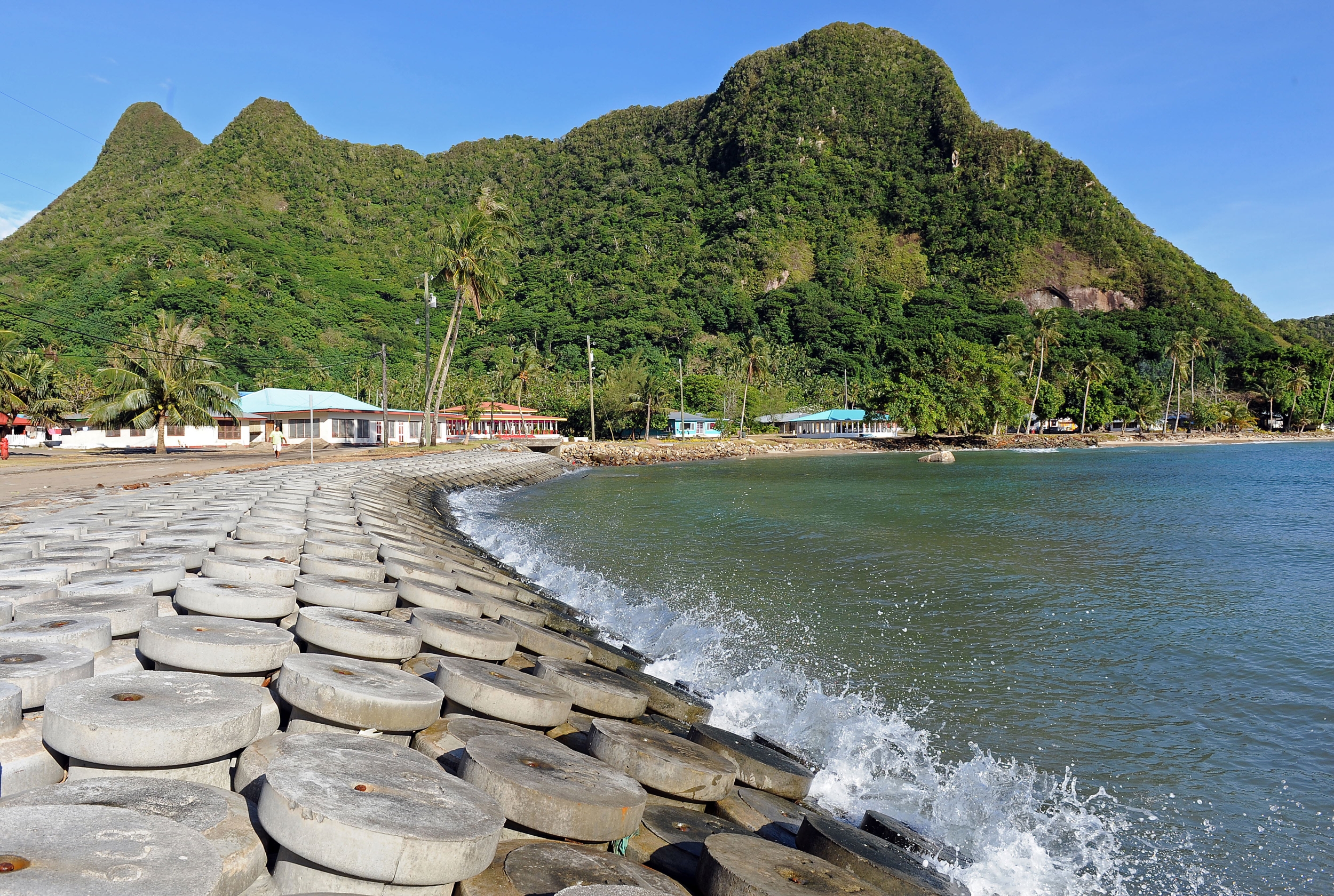
- Revive Our Oceans: Niue Ocean Wide Trust. The Pacific island of Niue, home to about 1,700 people, is protecting an area of ocean larger than the United Kingdom. Euronews reports its conservation scheme has already helped boost fish numbers by 60 percent. The trust aims to raise a further US10millionby2028towardanUS18 million permanent fund, and hopes at least one more Pacific country adopts its model.
Two of the five winners, Bhutan and Niue, are small nations being rewarded for protecting large natural areas relative to their size.
What the prize money can and cannot do
One million pounds is a modest sum for a national restoration programme. The Earthshot Prize says its bigger value lies in connections: all 15 finalists receive support from investors, philanthropists and environmental organisations to help them reach funding and expertise.
According to the prize, its 75 earlier finalists have together protected or restored 58 million hectares of land and 85 million hectares of ocean and coastline since 2020, and avoided or captured more than 18 million tonnes of carbon dioxide. Those totals are the organisers' own figures and cover all finalists, not only Bhutan.
For Bhutan, the prize may matter most as a signal. Small countries rarely receive global recognition for conservation, even when their choices protect resources shared by much larger neighbours. It shows other forest-rich countries that national conservation laws and long-term restoration plans can attract international attention and money.
A prize awarded during climate talks
The ceremony took place while world leaders met at the COP31 climate summit in Antalya, Türkiye. Euronews reported that Prince William described young innovators as "torchbearers of a global movement" at a time of sharp disagreement over climate action.
Bhutan's win also highlights the link between forests and water, a theme that is becoming more urgent as glaciers retreat and rainfall patterns shift across the Himalayas. For the hundreds of millions of people who rely on rivers that start in the mountains, what happens in small upstream countries can shape water supplies far downstream.
What to watch next
Restore Bhutan's targets run to 2030. The key questions are how quickly restoration work scales up, how progress is measured and reported, and whether the prize helps unlock larger funding from governments, development banks or private investors.
Independent monitoring will matter, both for Bhutan and for the prize itself. Restoration targets are easy to announce but harder to verify, and readers should look for published data on hectares restored, survival of planted trees and forest health in the coming years.
What readers need to know
1. What did Bhutan win? The 2026 Earthshot Prize in the Protect and Restore Nature category, awarded in Mumbai on 17 November 2026. It is the first time a country has won.
2. How much money is involved? Each winner receives £1 million (about €1.2 million), plus support from investors and partners.
3. What will Bhutan do with it? Support Restore Bhutan, which aims by 2030 to restore 50,000 hectares of damaged land, save nearly 2 million tonnes of CO₂ and secure 133 billion litres of water. These are targets, not achievements.
4. Why does Bhutan matter so much? Its forests protect Himalayan water systems that, according to the prize, help sustain 1.6 billion people across South Asia.
5. Who else won? Ørsted (Denmark), PFAS-Free France, Mahindra Last Mile Mobility (India) and the Niue Ocean Wide Trust (Pacific).
© 2026 NatureWorldNews.com All rights reserved. Do not reproduce without permission.












 English (US) ·
 French (CA) ·