

Bees are humming, butterflies and moths are fluttering, and hummingbirds are zipping. By June, pollinators are in full force and you can be ready for them by planting nutrient rich flowers, offering nesting options, providing water, and avoiding pesticides.
June is National Pollinators Month, so what better time to plant gardens full of brightly colored flowers to attract bees, butterflies, birds, and other pollinators. These pollinators are looking for nectar and pollen to feed themselves or their young but not any flower will do. Studies show that the more hybridized and fancy flowers, such as double-flowered plants, offer less nourishment.
We owe it to the pollinators to provide food for them, because if they did not pollinate the plants for us, particularly fruit, nuts, and vegetables, we would have a very limited food supply. According to the U.S. Department of Agriculture, “75% of the world's flowering plants and about 35 percent of the world’s food crops” are pollinated by animals such as bees, butterflies, moths, beetles, flies, wasps, bats, and birds.
5 Ways to Support Bees and Other Pollinators in June
To make your yard more pollinator friendly this summer, here are five ways you can help the bees, butterflies, and other pollinators find food, shelter, and water.
1. Offer a Diversity of Nutrient Rich Flowers
(Image credit: Muhammad Adeel Ahmed / Shutterstock)
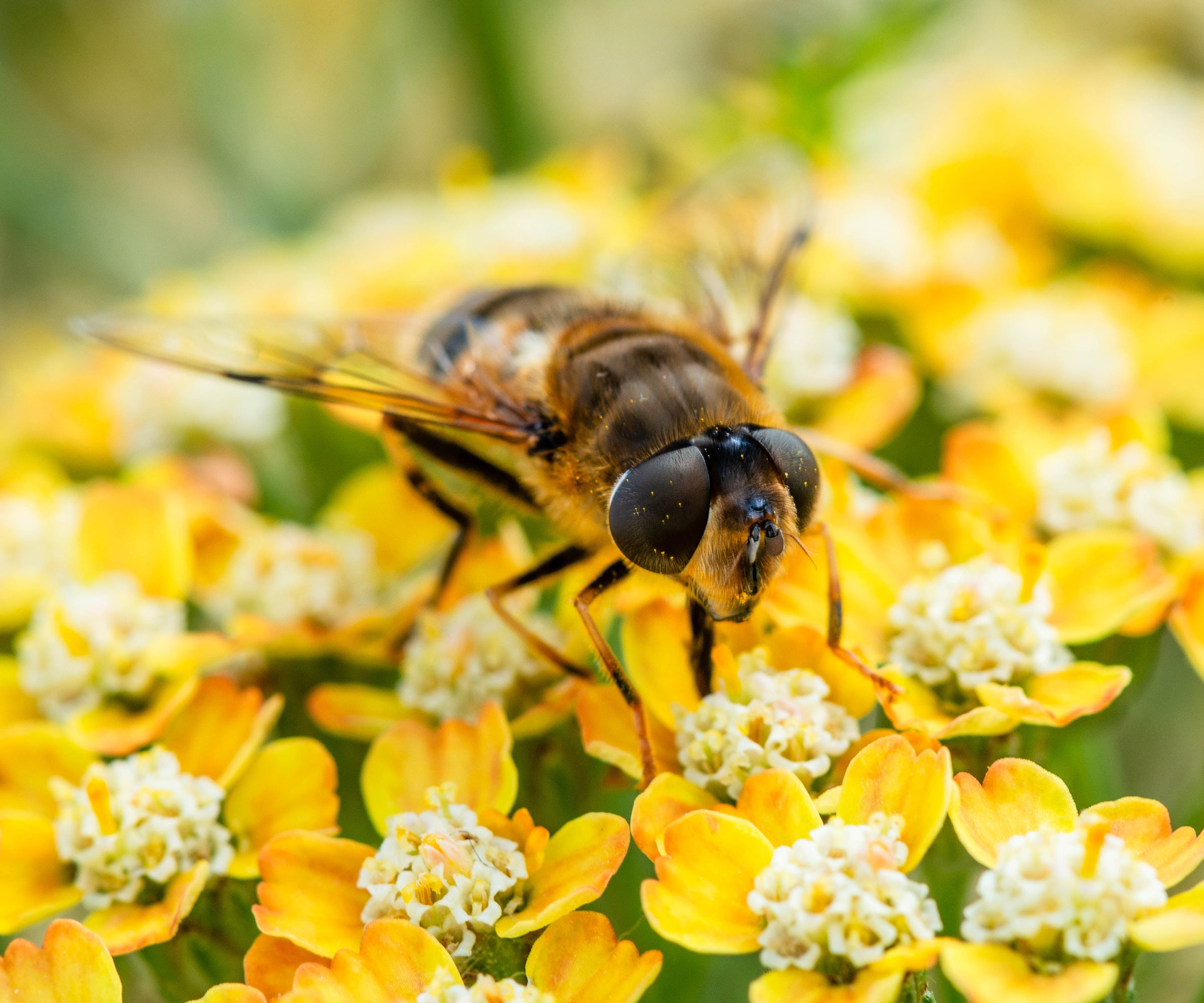
Offer a variety of nectar and pollen rich flowers in different colors and different shapes and sizes to appeal to more pollinators. Purple, blue, yellow, white, pink, and orange are good color choices. Bees do not see red very well, so if you include red flowers, choose bi-colors or those with contrasting centers.
Some pollinators prefer flat top or daisy-like landing pads, whereas others prefer tube shapes. By including a diversity of flowers and shapes, you will attract a wider variety of pollinators. Nutrient-rich flowers include aster, catmint, bee balm, coreopsis, garden phlox, purple prairie clover, and yarrow. Shrubs such as butterfly bush and chaste tree bring the pollinators into your yard.
Also be sure the bloom times overlap to provide nourishment from spring to fall. And letting a few weeds go in the corner of the yard will keep pollinators happy. Perennial dandelion blooms prolifically in the spring, but also blooms off and on all summer. It spreads by seed, so remove the seed heads if you want to contain them to a small area. White and red clovers bloom most of the season and are valued by bees.
2. Include Native Plants
(Image credit: Mark Nistico / Getty Images)
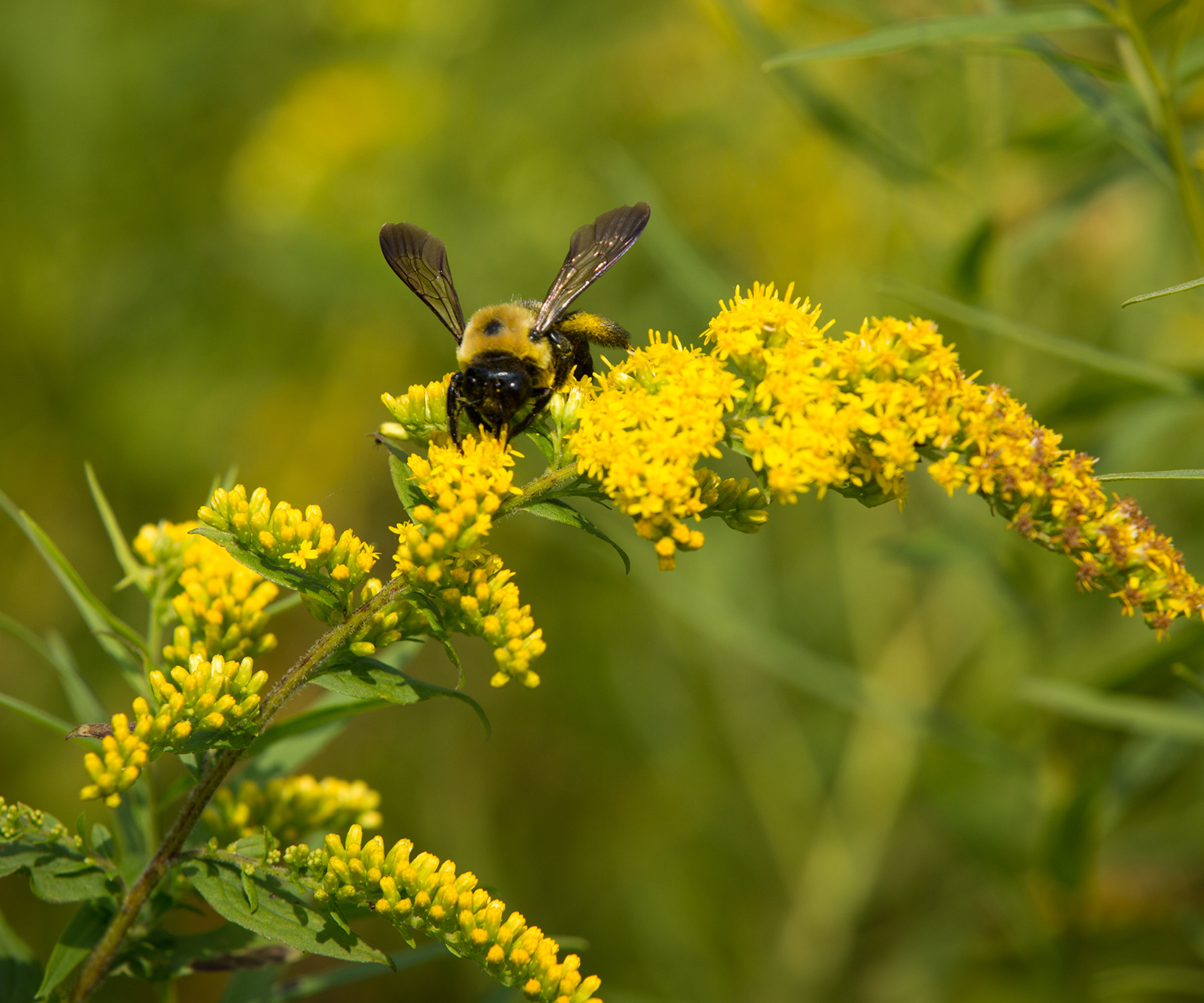
Be sure to include native plants in the landscape as they will serve other wildlife as well and are acclimated to your region’s climate. Many species of butterfly host plants the caterpillars need include native varieties. For example, you can include milkweed for monarchs, Dutchman’s pipe for pipevine swallowtails, and passion vine for fritillaries, to name a few.
Native plants are the best source for nectar and pollen because they have evolved with the pollinators to offer the nutrition they need at the right time. Native plants such as pale purple coneflower, bee balm, black-eyed Susan, liatris, goldenrod, golden alexanders, and heath aster are a few pollinator favorites.
3. Provide Shelter and Nesting Sites
(Image credit: Marcel Krauss / Getty Images)
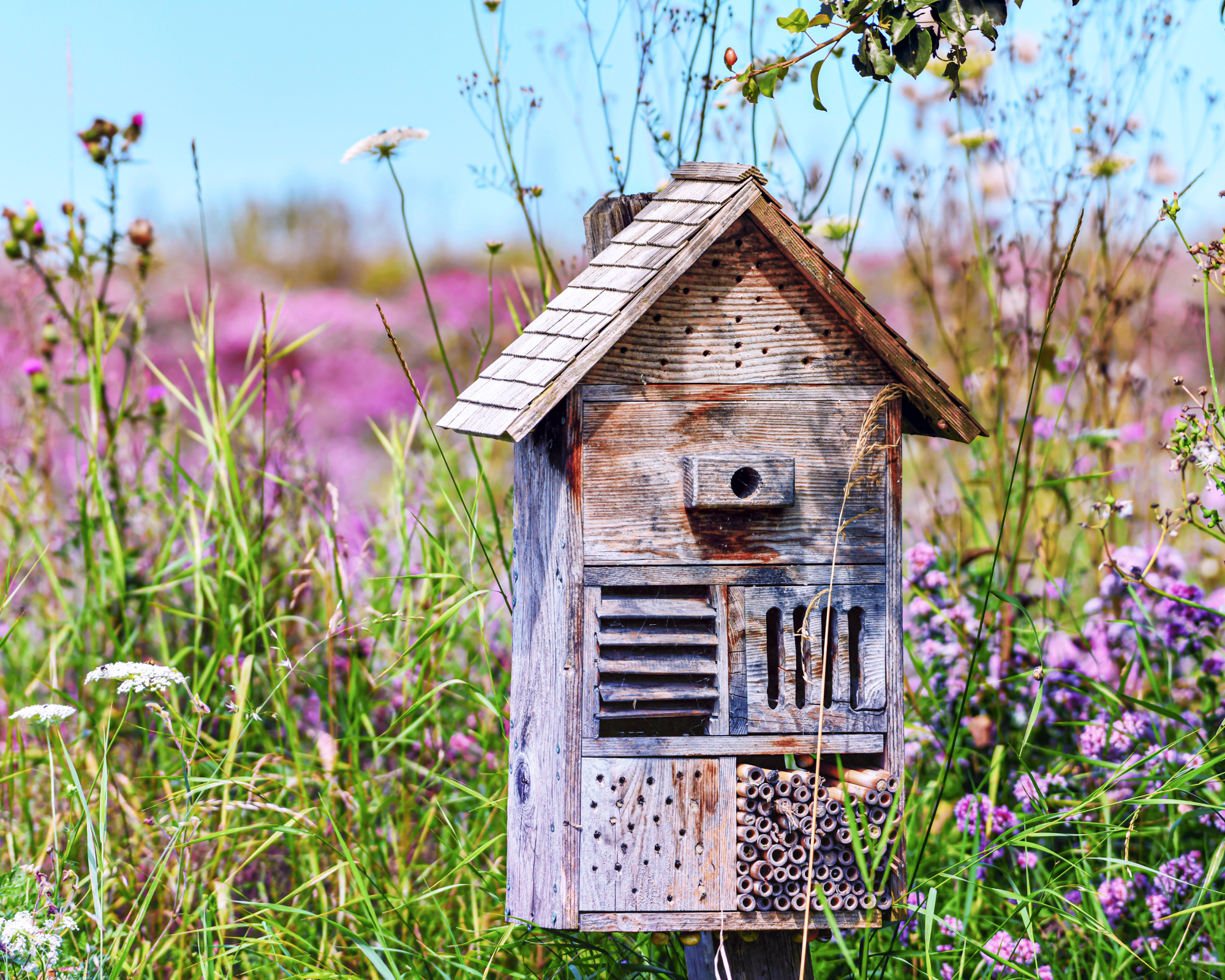
You can help native bees find nesting places. About 70 percent are ground nesters so you can leave a bare spot of soil so they can dig in, preferably in a sunny area facing south. The females excavate tunnels and brood cells underground, then fill them with nectar and pollen.
The other 30 percent are wood and cavity nesters who build nests in old beetle tunnels in downed wood. You can help them by leaving logs or stumps on your property. You also can make bee nest blocks out of a block of untreated wood. Drill small holes close together in varying sizes. Or, collect a bundle of dead, hollow stems and tie them together. You can purchase a readymade pollinator hotel from GardenOutsideTheBox on Etsy.
Plants such as bee balm, milkweed, anise-hyssop, and Joe Pye weed have hollow stems. Place the nests in an area sheltered from weather and where they get morning sun.
4. Maintain Water Sources
(Image credit: TaiFong Chin / 500px / Getty Images)
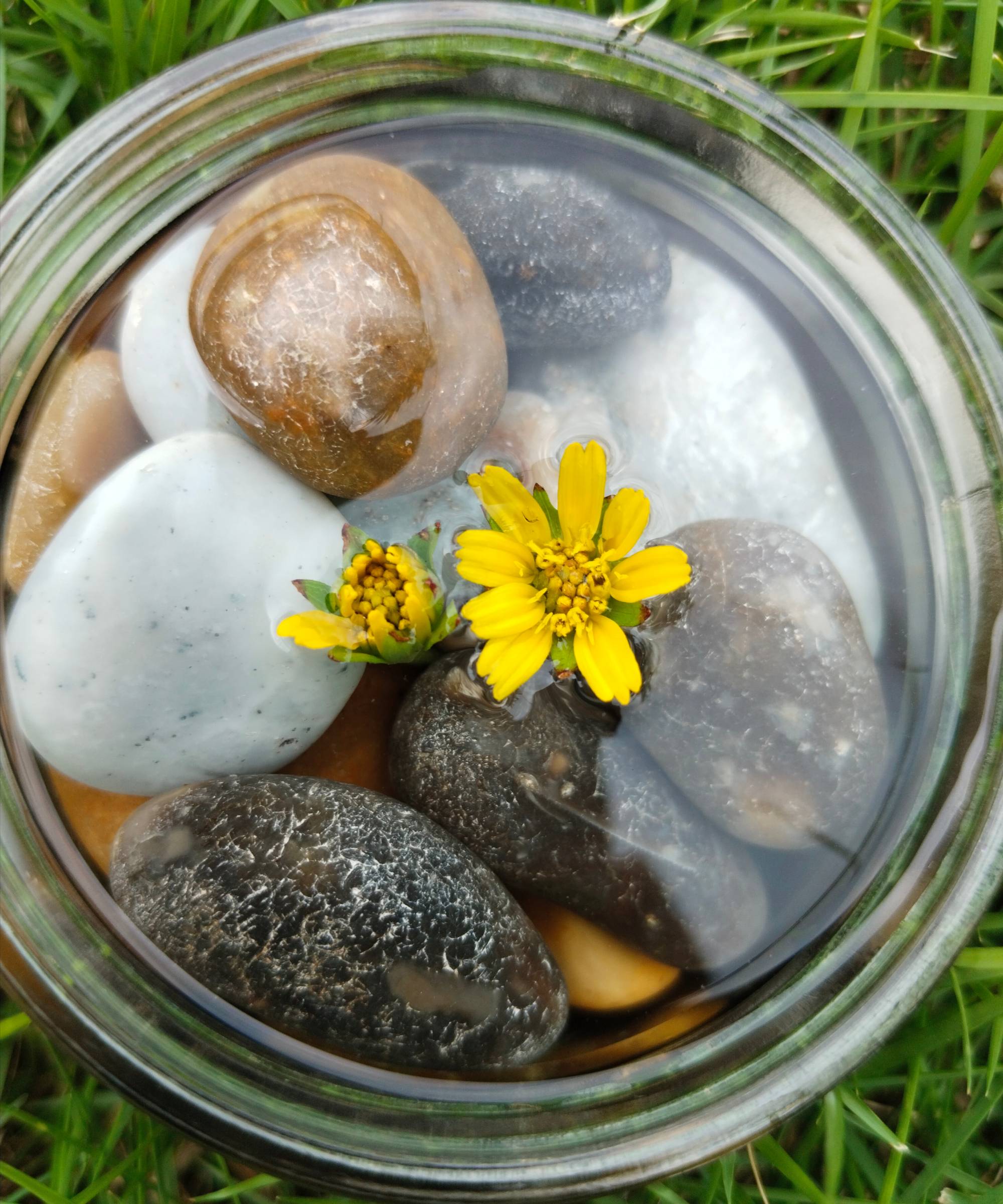
Butterflies and bees need shallow sources for water. Butterflies sip nutrients from mud puddles along the sidewalk or from wet sandy spots in the ground. Referred to as “puddling” you can see them on a sunny day visiting wet spots. To mimic that in your yard, create a sandy area in the ground or in a shallow container and keep it moist.
Bees need a shallow container with “stepping stones” so they can sit while drinking - they can’t hover to drink. You can fill a small bird bath or plant saucer with clean pebbles and fill it with water to create a pollinator water station. Or, float some wood or cork in the water for them to cling to.
Bee Cups are another alternative that only hold a teaspoon of water and are textured so the bees can sip without falling in. Bee Cups are handmade and use a bee-attracting ultraviolet glaze to vector them in. You can find Bee Cups bee watering stations on Amazon.
5. Avoid Pesticides
(Image credit: Valeriy_G / Getty Images)
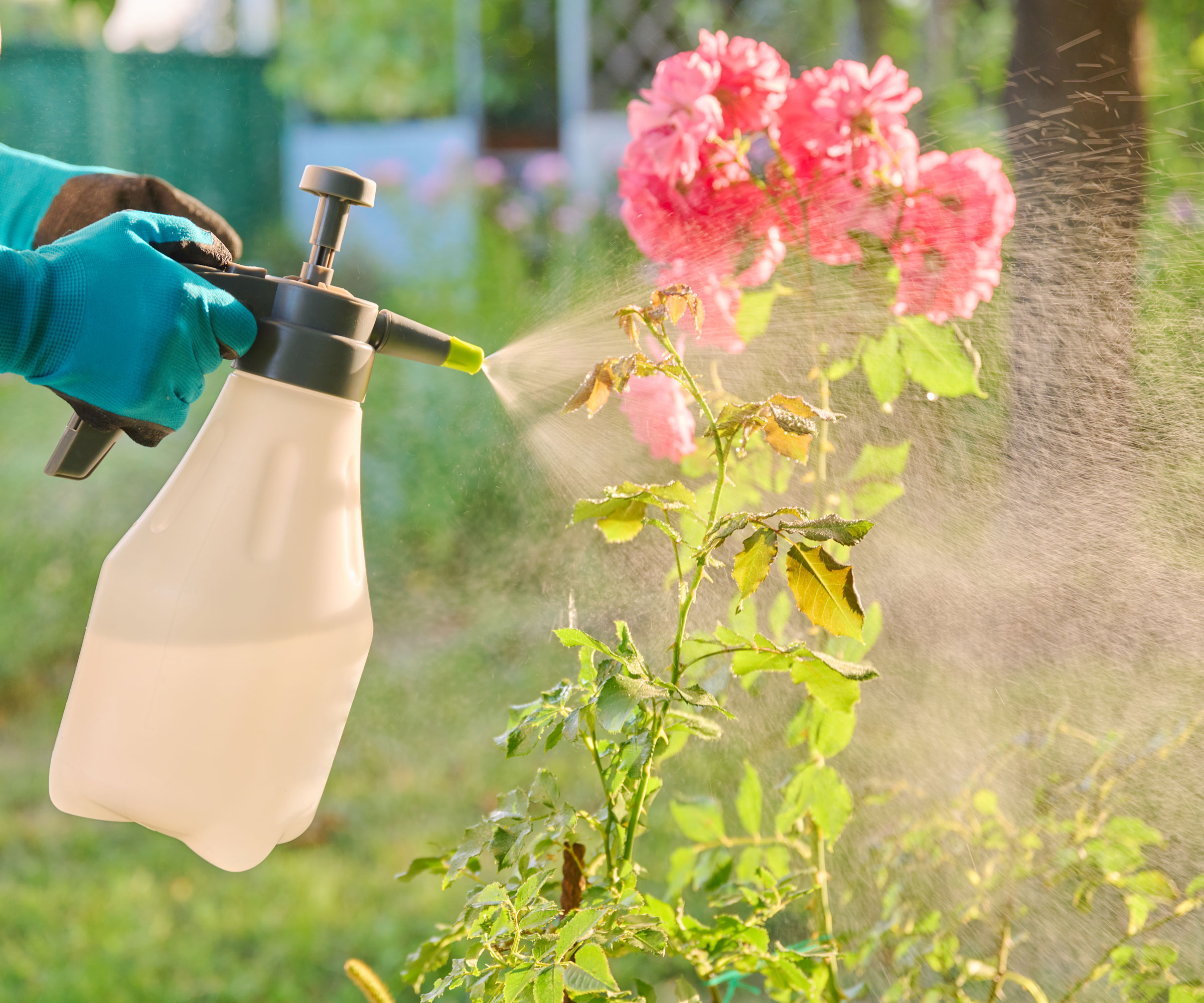
Pesticides will kill bees and other pollinators at every life stage. Even non-insecticides, such as herbicides and fungicides, can have a detrimental effect on pollinators. Organic pesticides also can kill the non-target pollinators. It is best to eliminate pesticides entirely, but if you must use them occasionally, choose the least toxic.
As part of integrated pest management, pesticides are only used as a last resort when the threat of insect damage is higher than the threat of using pesticides. And then, only spray pests in the evening after the bees have gone back to their nests. And never spray flowers.











 English (US) ·
  French (CA) ·