

 5 hours ago
16
PROTECT YOUR DNA WITH QUANTUM TECHNOLOGY
Orgo-Life the new way to the future Advertising by AdpathwayA newly characterized metabolic pathway enables the opportunistic urinary bacterium Actinobaculum massiliense to synthesize potent androgenic hormones directly from inactive steroid precursors. Historically, human urine was presumed to be sterile in the absence of acute infection, leaving the urinary tract largely excluded from early foundational research efforts such as the Human Microbiome Project. However, recent sequencing surveys have demonstrated that diverse and specialized microbial communities colonize the urogenital tract, with distinct taxonomic shifts observed in patients diagnosed with malignant conditions such as prostate cancer. Investigating how urinary tract microorganisms biotransform host molecules, a team of researchers has developed a specialized screening framework and uncovered a metabolic mechanism through which uropathobionts process human adrenal and testicular steroid precursors. By isolating bacterial strains from patients undergoing diagnostic prostate procedures, the investigation provides molecular and enzymatic evidence showing that commensal and pathobiontic bacteria possess specialized enzymes capable of converting circulating precursor steroids into testosterone and related androgenic molecules.
Steroid hormones circulate through human plasma and are cleared by hepatic metabolism before excretion into the urinary tract, yet substantial quantities of unmetabolized steroid intermediates, including dehydroepiandrosterone and glucocorticoid derivatives, enter human urine daily. In host physiology, androgens such as testosterone and dihydrotestosterone govern endocrine signaling and can fuel the proliferation of androgen-dependent prostate carcinomas. Current pharmacological therapies for advanced prostate cancer frequently target host steroidogenesis using cytochrome P450 monooxygenase inhibitors such as abiraterone alongside glucocorticoid management. Nevertheless, host-directed enzymes differ mechanistically from bacterial metabolic machinery. Prior investigations revealed that gastrointestinal bacteria, including Clostridium scindens and Butyricicoccus desmolans, express desmolase enzymes encoded by desA and desB genes that catalyze oxygen-independent side-chain cleavage of glucocorticoids into androgen precursors. While those findings established microbial steroid cleavage in the digestive tract, the presence, enzymatic identity, and biological capacity of resident urinary bacteria to generate biologically active androgens within the male urogenital system remained largely undefined.
To overcome the technical hurdles of traditional chromatography methods, which require laborious liquid or gas chromatography-mass spectrometry screening of individual microbial cultures, the research team developed the Human Sterolbiome Discovery High-throughput assay, designated as the HSDH Assay. This modular enzymatic system exploits the strict regio- and stereospecific properties of hydroxysteroid dehydrogenases to deliver an optical absorption readout in standard ninety-six-well plate platforms. The assay couples steroid bioconversions to changes in nicotinamide adenine dinucleotide phosphate cofactor absorbance measured at three hundred and forty nanometers. When bacterial isolates cleave the side chain of cortisol to yield seventeen-keto steroids such as 11-beta-hydroxyandrostenedione, or reduce seventeen-keto intermediates to seventeen-beta-hydroxy forms such as 11-beta-hydroxytestosterone, the enzymatic reaction selectively oxidizes NADPH to NADP+ or reduces NADP+ to NADPH. This enzymatic coupling generates a quantifiable alteration in optical density over time, permitting rapid, high-throughput functional interrogation of live bacterial culturomes directly from clinical specimens.
The assay framework was validated using a purified recombinant seventeen-beta-hydroxysteroid dehydrogenase derived from the fungus Cochliobolus lunatus, which exhibits robust bidirectional catalytic activity. The fungal cDNA sequence was cloned into a pET-51b expression vector, produced in Escherichia coli BL21-CodonPlus cells, and purified using Strep-Tactin affinity chromatography. In controlled biochemical assays with fifty micromolar steroid substrates and one hundred micromolar cofactors, the purified recombinant enzyme converted 11-beta-hydroxyandrostenedione to 11-beta-hydroxytestosterone with concomitant oxidation of NADPH, while efficiently performing the reverse oxidative reaction in the presence of NADP+. The analytical platform was subsequently challenged against characterized control bacteria, including Escherichia coli MG1655, which does not metabolize cortisol, Propionimicrobium lymphophilum ANSC4, which converts cortisol into 11-beta-hydroxyandrostenedione, and Propionimicrobium lymphophilum API-1, which carries out both side-chain cleavage and subsequent seventeen-beta reduction. Optical density measurements at three hundred and forty nanometers matched the expected metabolic profiles precisely, corroborating corresponding chromatographic validation by liquid chromatography-mass spectrometry.
Following methodological validation, the investigators applied the HSDH Assay to screen mid-stream clean-catch urine samples collected from twenty-seven male patients enrolled at Carle Foundation Hospital prior to scheduled prostate biopsies. Participants were between fifty and ninety years old with body mass indices of fifty or less, and lacked prior histories of prostate cancer. Individuals receiving antibiotic therapy within the preceding month, those undergoing clinical treatment for active urinary tract infections or sexually transmitted diseases, and patients prescribed benign prostatic hyperplasia medications were systematically excluded. Culturing urine on enriched blood, Columbia, and Schaedler agar under strict anaerobic conditions yielded bacterial colonies that were screened for steroid-converting activity. Nine of the twenty-seven patients harbored bacteria carrying steroid-17,20-desmolase or seventeen-beta-hydroxysteroid dehydrogenase activity, and seven of these nine individuals were ultimately diagnosed with prostate cancer. The screening isolated eight Propionimicrobium lymphophilum strains along with three Actinobaculum massiliense isolates, specifically designated strains CFH19, CFH34, and CFH51, derived from patients subsequently confirmed to have stage pT1C or T3B prostate tumors.
A comprehensive pangenome analysis encompassing twenty-two Propionimicrobium lymphophilum genomes, including newly isolated and reference strains, revealed a closed pangenome comprising four thousand five hundred and sixty-five total genes, with a conserved core genome of one thousand four hundred and twenty-two genes and an estimated Heaps Law alpha parameter of 1.00. Genome completeness was verified using BUSCO and checkM tools, demonstrating high assembly quality with minimal contamination, while average nucleotide identity values exceeding ninety-eight percent confirmed conspecific taxonomic grouping. Profiling the carriage of steroid-metabolizing genes revealed marked genomic variation: twelve urinary isolates harbored both the desAB desmolase genes and the desG seventeen-beta-hydroxysteroid dehydrogenase gene, eight carried only desAB, and one carried desG alone, whereas the submaxillary type strain DSM 4903 completely lacked these loci and failed to metabolize cortisol or 11-beta-hydroxyandrostenedione in laboratory culture. Functional pathway analysis through the Kyoto Encyclopedia of Genes and Genomes further classified Propionimicrobium lymphophilum as an obligate anaerobic, peptide-fermenting organism relying on nutrient transport systems and intact cofactor biosynthesis routes to maintain redox balance.
Attention subsequently shifted to the biological capabilities of Actinobaculum massiliense, a curved coccobacillus displaying prominent extracellular polysaccharide networks under scanning electron microscopy. Whole-genome sequencing of strain CFH19 resolved a circular 2.03-megabase chromosome encoding putative steroid-transforming enzymes. When live anaerobic cultures of Actinobaculum massiliense CFH19 were incubated with fifty micromolar dehydroepiandrosterone, quantitative liquid chromatography-mass spectrometry documented a progressive decline in substrate concentrations from 26.25 micromolar at twenty-four hours to 11.02 micromolar at forty-eight hours and 5.79 micromolar at seventy-two hours. This depletion coincided with the transient generation of androstenedione, which peaked at 15.29 micromolar at twenty-four hours before decreasing to 4.36 micromolar at seventy-two hours. Concurrently, concentrations of androstenediol and testosterone accumulated substantially, reaching 21.45 micromolar and 17.15 micromolar, respectively, after seventy-two hours of cultivation. Independent incubations using androstenedione or androstenediol as starting substrates confirmed bidirectional interconversions, establishing that Actinobaculum massiliense CFH19 utilizes both intermediary branches to biosynthesize testosterone.
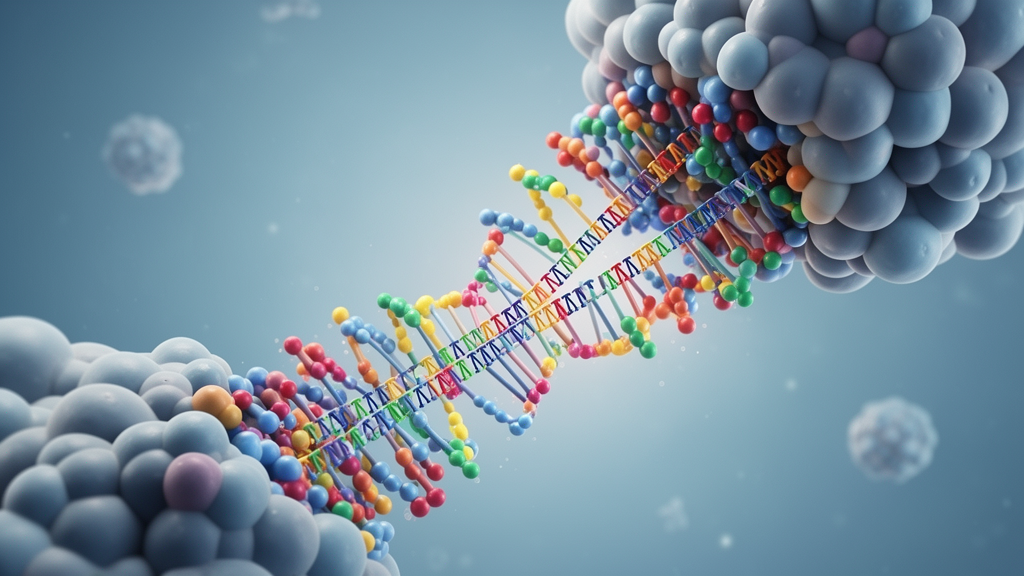
To pinpoint the genetic architecture responsible for this steroid conversion, researchers interrogated the genome of strain CFH19 for candidate open reading frames belonging to recognized dehydrogenase superfamilies. Two candidate genes were identified: PKOOAGGE_00485, encoding a 26.61-kilodalton short-chain dehydrogenase/reductase annotated as a putative 3-alpha- or 20-beta-hydroxysteroid dehydrogenase, and PKOOAGGE_00635, encoding a 28.76-kilodalton enzyme annotated as a 3-alpha-hydroxycholanate dehydrogenase. Both candidates were synthesized with codon optimization and heterologously expressed from pETIDT-C-His vectors in Escherichia coli BL21-CodonPlus cells. Functional characterization revealed that the protein encoded by gene 485, designated DirA for dehydroepiandrosterone isomerase reductase, operates as a multifunctional enzyme possessing dual 3-beta/17-beta-hydroxysteroid dehydrogenase and delta-4,5-isomerase activities. Recombinant DirA utilized NADH to convert dehydroepiandrosterone into androstenedione, androstenediol, and testosterone. Conversely, the enzyme encoded by gene 635, named DirB, functioned strictly as an isoform of seventeen-beta-hydroxysteroid dehydrogenase, converting dehydroepiandrosterone to androstenediol and androstenedione to testosterone while lacking any measurable three-position oxidation or isomerase capacity.
Structural modeling and dynamic simulations illuminated the physical basis underlying these contrasting enzymatic outputs. Computational models generated by AlphaFold3 achieved high-confidence metrics, yielding interface predicted template modeling scores of 0.95 for DirA and 0.93 for DirB in the presence of nicotinamide cofactors. While both enzymes conserve a classical catalytic triad comprising Ser140, Tyr153, and Lys157, their active-site architectures diverge markedly. Docking simulations using AutoDock Vina revealed that DirA features a spacious catalytic cleft capable of accommodating steroid ligands in both 3-prime and 17-prime orientations with favorable binding energies ranging between minus 6.4 and minus 7.1 kilocalories per mole. In contrast, DirB contains a constricted substrate-binding tunnel that binds androstenedione weakly and repeatedly forces steroids into flipped, catalytically unproductive conformations. Unrestrained one-hundred-nanosecond molecular dynamics simulations carried out in NAMD3 verified that ligands in DirA consistently maintain productive hydrogen-transfer distances of 3.10 to 4.34 angstroms to Ser140 and 3.70 to 4.95 angstroms to Tyr153, whereas in DirB the steroid 3-prime groups remain positioned 7.32 to 13.43 angstroms away from the catalytic residues.
Phylogenetic evaluations underscored the broad evolutionary distribution of these steroid-metabolizing enzymes across diverse environmental and host-associated niches. Maximum-likelihood phylogenetic trees constructed from the top one hundred non-redundant BLASTP sequence hits revealed that DirA homologs are dispersed across multiple bacterial phyla, including Actinomycetota, Bacillota, Pseudomonadota, Myxococcota, Bacteroidota, and Planctomycetes. Within Actinomycetota, DirA clustered closely with sequences from Corynebacterium and Nocardioides, sharing 52.19 percent amino acid identity with a steroid-degrading protein from Nocardioides sp. WS12. For DirB, homologous sequences were identified predominantly within the phyla Actinomycetota and Pseudomonadota, with pronounced representation among environmental and soil-dwelling Microbacterium species. The presence of homologous enzymes across aquatic, terrestrial, and mucosal commensal microbes indicates that the dirAB pathway represents an evolutionarily conserved metabolic mechanism that has been adapted by specialized uropathobionts colonizing the human urinary tract.
The uncovering of the dirAB pathway highlights an unrecognized microbial mechanism with potential implications for understanding host endocrinology and local urogenital conditions. Microbial communities residing on mucosal surfaces or forming adherent biofilms within the prostatic urethra may encounter excreted steroid intermediates and locally convert them into potent androgen receptor ligands. Furthermore, microbial steroid conversions could potentially alter measured urinary testosterone-to-epitestosterone ratios, an analytical metric routinely evaluated in clinical diagnostics and athletic antidoping testing protocols. However, the researchers emphasize crucial limitations in current knowledge: the cross-sectional cohort comprised twenty-seven male subjects and was not randomized or blinded, precluding causal inferences regarding prostate tumor progression or disease etiology. Additionally, urinary steroids naturally appear as glucuronide and sulfate conjugates, necessitating further investigation into microbial sulfatase and glucuronidase enzymes to elucidate whether androgens are released and absorbed in vivo to engage host endocrine receptors.
Subject of Research: Bacterial steroid metabolism and androgen biosynthesis by urinary Actinobaculum massiliense via the dirAB pathway
Article Title: The urinary pathobiont Actinobaculum massiliense can generate androgens via the dirAB pathway
Article References: Wang, T., Ahmad, S., Santos de Lima Rosa, R., Binion, B., Fernandez-Materan, F. V., Igbalaye, J. O., Chung, D., Bushra, A., Perez, V., Biedak, M. A., Tang, E., Barnick, B., Olukoya, D., Mbuvi, P., Dutta, D., Erdman, J. W., Jr., Gaskins, H. R., Yang, G., Irudayaraj, J., … Ridlon, J. M. (2026). The urinary pathobiont Actinobaculum massiliense can generate androgens via the dirAB pathway. Nature Communications, 17(1), Article 10498. https://doi.org/10.1038/s41467-026-77382-7
Image Credits: AI Generated
DOI: 10.1038/s41467-026-77382-7
Keywords: Actinobaculum massiliense, Propionimicrobium lymphophilum, dirAB pathway, urinary microbiome, androgen biosynthesis, dehydroepiandrosterone, testosterone, HSDH assay, hydroxysteroid dehydrogenase, steroid metabolism, prostate cancer, molecular dynamics, AlphaFold3, pathobiont, microbial endocrinology, NAMD3, pangenome analysis












 English (US) ·
 French (CA) ·