

Martha Stewart recently posted throwback pictures to her Instagram, and the results were, predictably, immaculate. Layers of hydrangeas, phlox, irises, and ornamental grasses, all flowing together in that way that looks effortless but definitely isn't. Basically, that’s the very definition of Martha Stewart herself. The comments, as usual, were full of people asking the same question: how?
While it may be frustrating, the real answer is that it’s not one thing; it’s a system. The good thing is that once you understand the principles, you can apply them to any border, even in your own garden, no matter the size. Here’s what the experts say Martha does so well.
Structure, Color, Texture – In That Order
(Image credit: Westbury / Getty Images)
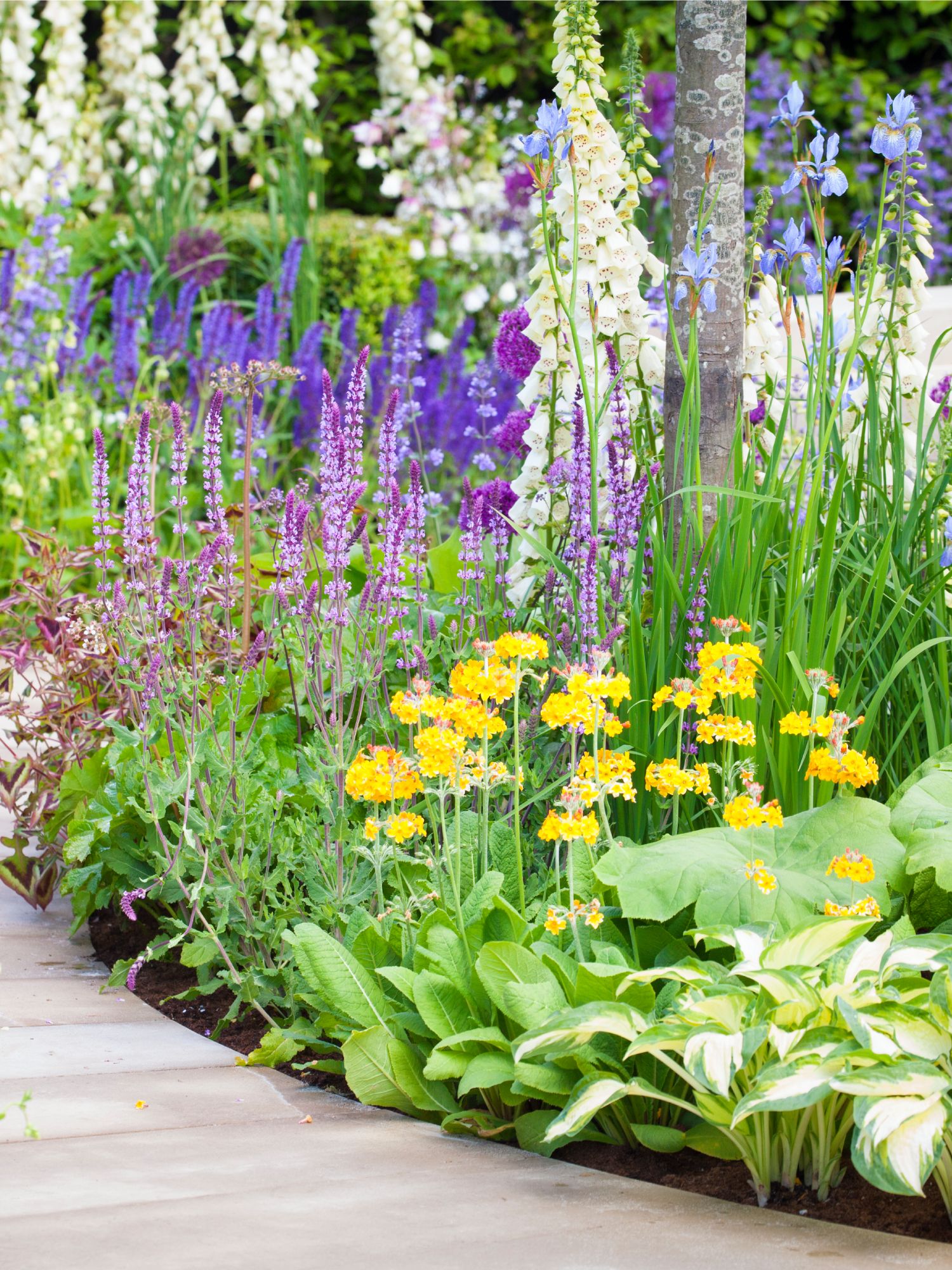
McCauley Adams, Principal Designer and Owner at Ramble on Rose Garden Design, cuts straight to the point: "The core principles behind a great perennial border are structure, color, and texture. When those three elements work together, you have something beautiful in every season, not just peak bloom." That last bit may be the most important.
Anyone, even a novice gardener, can make a border look good in June. It takes a real expert to make it look good in February, October, or in that awkward gap between spring bulbs and summer perennials when everything just looks as if it feels a bit sorry for itself.
Adams is clear on what holds a border together when the flowers aren't doing the work: "Both evergreen and deciduous species that hold their form through winter make the biggest difference. You are really planting for all four seasons, and structure is the foundation."
Stop Buying One of Everything
(Image credit: Getty Images)
If you've ever come home from a garden center with seven different plants, one of each thing that caught your eye, and arranged them in a border that somehow looked worse than when you started, well, this section is for you.
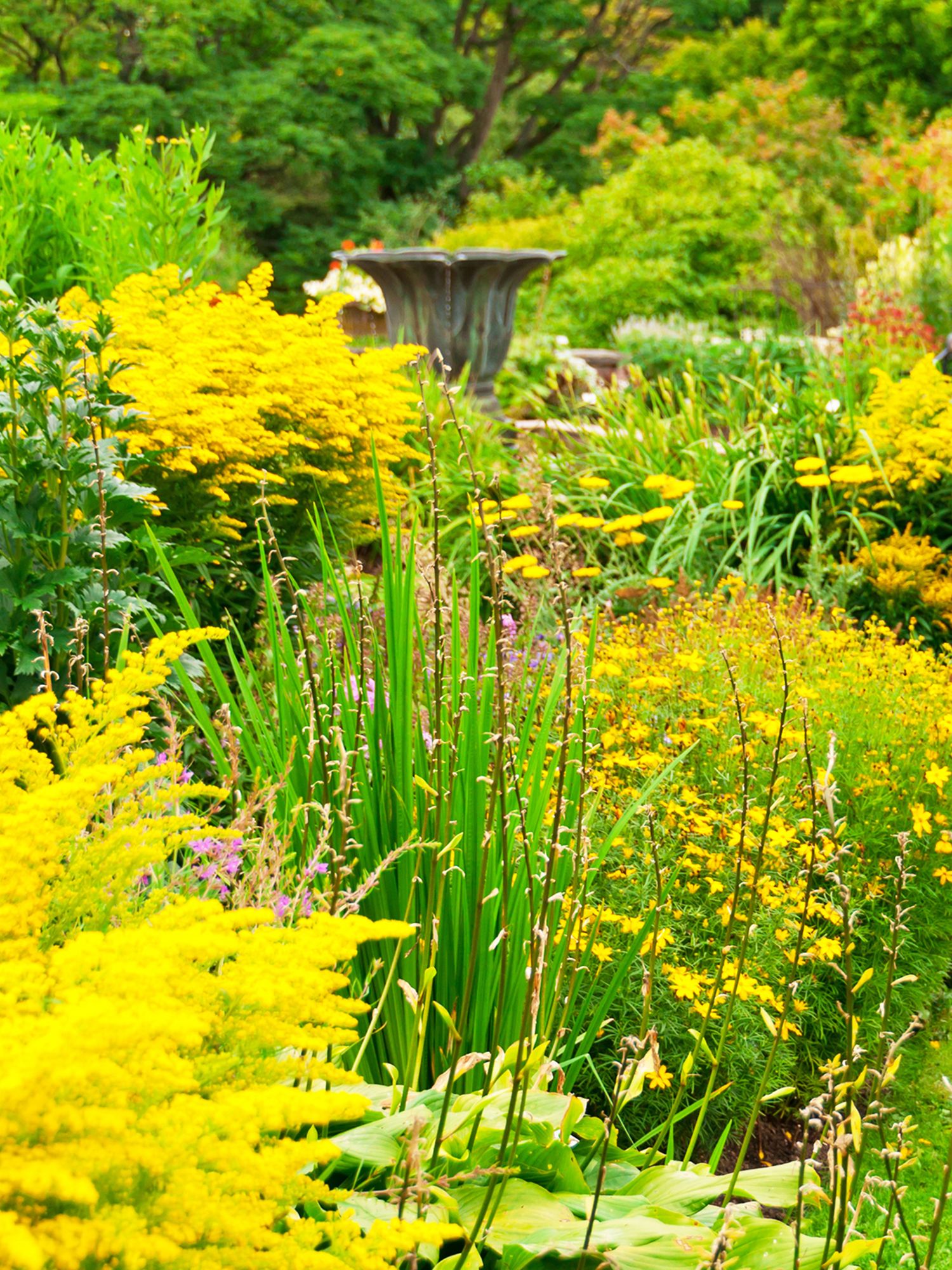
Adams identifies this as the most common mistake home gardeners make: "The most common mistake is going to the garden center, buying whatever is in bloom at that moment, and purchasing only one of each. Without a plan for succession and without repetition, the border never coheres, and it usually looks beautiful for about three weeks and then trails off."
Martha Stewart's approach is the exact opposite. She works with a tight plant palette and repeats it, giving borders rhythm and rather than the chaotic energy of a plant collector who lost the plot (no pun intended). As Adams puts it: "A tight plant palette, used confidently, makes a border feel tailored and considered rather than collected."
The practical takeaway: pick three to five plants you genuinely love, buy multiple of each, and plant in odd numbers.
The Succession Planting Blueprint
(Image credit: Jokuephotography / Getty Images)
The reason Martha's borders always seem to have something going on is succession planting. What exactly is this, you may ask? It’s the art of stacking flowers so that as one dies, another takes over. Adams maps out exactly how this relay race works:
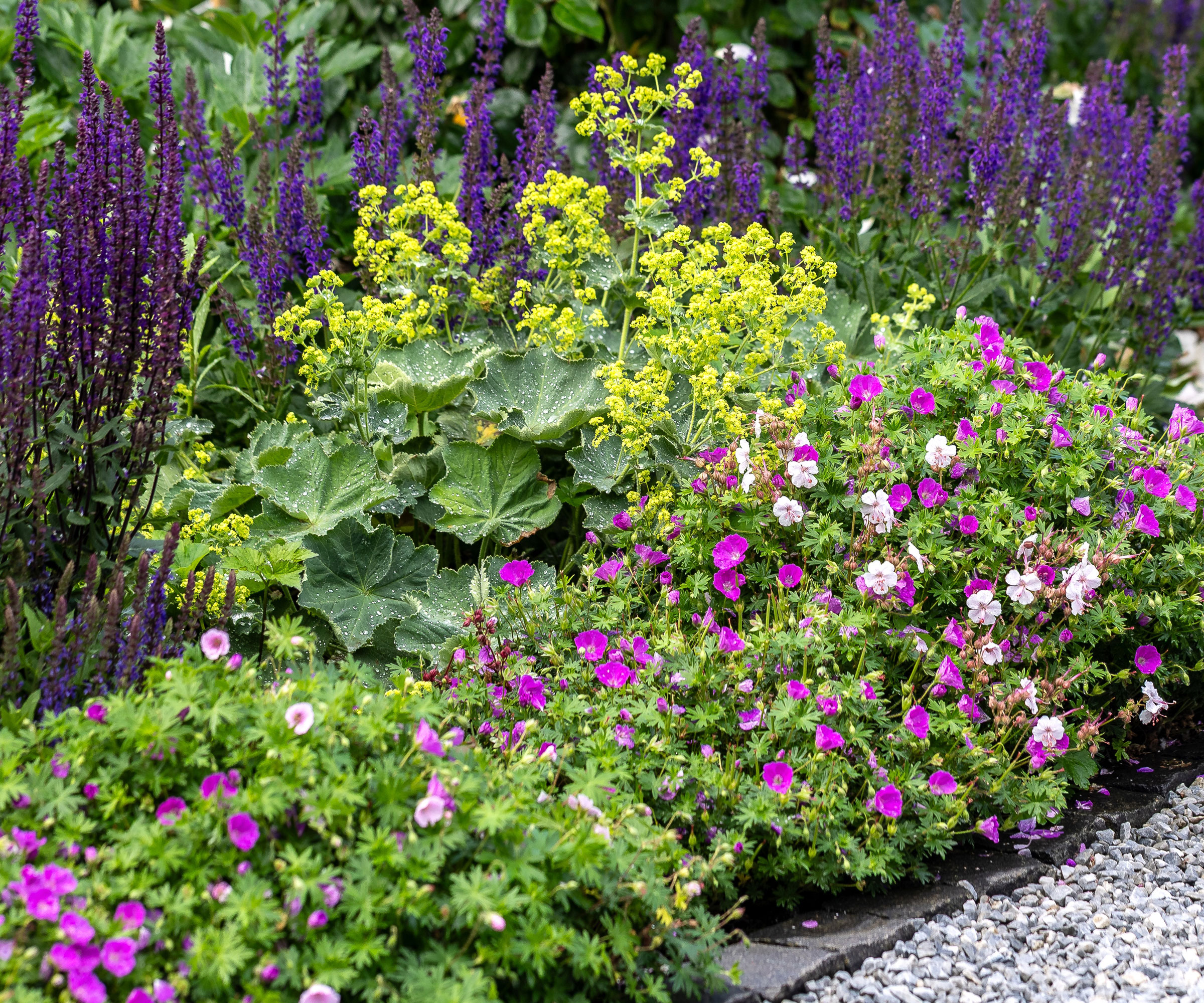
"Early in the season, snowdrops, hellebores, and crocus carry the border before much else wakes up. As those fade, hyacinth, daffodils, and early flowering trees like redbud and dogwood take over. Into early summer, hostas emerge alongside astilbe and allium. Then the hydrangeas begin their long relay: oakleaf first, then Annabelle, then bigleaf, then Limelight, which alone can carry a border from late spring well into fall.
"Late summer is when zinnias, cosmos, and dahlias hit their stride. As the season winds down, ornamental grasses like Karl Foerster and Pink Muhly bring movement and warmth. Then the evergreens hold the space through winter, and it begins again." For shade gardens specifically, Adams recommends astilbe, ferns, brunnera, and hosta. For sun: agastache, veronica, butterfly bush, gaura, and iris."
Planting so many bulbs can be backbreaking, so try the Colwelt Bulb Planter with a long handle (available on Amazon).
That's a year-round border in one tidy paragraph. Screenshot it, print it, tattoo it somewhere visible.
Shop Perennial Border Classics
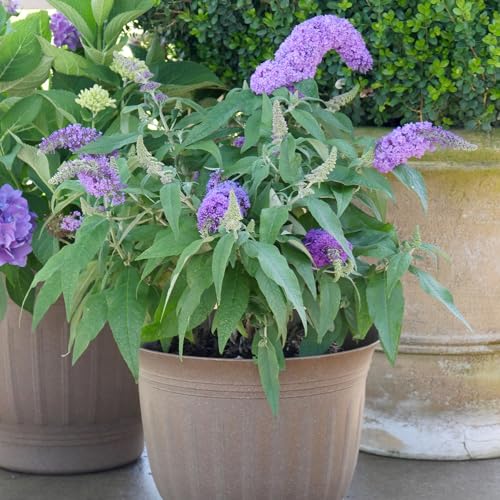
Proven Winners Pugster Ameythst Buddleia
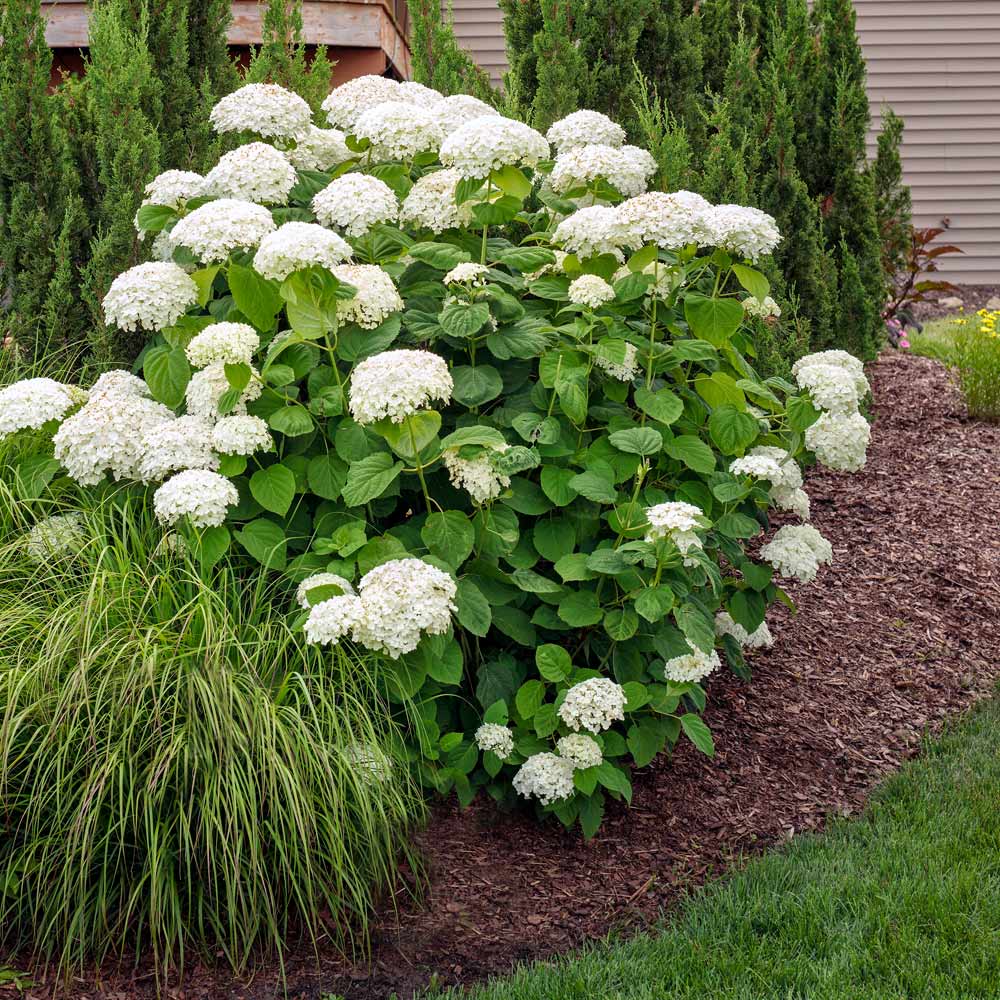
Annabelle Hydrangea Shrub
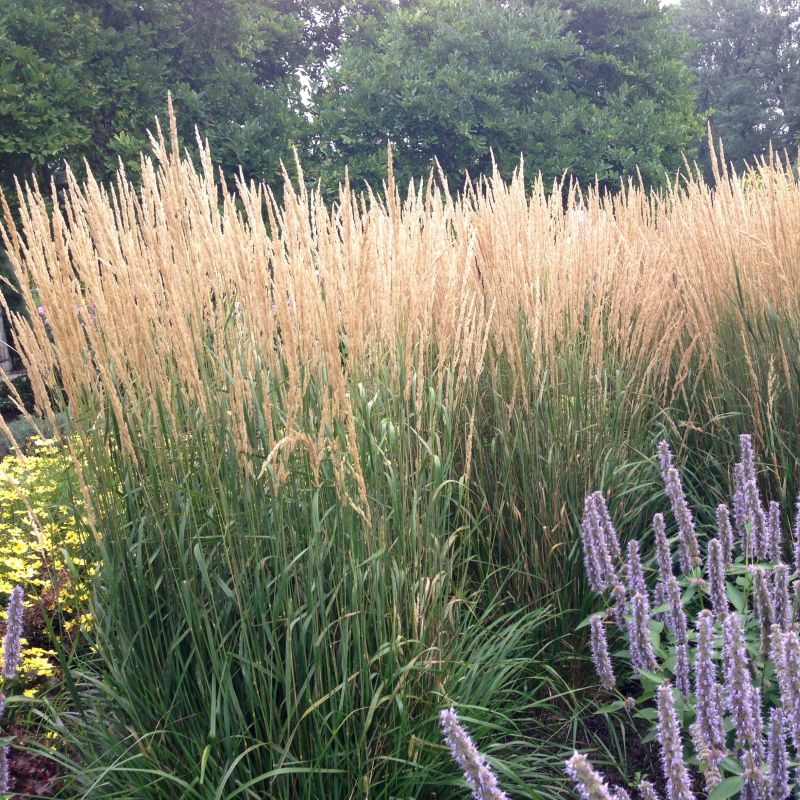
Karl Foerster Feather Reed Grass
The Part Nobody Talks About: Drainage
Here's the thing about beautifully layered perennial borders: they die. Not always dramatically, not always immediately, but somewhere in year two or three, patches go brown, plants don’t reestablish, and you stand there blaming the soil or the weather or your own incompetence. And then you go eat a tub of Ben & Jerry’s; it’s okay, we’ve all been there.
Emily Demirdonder, Co-founder and Director of Operations at Proximity Plumbing, has seen this pattern so many times she can predict it: "The border was well maintained after the first year, but once the second or third year arrived, the plants in the border were partially or completely dead. To me, this typical pattern can almost always be attributed to poor soil grading or lack of subsurface drainage."
The culprit, almost every time, is invisible: "Water will collect just beneath the surface of the soil, causing the roots of the plant to rot before they even have the time to establish roots. It happens more in clay-heavy ground but honestly, I've seen it in well-amended beds too."
Her fix isn’t exactly glamorous but is effective: "By relocating or adding a French drain or downspout 30–40 cm below the plant bed can positively affect plant border performance throughout the entire growing season, not just during the spring planting."
Martha Stewart's gardens, Demirdonder notes, rely on proper grading and water management infrastructure that most home gardeners never consider: "That's not a gardening decision, that's a water management decision. And it's the part homeowners skip." To avoid too much water, try this Digital Soil Moisture Meter from Amazon.
So before you spend another penny on plants, get down on your hands and knees after heavy rain and watch where water pools. If it's sitting anywhere near your border for more than an hour, you've found your problem. If your knees are aching from doing this, try a kneeling pad like this one from Walmart, which folds up and has handy little pockets on the side for your tools.
Scale Doesn't Matter as Much as You Think
One of the more reassuring things about this approach is that the recipe works regardless of garden size. Adams is straightforward about this: "A beautiful border can work in three to four feet of depth or ten or more feet wide. The recipe scales. The key is restraint: choose plants you will genuinely love at different points in the year, combine ones that hold their architecture year-round with ones that flow and shift with the seasons, and plant in odd numbers whenever possible."
And on the question of whether this maximalist, layered approach to planting is genuinely coming back into fashion or just a Martha thing: "I do think there is a growing appetite for borders that feel layered and generous, gardens that reward time and attention rather than staying out of the way." Which is really just another way of saying: gardening takes effort, the results are worth it, and Martha Stewart has been right about this for decades. Annoying, but true.












 English (US) ·
  French (CA) ·