

 6 hours ago
15
PROTECT YOUR DNA WITH QUANTUM TECHNOLOGY
Orgo-Life the new way to the future Advertising by AdpathwayA small, nearly see-through fish that has vanished from most of its historic range may soon receive federal protection. The U.S. Fish and Wildlife Service (USFWS) has proposed listing the peppered shiner as endangered under the Endangered Species Act, according to a report published on Yahoo News on 24 November 2026.
The peppered shiner is a translucent minnow about 2 inches (5 centimetres) long. Today it survives only in about 258 miles (415 kilometres) of the Saline River in Arkansas, according to the Fish and Wildlife Service.
The agency is not proposing to designate critical habitat, the report says. Federal protections would still apply to the fish itself if the listing is finalised.
A fish that has lost most of its range
The peppered shiner (Notropis perpallidus) was once found across several river systems in southeastern Oklahoma and southwestern Arkansas. Its former range included the Muddy Boggy, Kiamichi, Little and Mountain Fork river systems in Oklahoma, and the Little Missouri, Ouachita and Saline river systems in Arkansas.
It now persists only in the Saline, and it has not been documented outside the Saline River since 2001. Even there, it reproduces only in the upper part of the watershed, where roughly 95 per cent of the riverbanks remain forested, according to the Center for Biological Diversity (CBD), a conservation group that has campaigned for the fish's protection. The CBD describes the Saline as the only undammed river within the species' range.
The article does not give population figures, but the shrinking range alone shows how far the species has declined.
What threatens the peppered shiner
The Fish and Wildlife Service cites declining water quality and fragmented habitat as the main threats. The CBD points specifically to forest clearing and pollution from runoff associated with rapid growth around Benton and Hot Springs, two growing communities in central Arkansas.
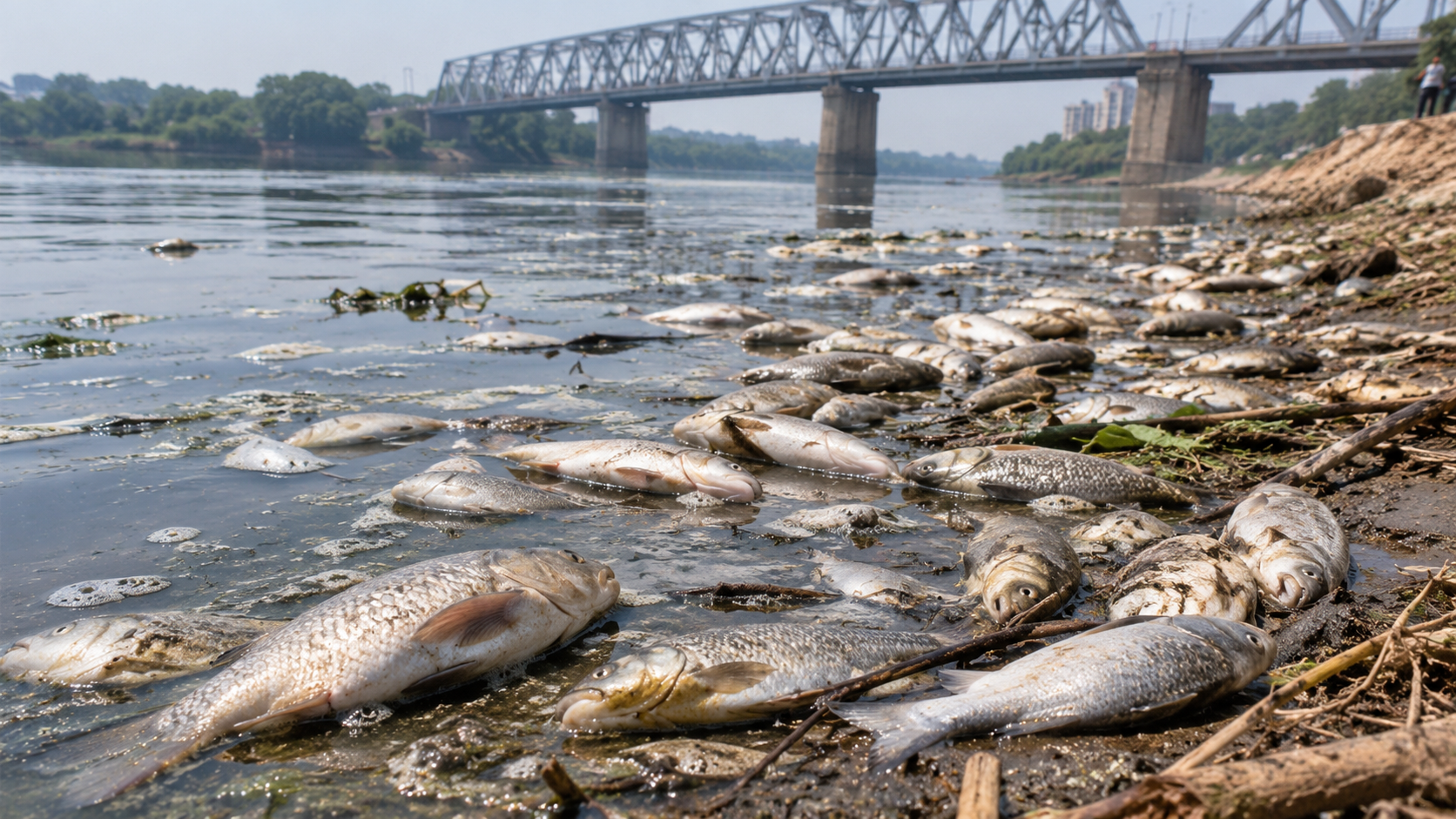
In the 1990s, scientists linked the species' decline to dam construction and to water pollution from gravel mining and livestock operations, the report notes. Dams change rivers dramatically. They turn flowing water into still reservoirs, trap sediment, alter water temperature and block fish movement. A small minnow adapted to clear, flowing water can disappear from long stretches of river once a dam is built.
Runoff from cleared land carries sediment and nutrients into streams. Fine sediment can smother the gravel beds where many small fish feed and spawn, and excess nutrients can fuel algae blooms that reduce oxygen levels.
Forty-four years waiting
The CBD says the peppered shiner was first identified as a candidate for federal protection in 1982, more than four decades ago. Tierra Curry, a senior scientist at the CBD, called the peppered shiners "special little fish" and said their endangerment "should be a warning for people."
Long waits for protection are not unusual. Many species identified as needing help under the Endangered Species Act have spent years or decades on candidate lists, in part because of limited agency resources and legal backlogs. Conservation groups have often turned to lawsuits and petitions to push decisions forward.
Why small fish matter
Minnows like the peppered shiner rarely attract public attention, but they play important roles in river ecosystems. They eat small insects and algae, and they are food for larger fish, birds and other wildlife. Because they are sensitive to pollution and habitat change, their decline can be an early sign that a river is in trouble.
The southeastern United States is a global hotspot for freshwater biodiversity, with an exceptional variety of fish, mussels, crayfish and snails. It is also a hotspot for freshwater extinctions and declines. Protecting a single species often means protecting the river conditions that benefit many others.
What an endangered listing would do
If the listing is finalised, it would become illegal to harm or kill peppered shiners without a permit. Federal agencies would have to consult with the Fish and Wildlife Service on projects that could affect the species, such as dams, road crossings or permits for activities in the river. The agency would also develop a recovery plan setting out actions to improve the fish's prospects.
The lack of a critical habitat designation means the government is not formally mapping specific stretches of river for added protection under that part of the law. The report does not explain the agency's reasoning on that point.
How listing decisions are made
Under the Endangered Species Act, administered by the U.S. Fish and Wildlife Service, a species can be listed as "endangered," meaning it is in danger of extinction throughout all or a significant part of its range, or "threatened," meaning it is likely to become endangered in the foreseeable future. The Fish and Wildlife Service bases its decisions on the best available scientific information, looking at factors such as habitat loss, overuse, disease, the adequacy of existing protections and other natural or human-made threats.
A proposal is not the final word. After the comment period, the agency reviews the evidence and comments it has received, and then decides whether to finalise the listing, change it or withdraw it. That process typically takes about a year, although delays are common.
Lessons from other small fish
The peppered shiner is one of many small freshwater fish in the United States that have needed federal protection. Experience with other species shows that recovery is possible when water quality improves and habitat is restored. Simple measures, such as protecting forested stream banks, managing sediment from construction sites, and keeping livestock out of streams, can make a meaningful difference for fish that depend on clean gravel and clear water.
Public comment
Proposed listings are published in the Federal Register and open to public comment before a final decision. The Yahoo report does not give the dates of the comment period. Readers who want to comment or follow the decision should consult the proposed rule in the Federal Register.
A river worth protecting
The Saline River is one of the last free-flowing rivers in the region and is known for its diversity of fish and freshwater mussels. The fate of the peppered shiner is closely tied to how land along the river is managed in the coming years, particularly as development spreads around Benton and Hot Springs. For a fish only a few centimetres long, the decision could make the difference between survival and disappearance.
Questions and Answers
What is the peppered shiner?
It is a small, translucent minnow, about 2 inches long, now found only in the Saline River in Arkansas.
What has the government proposed?
The U.S. Fish and Wildlife Service has proposed listing it as endangered under the Endangered Species Act. It is not proposing critical habitat.
Why has it declined?
Declining water quality, fragmented habitat, dams, gravel mining, livestock pollution and runoff from development have all been cited.
How long has it been waiting for protection?
The Center for Biological Diversity says it was first named a candidate for federal protection in 1982.
Can the public comment?
Yes. Proposed listings are open for public comment in the Federal Register before a final decision.
© 2026 NatureWorldNews.com All rights reserved. Do not reproduce without permission.













 English (US) ·
 French (CA) ·