

PROTECT YOUR DNA WITH QUANTUM TECHNOLOGY
Orgo-Life the new way to the future Advertising by AdpathwayHighlights
Nyungwe National Park is one of Rwanda’s most important birding destinations and a major site for Albertine Rift montane-forest birds. Current sources report roughly 317–345 bird species for the park/property, including around 30 Albertine Rift endemics, depending on the survey and checklist used. The forest’s combination of montane rainforest, high-altitude marshes, forest edges and open areas creates excellent opportunities for specialist birders.
- Exceptional concentration of Albertine Rift endemic and near-endemic birds.
- Excellent habitat for montane forest specialists, turacos, sunbirds, flycatchers, babblers and warblers.
- Important birding areas include the forest trails, road verges and forest-edge habitats, with Kamiranzovu Swamp especially important for high-altitude wetland species.
The park is also a major biodiversity destination, with chimpanzees, several monkey species, orchids and other forest wildlife.
Key Bird Species and Families
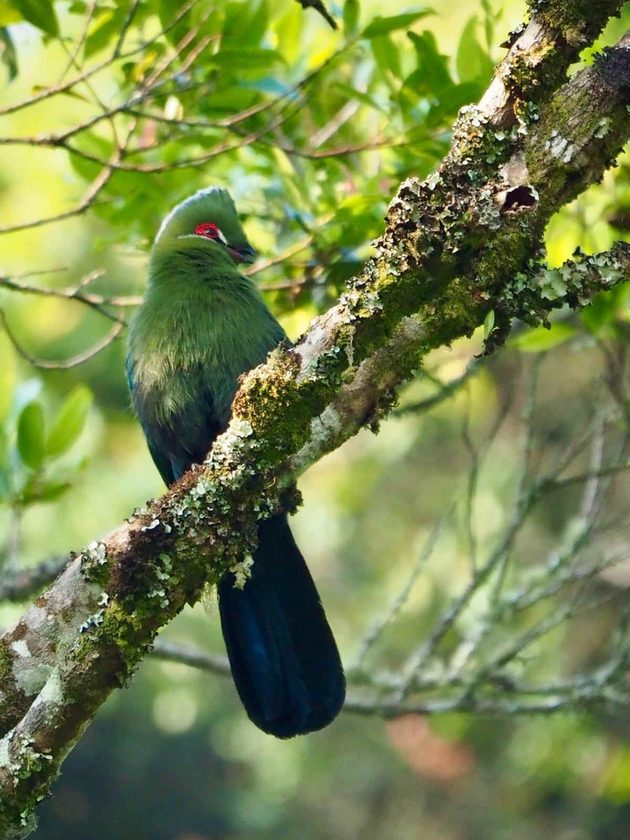
- Turacos (Musophagidae): Rwenzori Turaco, Great Blue Turaco, Black-billed Turaco and Ross’s Turaco.
Black-billed Turaco
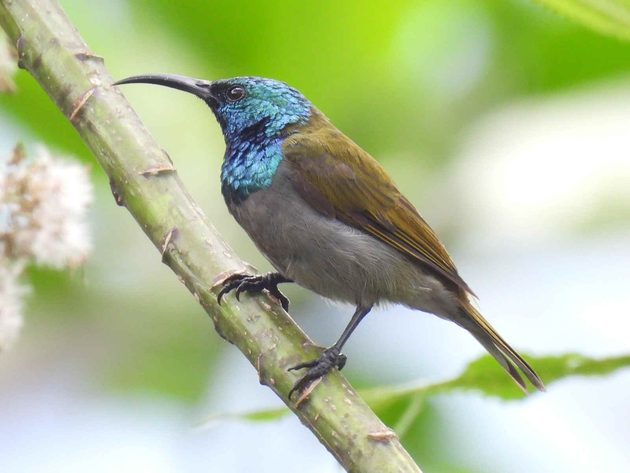
- Sunbirds (Nectariniidae): Regal Sunbird, Blue-headed Sunbird, Rockefeller’s Sunbird, Stuhlmann’s Sunbird and Purple-breasted Sunbird.
Green-headed Sunbird
- Babblers and chats: Red-collared Babbler, Red-throated Alethe, Archer’s Robin-Chat and Kivu Ground Thrush.
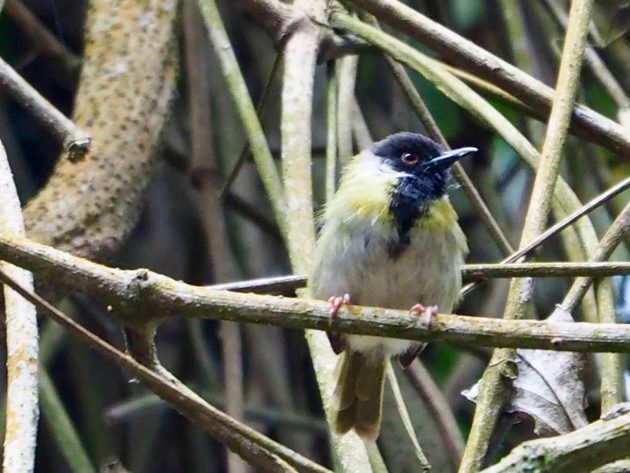
- Warblers and apalises: Grauer’s Warbler, Neumann’s Warbler, Red-faced Woodland Warbler, Rwenzori Apalis, Kungwe Apalis and Black-faced Apalis.
Black-faced Apalis
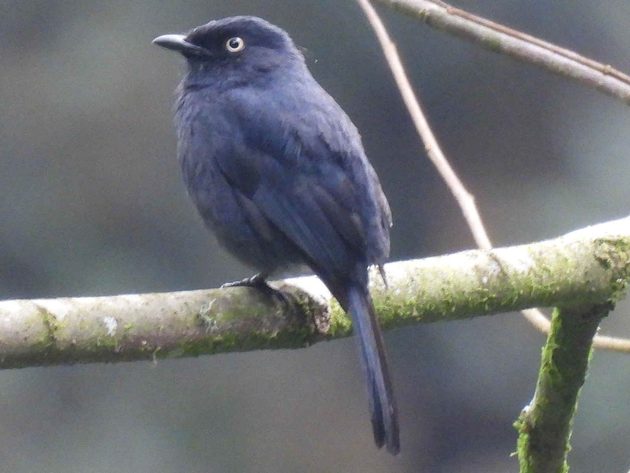
Other Albertine Rift specialities: Handsome Francolin, Rwenzori Batis, Stripe-breasted Tit, Yellow-eyed Black Flycatcher, Willard’s Sooty Boubou, Strange Weaver and Rwenzori Nightjar.
Yellow-eyed Black Flycatcher
- Other memorable forest birds include Black-and-white Casqued Hornbill, White-headed Woodhoopoe, African Green Pigeon, Forest Buzzard and Crowned Eagle.
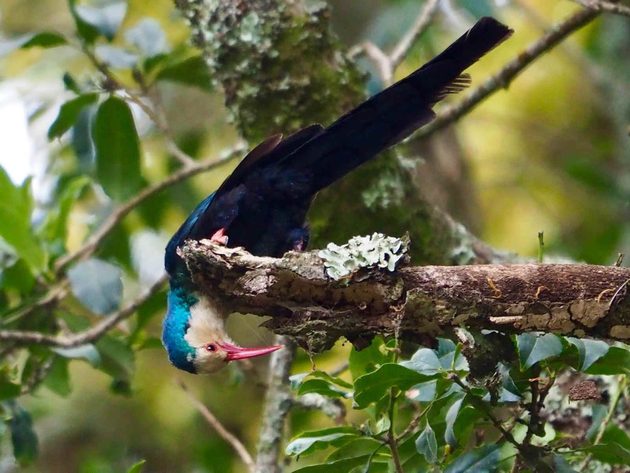
White-headed Woodhoopoe
Best Regions for Birding
The most productive areas vary with target species and weather. A local bird guide is valuable because many forest birds are easier to detect by call than by sight.
- Uwinka area and surrounding forest trails – a strong base for montane forest species and Albertine Rift specialities.
- Road verges and forest edges – often provide clearer views than dense forest interior and can be productive for mixed flocks.
- Kamiranzovu Swamp – particularly valuable for high-altitude wetland birds, including Grauer’s Swamp-Warbler.
- Gisakura area and nearby forest/tea-estate habitats – useful for forest-edge species and mixed birding.
- Karamba area near Gisakura – another useful birding locality, especially when combining forest and edge habitats.
- Cyamudongo Forest – a smaller forest block that can complement a Nyungwe birding itinerary.
Birding Map / Key Locations
Map of Nyungwe National Park
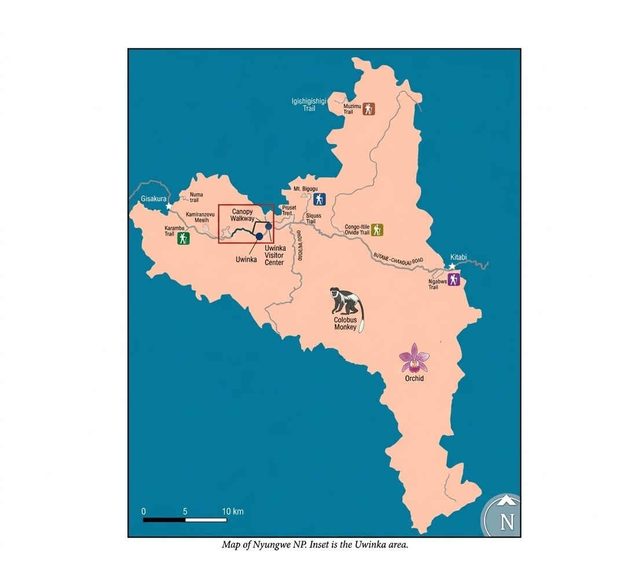
For a map, mark the main birding bases and habitats: Uwinka Visitor Centre, Kamiranzovu Swamp, Gisakura, Karamba and Cyamudongo Forest. A custom map can be prepared separately for a trip or birding brochure.
Best Birding Season
Birding is possible throughout the year. For migrant species, November to April is especially interesting. Resident Albertine Rift specialities can be targeted year-round. Because Nyungwe is a montane rainforest, rain and mist are common, so flexible scheduling and waterproof equipment are important.
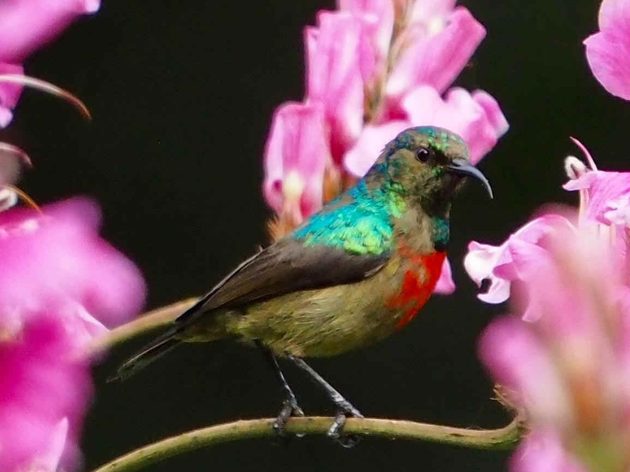
Immature Stuhlmann’s Sunbird
Birding Trip Suggestions
Suggested 3-day specialist birding programme:
- Day 1 – Uwinka: early-morning forest birding for turacos, sunbirds, babblers, flycatchers and other montane specialists; continue along productive forest-edge sections.
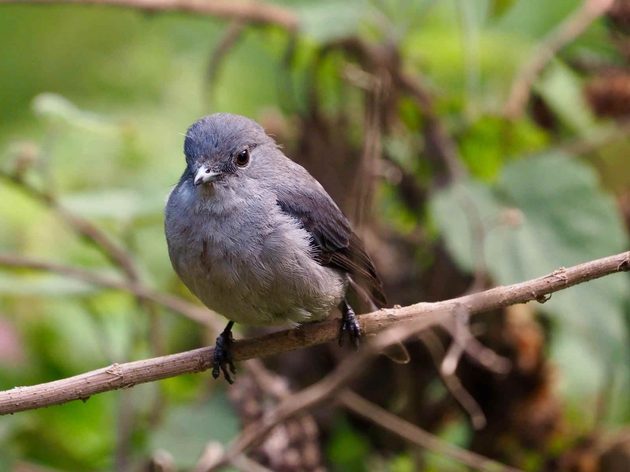
White-eyed Slaty Flycatcher
- Day 2 – Kamiranzovu: focus on high-altitude wetland and montane species, including Grauer’s Swamp-Warbler; combine the swamp with nearby forest habitat.
- Day 3 – Gisakura/Karamba or Cyamudongo: target forest-edge and forest specialists, mixed feeding flocks and any missed Albertine Rift endemics.
For a longer trip, add extra mornings rather than trying to cover too many sites in one day. Several Nyungwe specialties are elusive and may require repeated visits.
Practical Tips
- Carry good binoculars (8x or 10x), a camera with a long lens if available, and a reliable bird field guide.
- Use waterproof hiking boots, a rain jacket, warm layers, and long trousers; conditions can change quickly in the high forest.
- Start early: dawn is generally the most productive period for bird activity and mixed feeding flocks.
- Learn and use bird calls. Many species remain hidden in dense vegetation or high in the canopy.
- A local bird guide can greatly improve identification and help locate difficult Albertine Rift specialties.
- Carry drinking water, snacks/packed lunch, sunscreen and insect protection.
- Keep noise low and follow park rules. Avoid playback unless it is permitted and used sparingly for research or responsible birding.
Books
- Birds of Africa south of the Sahara – Peter Ryan (ed.), for broad regional reference.
- Birds of East Africa – Terry Stevenson & John Fanshawe, a useful field guide for Rwanda and the wider East African region.
- A dedicated Albertine Rift/Rwanda bird checklist is also recommended for serious birding trips.
Links
- https://visitnyungwe.org/
- https://visitrwanda.com/
- https://www.africanparks.org
- https://www.instagram.com/hajas_jacques?stkn=MnRzOXR4MThkN2Rq
By Habimana Jacques
HaJas Jacques is a freelance nature and bird guide based in Rwanda, specialising in birdwatching and nature experiences in Rwanda and neighbouring countries such as Uganda, Kenya, Tanzania, Burundi and the DRC. He can assist birders with locating Albertine Rift specialties as well as other endemic birds in the region, identifying forest birds, savannah birds, water birds and birds of other habitats by sight and sound, and planning practical birding routes according to the visitor’s target species and available time.
Contact:
- Email: hajasjacques@gmail.com
- Phone/WhatsApp: +250780654591
- Instagram: hajasjacques













 English (US) ·
  French (CA) ·