

 3 hours ago
3
PROTECT YOUR DNA WITH QUANTUM TECHNOLOGY
Orgo-Life the new way to the future Advertising by AdpathwayA global analysis of environmental DNA has uncovered a large gap in what scientists know about protists, a broad group of microscopic organisms that includes many single-celled eukaryotes. The study, published November 10 in Nature Communications, examined more than 30,000 assembled metagenomes and found that most of the protist groups in one analysis had no described organism represented in reference databases.
The result does not mean scientists have discovered thousands of new named species. The researchers identified genetic groups from environmental samples, many of which have not been grown in a laboratory or matched to a formally described organism. Their work is a map of missing knowledge and a guide for future sampling, rather than a catalog of fully characterized species.
What protists are—and why they matter
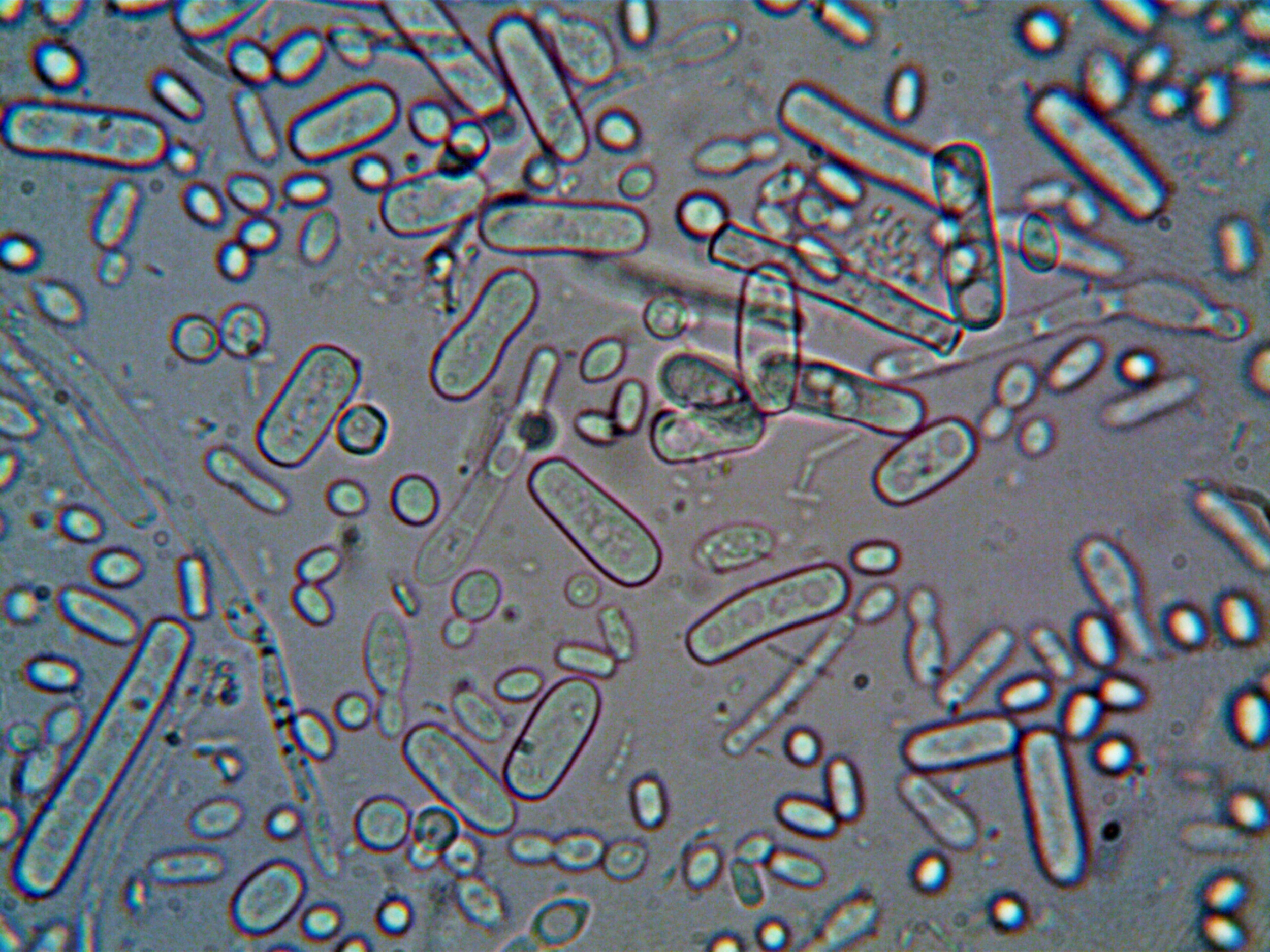
Protists are eukaryotes that are not classified as plants, animals or fungi. They include organisms with many different lifestyles and ecological roles. Some feed on bacteria, some photosynthesize, some live as parasites, and others form relationships with different organisms. Because they are so diverse, protists can influence food webs, nutrient cycling and the health of aquatic and soil environments.
Many remain poorly represented in scientific databases because they are difficult to cultivate and identify. Traditional surveys often use a short DNA marker to sort organisms into groups, but the method can miss divergent lineages or underrepresent them because of laboratory bias. The new study uses a broader collection of long genetic sequences and metagenomic data to look for protist diversity without first growing the organisms.
The open-access paper reports that researchers analyzed over 30,000 assembled metagenomes, single-cell genomes and long-amplicon datasets from marine, freshwater and soil-associated environments. They recovered 157,956 long 18S ribosomal RNA gene sequences and grouped those sequences into operational taxonomic units, or OTUs, based on genetic similarity.
Most analyzed groups had no named reference
At an 85% sequence-identity threshold, the team retained 9,543 protist OTUs after excluding non-protist groups and singletons. Of those, 81% consisted exclusively of environmental sequences with no described representative in the databases used. In plain terms, researchers can detect the DNA signal in an environment, but they often cannot connect it to a formally named organism or an organism already characterized in a lab.
An OTU is a practical grouping used to organize similar DNA sequences. It should not automatically be treated as a confirmed species. The percentage threshold determines how sequences are clustered, and different thresholds can produce different group counts. That is why the study's 81% result refers to a defined analysis, not a final count of all unknown protist species on Earth.
The authors also found underrepresentation of several major protist groups in existing reference databases, including Amoebozoa, Discoba and Rhizaria. They identified 13 deeply divergent candidate lineages with little or no representation in current references. Some could be linked to partial genomes recovered through single-cell methods, which may help researchers study organisms that cannot be readily cultivated.
DNA can reveal life that has not been collected directly
Environmental DNA allows researchers to detect organisms from genetic material in water, soil or other samples. It can reveal that a lineage is present even when researchers have not captured or cultivated the organism. This is powerful for surveying microscopic life across many habitats, but it also creates interpretation limits.
A DNA sequence alone may not tell scientists what an organism looks like, what it eats, whether it is alive at the time of sampling or what role it plays in the ecosystem. The team used distribution patterns and predicted associations with bacteria and other eukaryotes to help frame possible ecological connections. Those associations are hypotheses to investigate, not direct proof that the organisms interact in a particular way.
The study combines multiple data types and environments, but sampling is never uniform. Some habitats have much more sequencing than others, and an organism's genetic material may be hard to recover. A lineage missing from a database is not necessarily rare; it may simply be under-sampled or poorly matched to current methods.
A new reference set is a research tool, not a finished inventory
The researchers describe their work as a global, cultivation-independent resource. It can help direct targeted sampling, genomic analysis and future experiments. If researchers can collect single cells or develop methods to culture more lineages, they may learn how these protists function and how they fit into food webs.
Better reference databases could also improve environmental monitoring. When a DNA sample contains a sequence that can be identified more accurately, scientists can make stronger comparisons among locations or time periods. This may help track ecosystem change, invasive organisms or disease-related lineages, depending on the organism and the data available.
But the paper does not provide an immediate conservation action or claim that a specific ecosystem is failing. Its importance is foundational. Scientists cannot confidently assess the role of organisms that remain unnamed, uncharacterized or absent from reference collections.
The next challenge is connecting sequences to biology
The next work is likely to combine field sampling with microscopy, single-cell sequencing and ecological experiments. Researchers need to establish which genetic groups correspond to distinct organisms, how those organisms behave and whether they carry out functions that matter to the environment.
The study also highlights a broader challenge: the planet's microscopic biodiversity is much less documented than its larger, visible species. That limits how much scientists can say about the total diversity of eukaryotic life or how ecosystems may respond to change. The database gaps are not a flaw in this study; identifying them is one of its main findings.
The headline result is striking, but its meaning is careful: many protist genetic groups recovered from global environmental data lack a described reference. The scientists have not named them all. They have made it easier to ask where these organisms live and what they might do, setting up the next stage of research into life that has been present in samples but missing from the scientific record.
The database gap affects ecological interpretation
Reference databases are used to assign a name or lineage to DNA sequences found in samples. When a sequence has no close match, researchers can still recognize that it belongs to a broader branch of life, but they may not know the organism's species, form or function. This creates a blind spot: environmental surveys may repeatedly detect a lineage without being able to explain what role it plays.
The paper's long 18S sequences provide more information than many shorter marker fragments, while the combined 18S–28S framework helps place lineages in a broader evolutionary context. Even a longer sequence does not reveal every biological trait. Cultivation, microscopy and single-cell work can connect a genetic signature to a living organism and reveal how it behaves.
The study found environmental sequences that do not match described representatives across marine, freshwater and soil environments. That means the knowledge gap is not confined to one habitat. However, the samples come from existing datasets and research programs, so uneven collection remains a constraint. A global database is broad but not necessarily balanced.
The authors identify the work as a resource for targeted sampling. Scientists can prioritize lineages that appear widely, occupy distinctive environments or sit on deeply divergent branches. Follow-up research can test whether these lineages have important ecological roles, but those roles should not be inferred from their genetic novelty alone.
A larger and better-curated reference database could improve future studies of food webs and environmental change. The Nature Communications paper provides a dataset, but broader taxonomic coverage will depend on researchers in many regions collecting and sharing high-quality samples.
Key Questions Answered
Are 81% of all protist species unnamed? No. The figure refers to a specific set of genetic groups and database comparison in this study.
Does an OTU equal a confirmed species? Not necessarily. It is a sequence-based grouping that helps organize genetic data.
What happens next? Researchers need to connect genetic lineages to organisms, ecological roles and direct observations.
© 2026 NatureWorldNews.com All rights reserved. Do not reproduce without permission.












 English (US) ·
 French (CA) ·