

A hosta in a garden bed has a lot of soil wrapped around its roots when the cold comes. Put that same hosta in a pot on the patio, though, and it's an entirely different story. Cold air reaches the roots from every side of the container, and even tough perennials and shrubs can experience winter damage that way.
The usual advice for overwintering container plants involves hauling pots into the garage or wrapping them up. But there's a cheaper option in the yard right now – the leaves piling up along the fence, waiting to get bagged for the curb.
This isn't the regular leaf mulch over the potting mix that it sounds like. Mulch on top does nothing for the pot walls. Dry leaves packed around the sides, in bags or inside a wire cage, put back some of the protection the ground would have given.
Why Fallen Leaves Can Protect Potted Plants From Frost
Garden soil cools down slowly, and roots in a bed sit inside a huge mass of it. Pots don't have much of that buffer at all, and the root ball can drop close to the outdoor air temperature. Roots are also less cold-hardy than the stems and buds above them. As a rule of thumb, treat a potted plant as if it were two growing zones colder than your yard.
So what do the leaves actually do? Squeeze a handful of dry ones, and you'll notice how much of it is just air. Still air doesn't carry heat away from a pot very fast. A sunny afternoon can thaw the edge of a root ball – then it freezes hard again overnight, and that back-and-forth can tear roots and shove plants up out of the mix. The leaves slow those swings down.
So, there are two ways you can use fallen leaves to insulate pots, both using leaves against the pot walls.
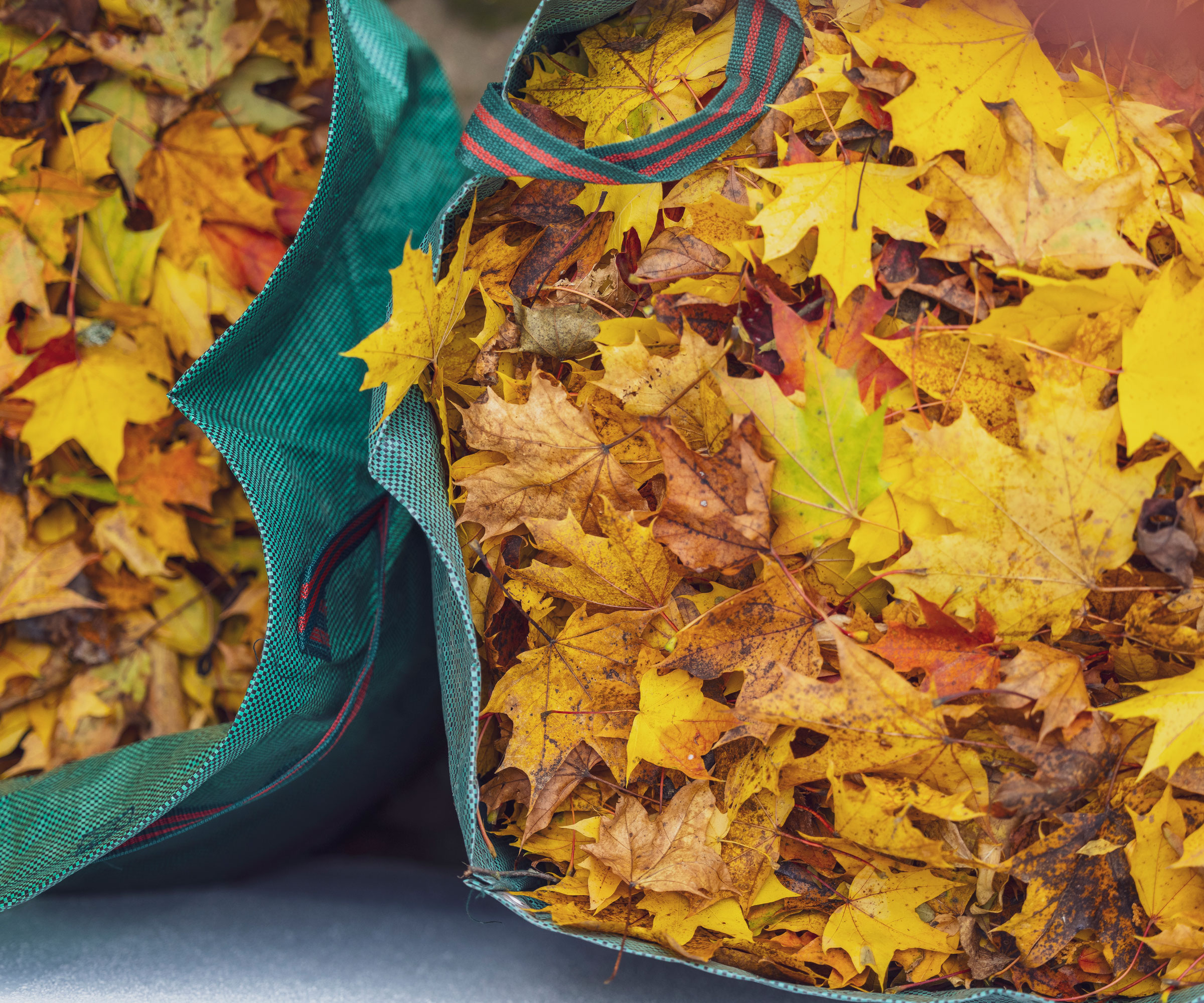
(Image credit: Malorny /Getty Images)
Method 1: Make Insulating Bags of Leaves
Start with dry, fairly clean leaves, removing any sticks or diseased foliage. Loosely fill sturdy garden bags or old feed sacks – don't stomp the leaves down. The extra space lets air circulate, and that’s what does the work. Walmart sells a three-pack of reusable 72-gallon leaf bags that stand 30 inches (76 cm) tall – taller than the rims of many patio pots.
Cluster the pots against a wall of the house, on the ground instead of a deck rail or plant stand. Water them well before the soil freezes, since moist potting mix holds heat better than dry mix. Then line the bags up snugly around the outside of the group. Leave the foliage uncovered, and keep a gap to check that the soil isn't soggy and the drainage holes are clear. You can lift any bag whenever a pot needs moving.
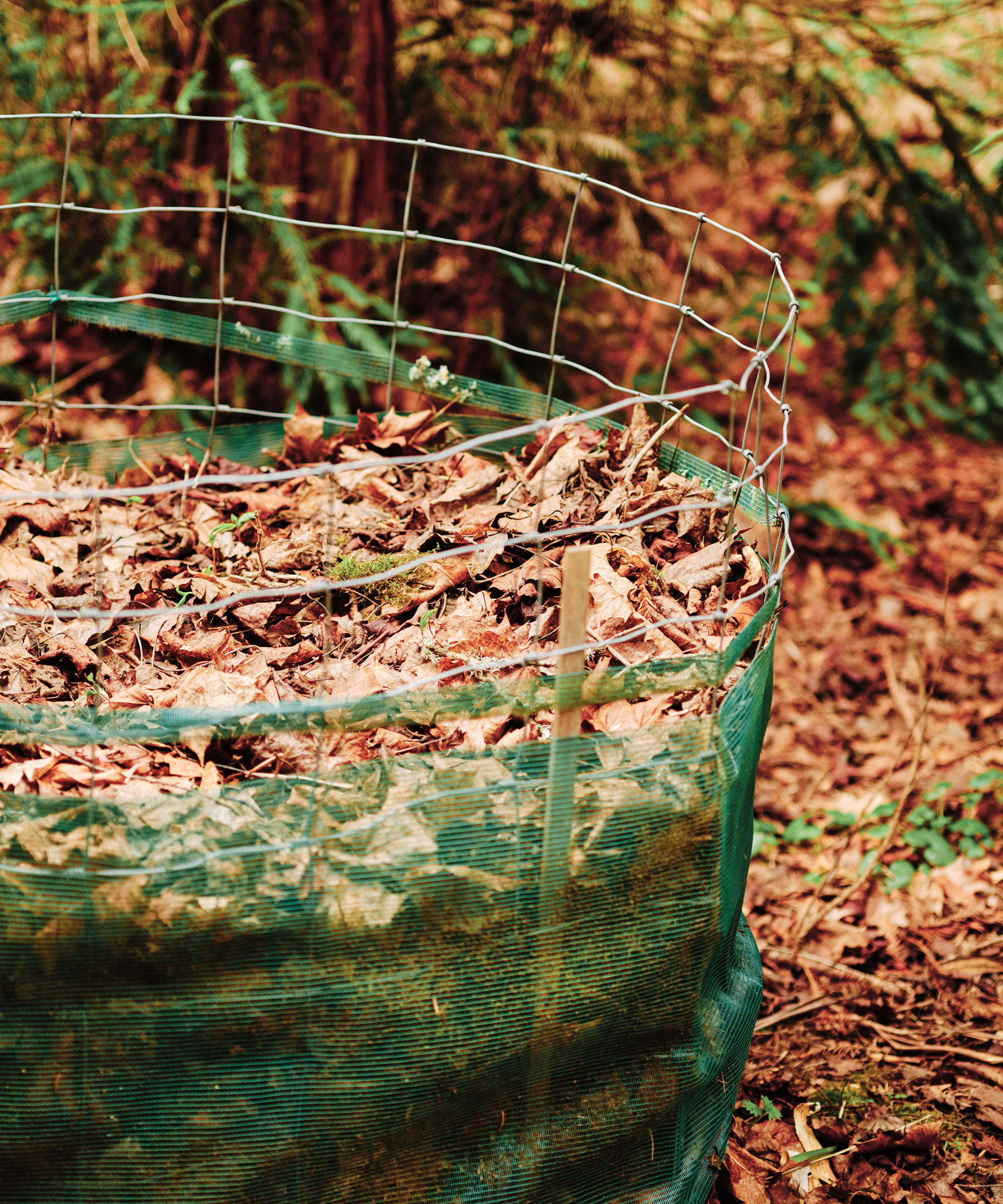
Method 2: Make a Leaf-Filled Protective Cage
For one big pot, or a few crowded close together, try a wire cage. Bend chicken wire or flexible garden fencing into a loose ring around them, with several inches of space between the wire and the pot. The Otryad 36-inch galvanized chicken wire roll from Home Depot will do the job, and it snips to fit.
Pour the leaves loosely into the gap, up to about the rim, keeping them off green foliage. A light cage can tip in wind. Pin its bottom edge down with 12-inch steel landscape staples.
After heavy rain or snowmelt, check the leaves in the middle. Wet, flattened leaves don't trap much air anymore, and they hold moisture against the pot, so swap them for dry ones. Take the cage down in spring, after the last hard freeze.
(Image credit: Getty Images)
Which Potted Plants Benefit Most?
This trick works best for plants that are hardy where you live but have their roots stuck above ground.
- Hostas need a cold, dormant winter, so bringing them indoors isn't the answer. Leaves around the pot shield dormant crowns and roots from repeated freezing and thawing.
- Heucheras (Coral Bells) are a good place to start. Their shallow crowns are prone to heaving when the mix freezes and thaws, so press any lifted crowns back down in late winter.
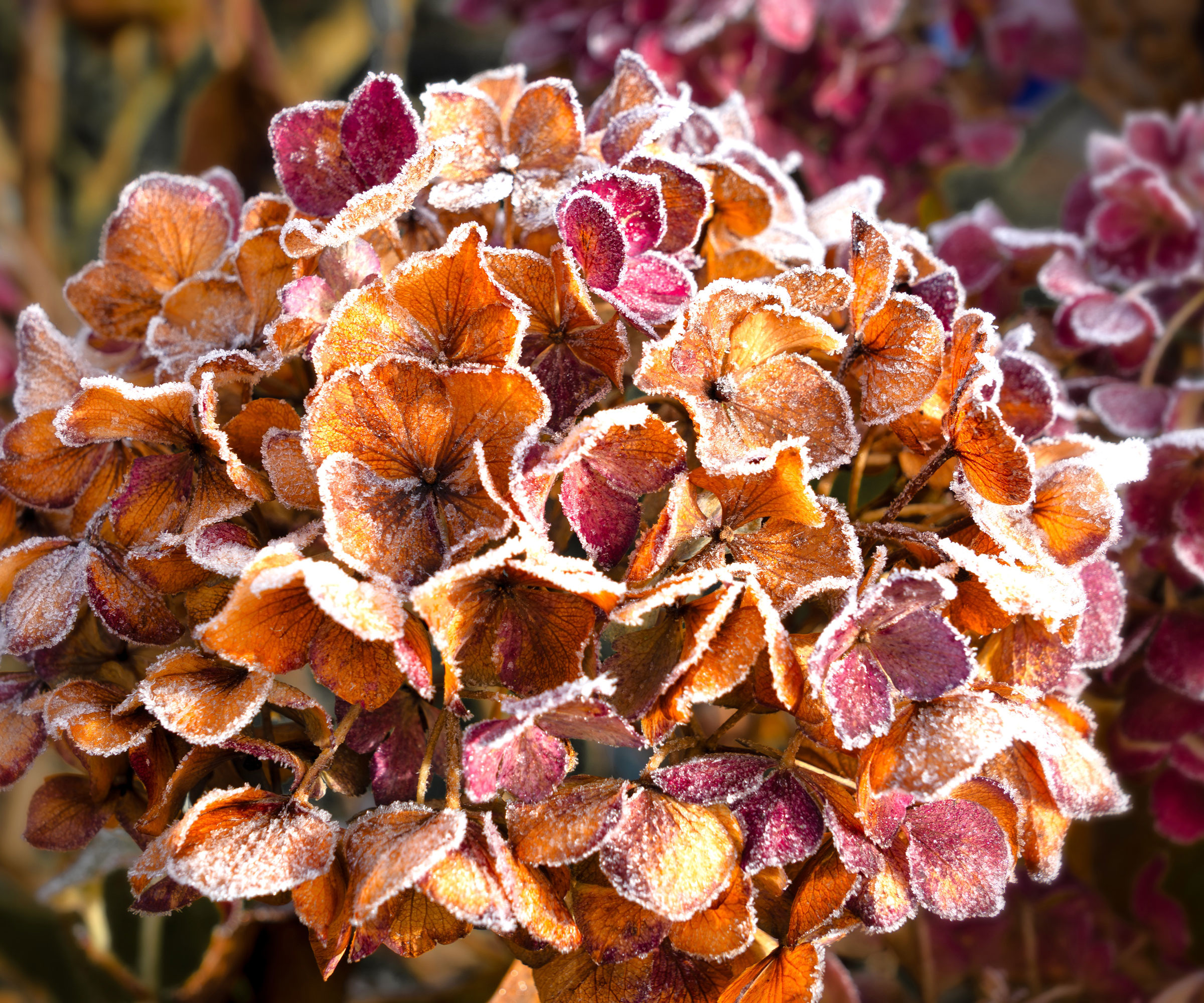
- Hydrangea roots stay protected inside the leaves, but bigleaf types carry next summer's flower buds on last year's stems, well above the bags. Those stems may need their own cover – Agfabric's 10-by-50-foot frost cloth can wrap them loosely when hard cold moves in.
- Roses, even those rated for your zone, can lose roots in a pot through a hard winter, especially in colder climates. Leaves cover the root zone while the canes stay in the open.
- Young Evergreen Shrubs like potted dwarf spruces and junipers keep losing water through their needles all winter. Don't bury the branches. Water once the mix thaws on a mild day.
(Image credit: Volker Luebke / 500px / Getty Images)
When Fallen Leaves Won't Be Enough
Leaves don't generate heat; they simply slow the rate at which a pot loses its warmth. Citrus or a tender salvia ringed with leaf bags still gets hurt in a hard freeze. Those, along with tropicals and anything else outside its hardiness range, need a bright, frost-free spot indoors before the first frost.
Where winters get brutal, deep cold can outlast the leaves. Sink the pot to its rim in a garden bed instead, or move it into an unheated garage or shed that stays roughly 35–45°F (2–7°C). Bamford Plant Caddies from Amazon will let you roll plants where you want them.
Those leaves were going to the curb anyway. Stacked in bags around the patio pots, they won't look like much, honestly. Any hydrangea that comes through winter with healthy roots won't need replacing, though, and nobody paid for the leaves.
When spring settles in, dump the bags over a garden bed or into the compost bin, and let the leaves break down there. Next fall, you'll have a new pile along the fence to start over with anyway.













 English (US) ·
 French (CA) ·