

It happens every December. You bring home a full, bright red poinsettia, set it on the table, and a week or two later the colorful bracts start to curl and fall. By Christmas morning, the plant looks tired and half bare.
Some of that can be blamed on poinsettia care after you get home, like a cold windowsill or a pot left sitting in water. Much of it starts at the store, though. The plant was already on its way out before it ever went in the cart.
There's an easy way to tell a fresh one from a tired one, and hardly anybody looks. Forget the red for a second. Down in the center of each cluster of colored leaves are some tiny yellow-green buds, and those say a lot more about how long the color will hold up. It's kind of a strange thing to judge a plant by, but trust the process.
The Tiny Detail That Reveals a Poinsettia's Freshness
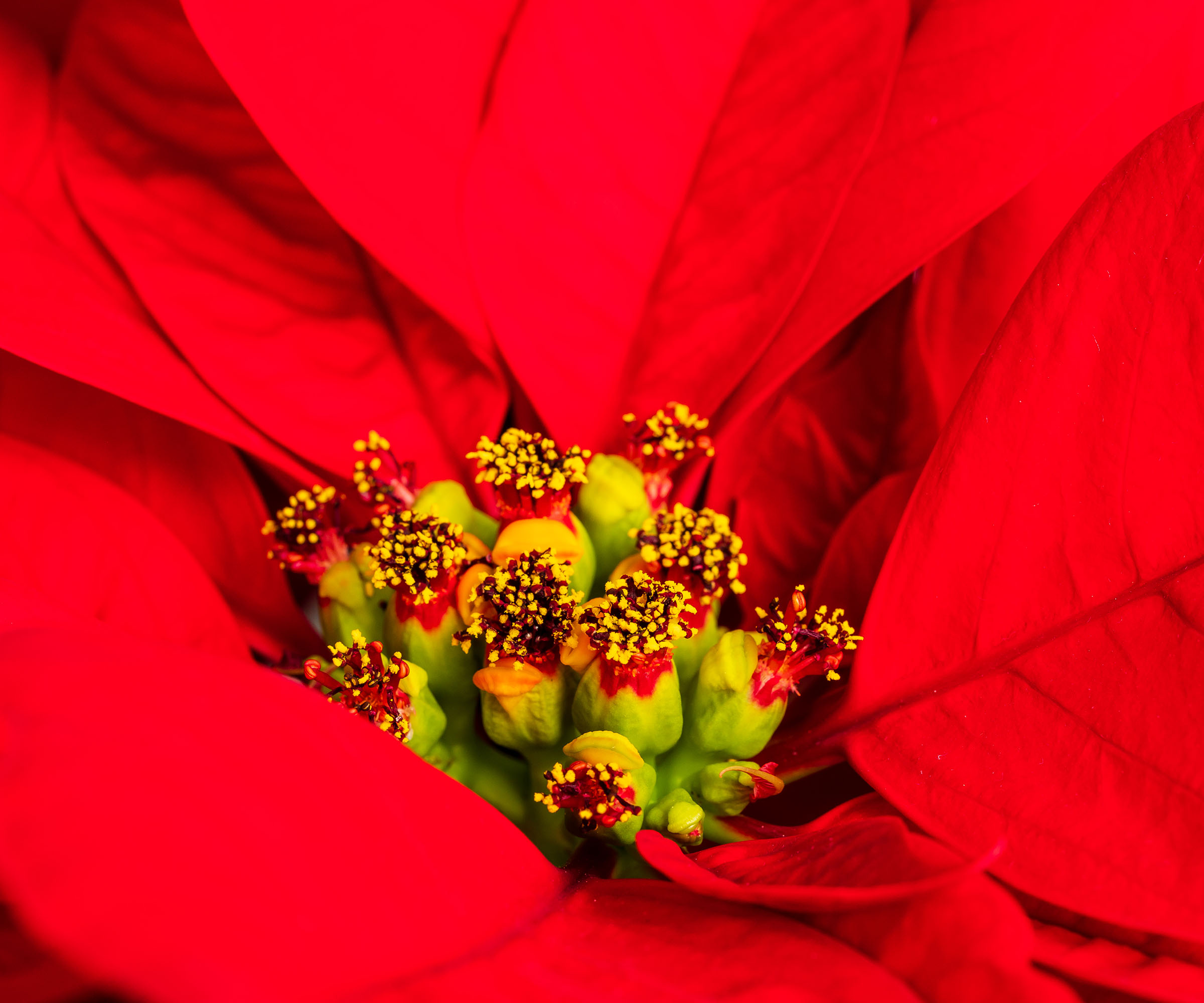
Those colorful "petals" on a poinsettia aren't petals at all. They're bracts, and they color up in fall as the nights get longer. Right in the middle sit the real flowers, small knobby clusters called cyathia. Each one is a little cup holding a single female flower and several male flowers, often with a yellow gland on its rim.
Cyathia go through the same cycle on every plant. They start out tight and green or red-tipped, open to shed yellow pollen, and then drop off. After the cyathia fall, the colored bracts usually follow before long.
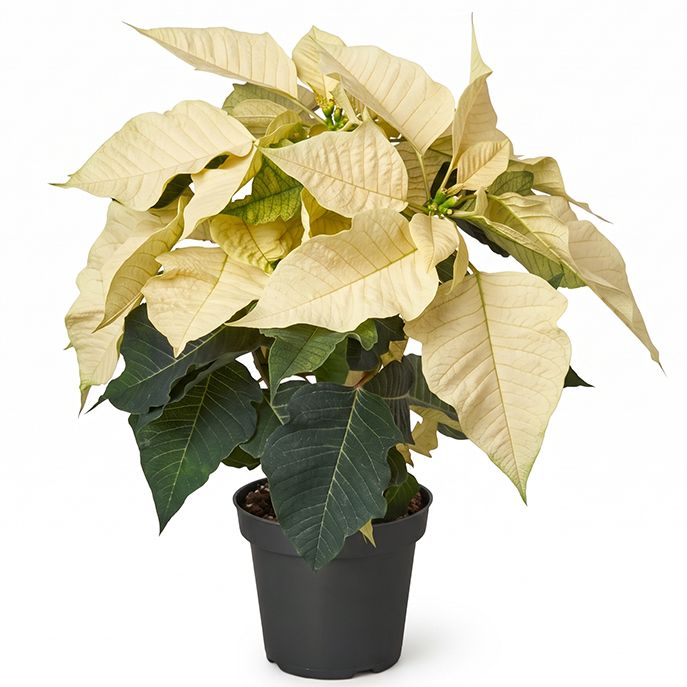
Some of the newer poinsettia varieties hang on to their cyathia longer. So it isn't a sure thing, but it's still one of the better clues you get in the store. Any color works for this check, whether you're eyeing red or the pink poinsettias at Walmart (which come in a four-pack for maximum festive joy).

(Image credit: Vermontalm / Shutterstock)
What to Look for When Buying a Poinsettia
Bend down and look closely at the center of a few bracts. Plants on the same table can be at different stages, so check more than one. Ideally, the cyathia are mostly closed, green or tipped with red, and fresh-looking. Some yellow showing is fine on its own. That's often just the gland on the side of the cup – it doesn't mean the flower has opened.
Now compare that to a plant where the buds have split open and yellow pollen is dusting the bracts below them. If you see that, or you find bare stubs where cyathia used to be, that poinsettia has been blooming a while already. It may look fine today, but it has less time left than the one beside it with tight buds.
Classic red poinsettias come in a four-pack from Costa Farms, and you can order them on Amazon – and the same quick look at the center works on a plant that shows up at the door.
(Image credit: Getty Images)
Other Warning Signs to Check Before You Buy
The green leaves under the bracts deserve a look too. Check for yellow leaves low on the stems, or bare spots where leaves have already dropped. Cold, poor light, and watering trouble can all cause that. Pass on a plant that droops or looks wilted, along with any that have torn, bruised, or creased bracts. Bluish or whitish edges on the bracts can be a sign of cold injury.
Flip a few leaves over as well. Whiteflies, such as the silverleaf whitefly (Bemisia tabaci), are common on poinsettias, and a puff of tiny white insects lifting off when you brush the plant is a bad sign.
Lift the pot if you can. Soggy soil in a heavy pot may mean it's been sitting in water inside its foil, and roots kept that wet can rot. Pay attention to where the plants are displayed, too. Poinsettias crowded by the automatic doors can catch a blast of cold air every time the doors open, and plants left packed in plastic sleeves for days can droop and drop their flowers early – ethylene gas builds up inside the sleeve.
When you get home, use a soil moisture meter, like the Xlux moisture meter available on Amazon, to take the guesswork out of watering.
(Image credit: Westend61 / Getty Images)
How to Keep Your Poinsettia Beautiful After Bringing It Home
The journey home is where poinsettias tend to get hurt. When it's below 50°F (10°C) outside, sleeve or wrap the plant before it leaves the store, even for the short walk to the car. Just a few minutes of cold air can damage the bracts and leaves, and the damage may not show right away. Save the garden center for your last stop so the plant isn't stuck in a cold car while you're in other stores, and warm the car up first. Once you're inside, get the sleeve off pretty quickly.
Pick a bright room for your poinsettia. Keep the plant near a window but out of hard, direct sun, and well clear of heat vents, the fireplace, and any door that lets in a draft.
Normal house temperatures work fine, roughly 65 to 70°F (18 to 21°C) during the day, with nights around 60°F (16°C) or a little warmer. Window glass gets cold at night, though, and so can the air right beside it. Set a digital indoor thermometer, like the TempPro TP50, for a night or two, and you'll know for sure.
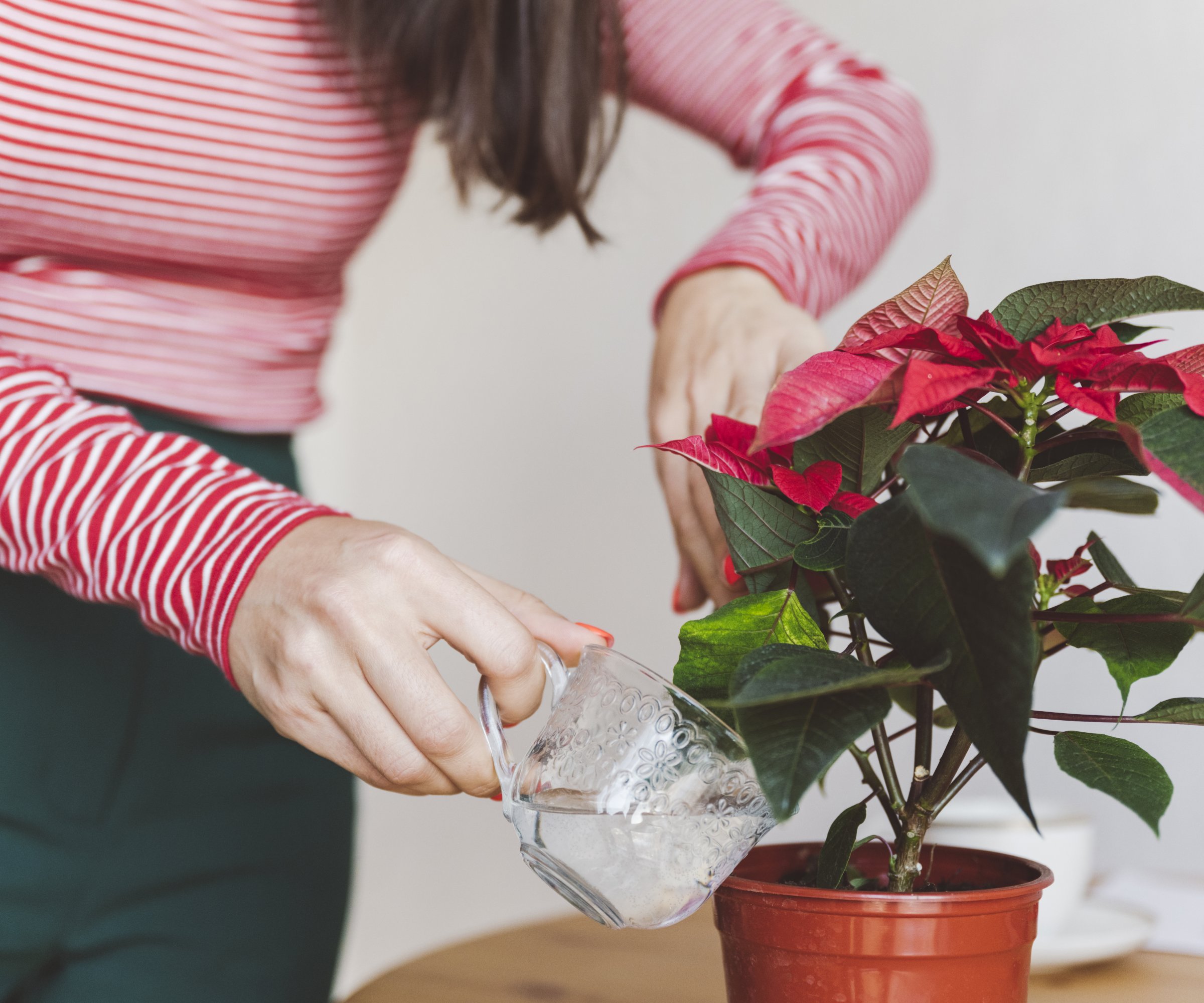
Stick a finger in the pot before you water. If the top of the soil is dry, go ahead, and if it's still damp, wait a day or so. That shiny foil holds water like a bowl, so poke a few holes in the bottom, or take the pot out and water it over the sink until it drains. A ceramic planter, like this Garden & Home Red 8 Inch Indoor Ceramic Plant Pot, with drainage holes and saucer, is a much nicer option than foil anyway. You don't need fertilizer while a poinsettia is in bloom.
Pick a plant with tight little buds in the center, keep it somewhere warm and bright, and the color can hold for weeks after the holidays. So the next time you're standing in front of a whole table of red, skip past the brightest one for a second and look at the center first.
Shop Poinsettias
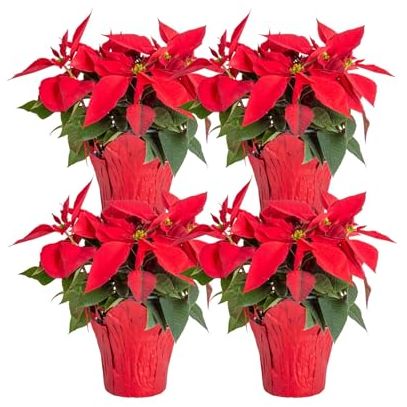
Costa Farms Poinsettias (Pack of 4)
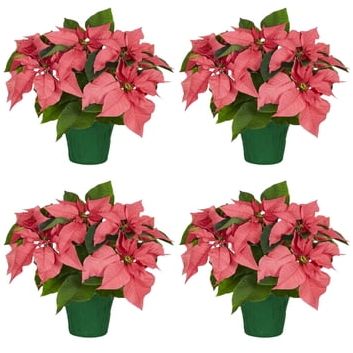
Expert Gardener Pink Poinsettias (Pack of 4)















 English (US) ·
 French (CA) ·