

PROTECT YOUR DNA WITH QUANTUM TECHNOLOGY
Orgo-Life the new way to the future Advertising by AdpathwayArticle navigation

SHORT COMMUNICATION| 12 November 2025
Wolfram Schulze
,
Wolfram Schulze
Conceptualization, Data curation, Formal analysis, Investigation, Methodology, Software, Validation, Visualization, Writing – review & editing
Department of Animal Physiology
,
University of Bayreuth
,
Universitätsstrasse 30, 95447 Bayreuth
,
Germany
Search for other works by this author on:
Peter Machnik
,
Peter Machnik
Conceptualization, Data curation, Formal analysis, Investigation, Methodology, Validation, Visualization, Writing – review & editing
Department of Animal Physiology
,
University of Bayreuth
,
Universitätsstrasse 30, 95447 Bayreuth
,
Germany
Search for other works by this author on:
Stefan Schuster
Stefan Schuster
Conceptualization, Formal analysis, Funding acquisition, Methodology, Project administration, Resources, Supervision, Validation, Visualization, Writing – original draft, Writing – review & editing
Department of Animal Physiology
,
University of Bayreuth
,
Universitätsstrasse 30, 95447 Bayreuth
,
Germany
Search for other works by this author on:
Competing interests
The authors declare no competing or financial interests.
Received: 29 Oct 2024
Accepted: 25 Sep 2025
Online ISSN: 1477-9145
Print ISSN: 0022-0949
Funding
Funding Group:
Award Group:
- Funder(s):
Deutsche Forschungsgemeinschaft
- Award Id(s):
Schu1470/8-1
- Funder(s):
© 2025. Published by The Company of Biologists
2025
J Exp Biol (2025) 228 (22): jeb249772.
ABSTRACT
Escape responses are an essential part of the behavioural repertoires of almost all animals. In fish, it is thought that conserved circuits map retinal position to motor activity so that escapes are typically away from visual looming-disk stimuli. In support of this view, it has recently been demonstrated that this even causes reef fish to initially flee away from a secure shelter. Here, we provide a clear counterexample to the view that fish are generally bound to use similar and conserved circuitry. In shell-dwelling cichlids, visual looming-disk stimuli elicited but did not direct rapid escape C-starts. Rather, the initial direction of their C-starts was in the direction of their shell, even if this required the fish to start right towards the looming disk.
Footnotes
Author contributions
Conceptualization: W.S., P.M., S.S.; Data curation: W.S., P.M.; Formal analysis: W.S., P.M., S.S.; Funding acquisition: S.S.; Investigation: W.S., P.M.; Methodology: W.S., P.M., S.S.; Project administration: S.S.; Resources: S.S.; Software: W.S.; Supervision: S.S.; Validation: W.S., P.M., S.S.; Visualization: W.S., P.M., S.S.; Writing – original draft: S.S.; Writing – review & editing: W.S., P.M., S.S.
Funding
This study was funded by the Deutsche Forschungsgemeinschaft (Schu1470/8-1).
Data and resource availability
Data are available from the authors upon reasonable request. All relevant data and details of resources can be found within the article and its supplementary information.
© 2025. Published by The Company of Biologists
2025
You do not currently have access to this content.
Sign in
Client Account
You could not be signed in. Please check your email address / username and password and try again.
Email address / Username ?
Password
Pay-Per-View Access
$30.00
Welcoming Emily Baird and Philipp Lehmann to the JEB editorial team

We welcome two new Monitoring Editors: neuroethologist Emily Baird, from Stockholm University, Sweden; and insect physiologist Philipp Lehmann from University of Greifswald, Germany, to strengthen and enhance the expertise that is central to JEB’s success.
A mechanical perspective on suction feeding in fishes
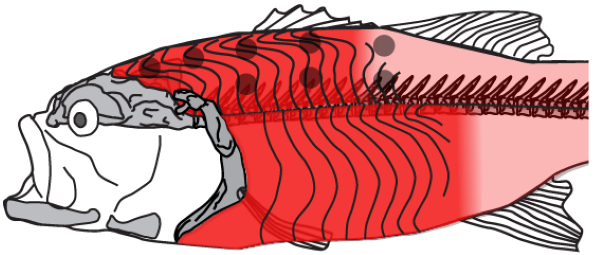
Ariel Camp and Sam Van Wassenbergh review the mechanics of fish suction feeding, a process that involves the creation of powerful suction through the interplay between muscle function, skeletal force transmissions and fluid flow patterns.
Warmer waters may pose problems for bigger trout
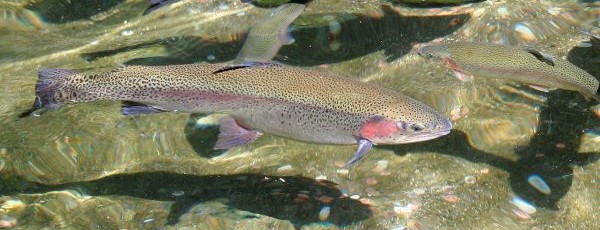
Being bigger isn't always better. Luis Kuchenmüller and colleagues show that rainbow trout deliver less oxygen to the heart to power it as the temperature rises and it gets worse the bigger they get.
Extraordinary creatures: poison frogs
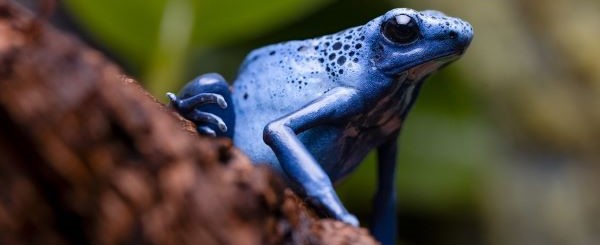
Lauren O'Connell discusses the biology of poison frogs, including how they get their incredible toxicity and the amazing way these frogs take care of their tadpoles.
JEB grants to support junior faculty

Learn about the grants that we launched in 2023 to support junior faculty from two of our awardees: Erin Leonard, Early-Career Researcher (ECR) Visiting Fellowship recipient, and Pauline Fleischmann, Research Partnership Kickstart Travel Grant recipient. The next deadline to apply is 28 November 2025.
















 English (US) ·
  French (CA) ·