

PROTECT YOUR DNA WITH QUANTUM TECHNOLOGY
Orgo-Life the new way to the future Advertising by AdpathwayOne of the most surprising things new birdwatchers discover is how often common birds are misnamed.
Even people who have watched birds casually for years often use the wrong name for familiar species. This usually isn’t because they aren’t paying attention, but because many birds look similar at a glance, especially when seen briefly, at a distance, or in poor light.
Most bird confusion comes from birds that share similar size, color, or behavior. Once you know what usually causes the mix-ups, identification becomes much easier.
Here are some of the birds people in the United States most commonly confuse, and why it happens.
The “Blackbird” That Isn’t a Blackbird
 American Crow
Many people use the word “blackbird” to describe any medium-sized dark bird they see.
In reality, several different species are often grouped under this name, especially European Starlings, Common Grackles, and American Crows. Starlings are one of the most common sources of confusion because they appear dark from a distance and are found almost everywhere people live.
Once you start noticing size and behavior, the differences become clearer. Starlings are smaller and move quickly in groups, while grackles are larger and more confident, and crows are much bigger and usually seen flying overhead or calling loudly.
Downy Woodpecker vs Hairy Woodpecker
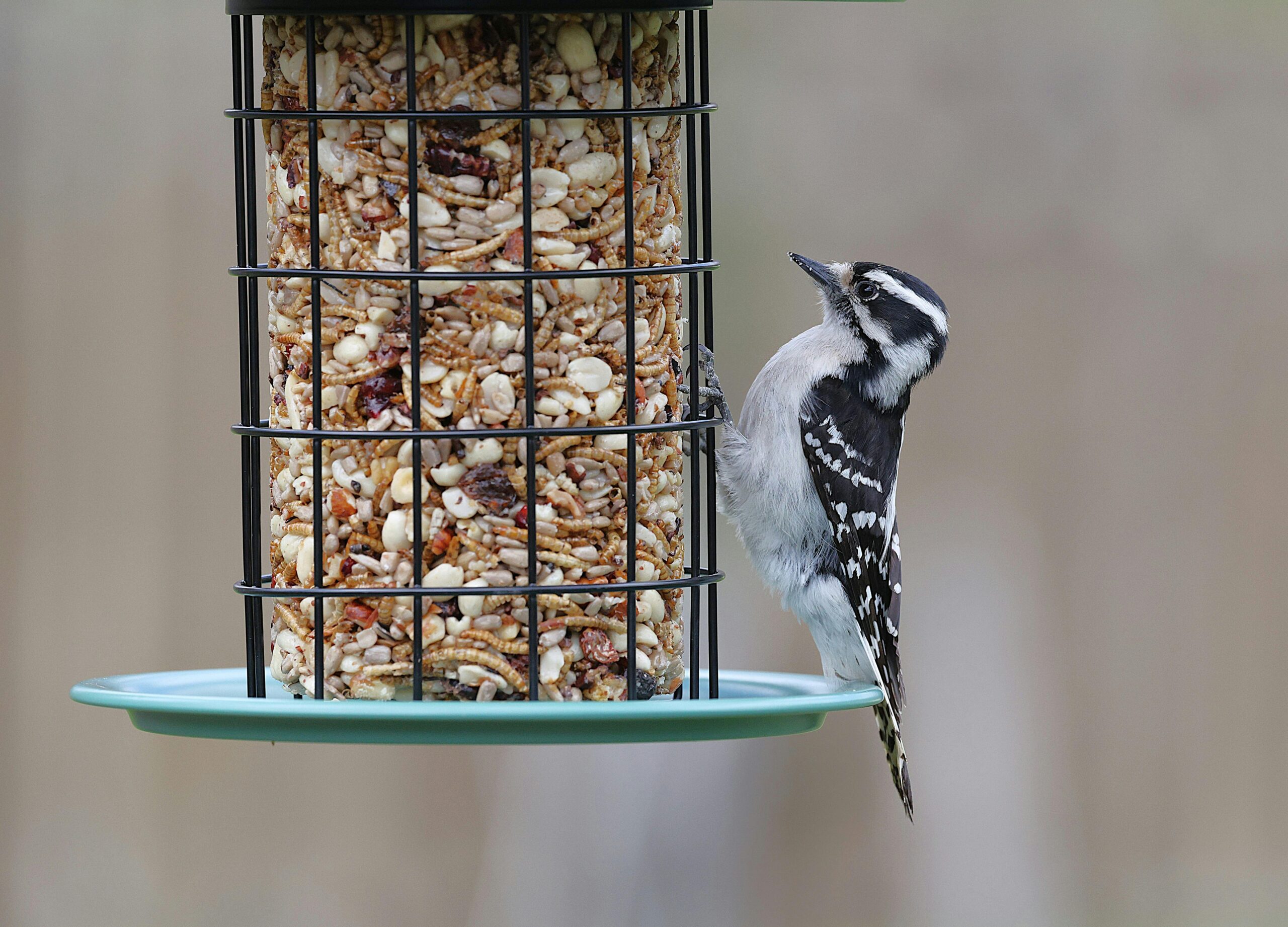 Downy Woodpecker
These two woodpeckers look almost identical at first glance.
The Downy Woodpecker is smaller and far more common in backyards, while the Hairy Woodpecker is noticeably larger. Because people rarely see them side by side, size differences are easy to miss.
 Hairy Woodpecker
Many beginners assume they are seeing the same bird in different places. Once you realize that the Downy Woodpecker is the one most likely to visit feeders and small trees, the confusion usually fades.
American Crow vs Common Raven
 American Crow
Large black birds flying overhead are often called crows, but ravens are also common in many parts of the country.
 Common Raven
Ravens are larger, have heavier bills, and often soar or glide rather than flap steadily. Their calls are deeper and more resonant, though this can be hard to notice at first.
Because both species are black and highly visible, it is normal to confuse them until you become familiar with their behavior.
American Robin vs Northern Mockingbird
 American Robin
At a quick glance, American Robins and Northern Mockingbirds can look surprisingly similar.
Both are medium-sized birds with upright posture that spend time on lawns, fences, and open perches. From a distance, their general shape and movement can appear almost identical.
 Northern Mockingbird
The difference most people eventually notice is behavior. Robins spend much of their time hopping across lawns searching for food, while mockingbirds are more likely to perch visibly and sing loudly from rooftops, trees, or fences.
Once you associate mockingbirds with constant singing, the confusion usually disappears.
House Sparrow vs House Finch
 house finch vs house sparrow
These two birds frequently visit feeders and yards, leading to constant confusion.
House Sparrows tend to be chunkier with plainer coloring, while House Finches are slimmer and males show red coloring on the head and chest. Because they often appear in the same places, many people assume they are the same species.
Once you learn the difference, you start noticing how often both appear together rather than mistaking one for the other.
You can read our fantastic guide by David Sibley on House Sparrows vs House Finches here.
Mourning Dove vs Rock Pigeon
 Mourning Dove
Many people assume Mourning Doves are simply a type of pigeon.
Both birds are common around people and often seen on rooftops, fences, and open ground. However, Mourning Doves are slimmer with longer, pointed tails and tend to move quietly and gently.
 Rock Pigeon
Rock Pigeons are bulkier, more social, and often gather in groups around buildings and sidewalks. Once you notice the dove’s long tail and softer behavior, the difference becomes much clearer.
Chickadee vs Titmouse
 Tufted Titmouse
Small gray birds with quick movements are often grouped together mentally.
 Chickadee
Chickadees are smaller and have bold black and white facial markings, while Tufted Titmice are larger with a noticeable crest. Because both species are active and often travel together, they are easy to confuse.
Paying attention to head shape and size quickly helps separate the two.
Blue Jay vs “Other Blue Jays”
 Blue Jay
Some people worry they are misidentifying Blue Jays when they see different looking blue birds.
 Stellers Jay
In most of the eastern and central United States, the bold blue bird in your yard is almost certainly a Blue Jay. In western regions, similar birds like Steller’s Jays appear darker and have different markings.
 california scrub jay
If you are seeing a bright blue bird with strong black and white patterns and loud calls, you are almost always looking at a Blue Jay.
Why Misidentification Is Normal
Misidentifying birds is not a failure. It is part of learning how to notice differences.
Birdwatching is built on repeated observation. The more often you see a bird, the easier it becomes to recognize subtle differences in shape, movement, and behavior.
Even experienced birders misidentify birds occasionally, especially in poor light or at long distances.
A Reassuring Thought
If you have ever looked up a bird and realized you were calling it the wrong name, you are doing exactly what birdwatchers do.
Learning bird identification is not about getting everything right immediately. It is about paying attention, noticing patterns, and gradually becoming familiar with the birds that share your everyday spaces.
The fact that you are questioning what you see means you are already becoming a better observer.
Commonly Confused Backyard Birds in the US
-
Dark birds: Starling, Grackle, Crow
-
Small feeder birds: House Sparrow, House Finch
-
Woodpeckers: Downy vs Hairy
-
Lawn birds: Robin vs Mockingbird
-
Urban birds: Mourning Dove vs Pigeon














 English (US) ·
  French (CA) ·