

 4 hours ago
2
PROTECT YOUR DNA WITH QUANTUM TECHNOLOGY
Orgo-Life the new way to the future Advertising by AdpathwayThousands of one of Britain’s rarest wildflowers have been moved to safety from an eroding Scottish shoreline where they were at risk of falling into the sea.
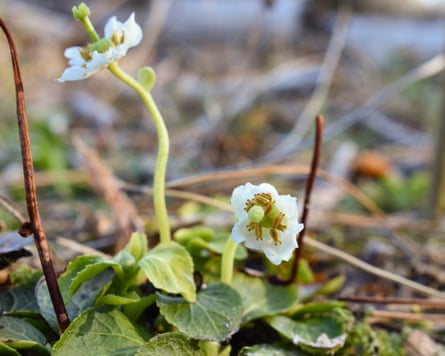
Conservationists rescued 3,400 one-flowered wintergreen plants at Culbin Forest in Moray, in an effort to protect a species estimated to have lost more than half its UK population in the past 50 years.
“We don’t yet know how many plants will survive at their new home in Culbin Forest, but we do know that it was only a matter of time before they would have all been lost to the sea if we’d left them where they were,” said Iain Macdonald, a biodiversity adviser at NatureScot.
In the UK, the tiny, star-shaped wildflower is found only in pine woods in north-east Scotland. It survives at just seven sites, only three of which support healthy populations, according to Plantlife Scotland.
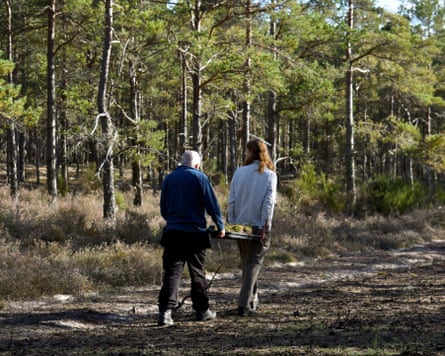
The charity worked with Forestry and Land Scotland, NatureScot and volunteers to relocate the plants after 2-3 metres of land collapsed into the sea over recent years.
Sam Jones, senior ecological adviser at Plantlife Scotland, said: “This type of groundbreaking conservation work will help ensure endangered species like the one-flowered wintergreen are not lost.”
Translocating the flowers meant uprooting their underground support systems. Volunteers cut out sections of soil around the plants to preserve the networks of fungi on which they depend for germination and survival.
Alongside obtaining energy through photosynthesis, one-flowered wintergreen can draw energy from fungi in woodland soils, a relationship that has complicated efforts to understand and reverse its decline.
Changes in forest management have affected the conditions those fungi need, while hotter, drier conditions caused by the climate crisis have reduced the soil moisture on which the plant relies, Plantlife said.
Although an estimated 50,000 plants remain in Scotland, they spread by producing genetically identical growth through their roots. The number of genetically distinct individuals could be fewer than 500. At one site, about 100 plants represented just two distinct individuals.
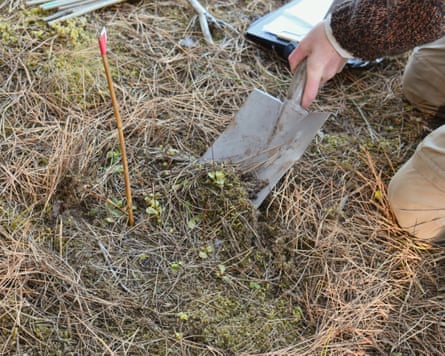
Eighteen volunteers conducted the rescue, which followed a smaller trial. The project received support from the Scottish government’s nature restoration fund.
Conservationists have also moved a small number of plants and seeds to another wood, where the species has not previously been recorded, hoping to establish a new population.
Macdonald said: “Any survival will be a success, and if we can continue to introduce more plants to some of the small, existing populations then we’ll strengthen their ability to cope with our changing environment.”















 English (US) ·
 French (CA) ·