

PROTECT YOUR DNA WITH QUANTUM TECHNOLOGY
Orgo-Life the new way to the future Advertising by AdpathwayBirds are one of the few wild animals most people encounter daily.
They hop across lawns, perch on fences, gather in parking lots, and call from nearby trees. Many people notice them constantly without ever learning what they are called or how common they really are.
If you have ever wondered about the birds you see around your home, you are not alone. In fact, most people across the United States are seeing the same group of birds, whether they live in cities, suburbs, or small towns.
These are the 20 birds you are most likely to see every day in the US and how to recognize them.
1. American Robin

For many people, the American Robin is the first bird that truly stands out once they begin paying attention.
Robins are often noticed hopping across lawns, stopping suddenly to tilt their heads as they search for food. This behavior makes them easy to follow with your eyes, even if you have never tried to identify birds before. Their orange breast and upright posture help them stand out against grass and pavement.
You are most likely to see robins in yards, parks, and along sidewalks where there is open ground. They are comfortable around people and often continue feeding even when someone is nearby.
For beginners, robins are memorable because they are active, visible, and predictable. Once you recognize a robin, you start noticing how frequently they appear and how much time they spend on the ground compared to other birds.
2. Northern Cardinal

The Northern Cardinal is one of the most striking birds people encounter around their homes.
The bright red male immediately draws attention, whether perched in a shrub, sitting at a feeder, or moving through low branches. Even people who have no interest in birds tend to notice cardinals because their color is so vivid and unmistakable.
Cardinals are commonly seen in yards with bushes, hedges, or feeders. They often stay in view longer than many small birds, moving deliberately rather than darting quickly out of sight.
For beginners, cardinals are easy to recognize and remember. Once you spot one, you begin to notice pairs, hear their sharp calls, and recognize them as regular visitors rather than rare sightings.
3. Mourning Dove

Mourning Doves are often noticed for their calm and gentle presence.
They are larger than many backyard birds and tend to walk slowly across the ground rather than hopping. Their soft, mournful call is familiar to many people, even if they do not immediately connect the sound to the bird.
You will often see Mourning Doves on lawns, driveways, fences, and power lines. They are comfortable in open spaces and frequently appear in pairs or small groups.
Beginners tend to remember Mourning Doves because of their size and relaxed behavior. Once you recognize one, you begin to notice how quietly they move through everyday spaces.
4. Blue Jay
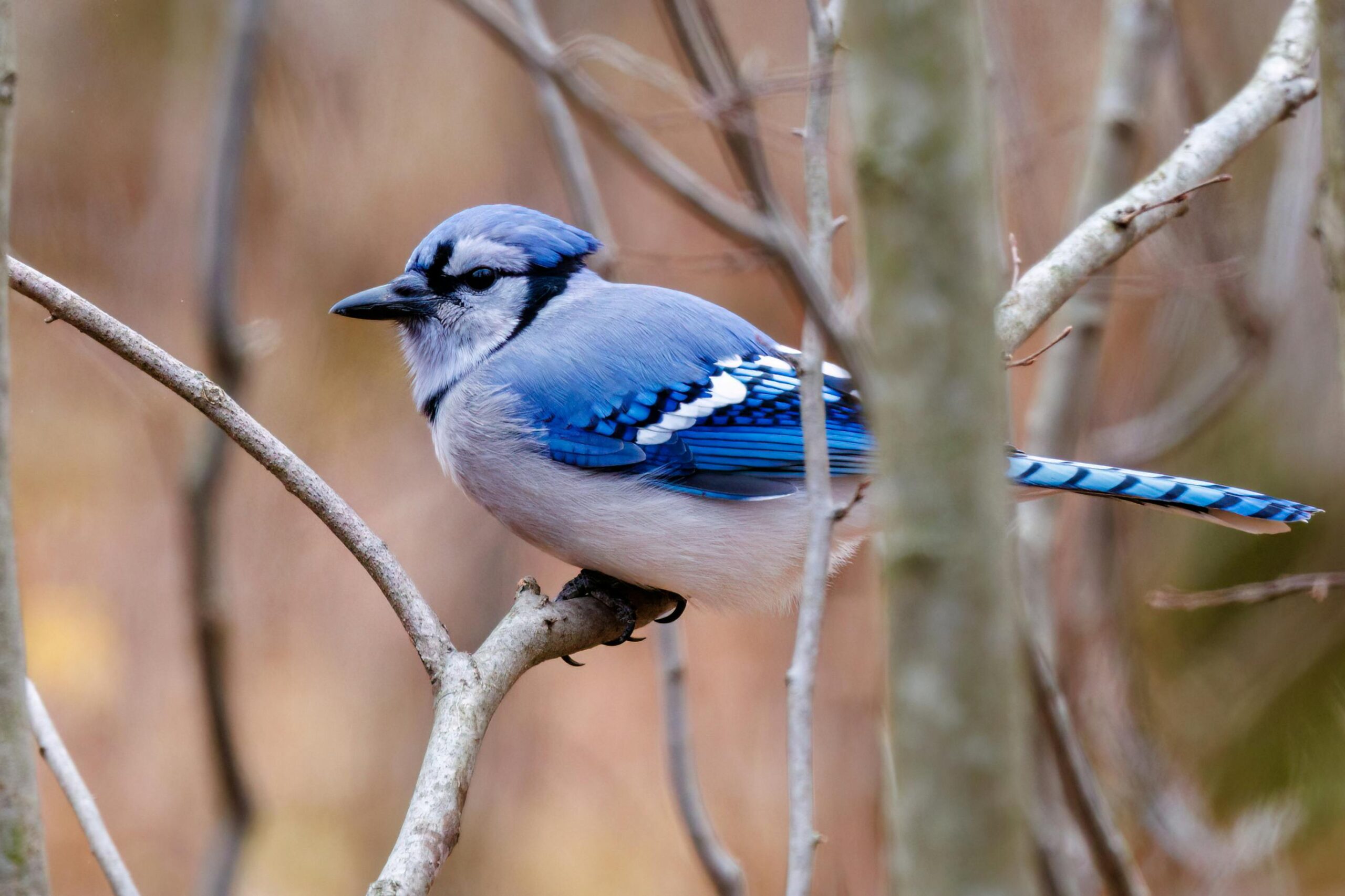
Blue Jays are difficult to ignore.
Their bright blue coloring, bold patterns, and loud calls draw attention immediately. Many people notice Blue Jays before they see them, hearing their calls echo through yards and neighborhoods.
Blue Jays are commonly seen flying between trees, visiting feeders, or perching high above open areas. They move confidently and are often among the most vocal birds in a neighborhood.
For beginners, Blue Jays stand out because they behave differently from smaller birds. Their assertive nature and strong presence make them easy to recognize once you start paying attention.
5. American Crow

American Crows are among the most recognizable birds in the country.
They are large, solid black, and often seen flying overhead or gathering in open areas. Their loud calls and social behavior make them noticeable even to people who are not looking for birds.
Crows can be found almost anywhere, from city streets to suburban yards and open fields. They often travel in groups and are frequently seen perched on rooftops, trees, or utility poles.
Beginners remember crows because they are intelligent and expressive. Once you recognize one, you start noticing their interactions and how often they appear throughout the day.
6. House Sparrow

House Sparrows are so common that many people overlook them entirely.
They are often seen hopping along sidewalks, gathering near buildings, or feeding on the ground in small groups. Because they blend into everyday surroundings, they are easy to notice without realizing you are seeing a specific species.
House Sparrows thrive around people and are most commonly found in yards, parking lots, and outdoor seating areas.
Learning to recognize House Sparrows helps beginners separate background movement from intentional observation. Once you know what they are, you begin to see how frequently they appear.
7. European Starling

European Starlings are often noticed because of their movement and group behavior.
They frequently appear in flocks, moving quickly across lawns, rooftops, and open spaces. Their dark feathers can look glossy or speckled depending on the light, which often leads to confusion.
Starlings are common in urban and suburban areas and are frequently seen near buildings, fields, and parking lots.
Beginners remember starlings because they are everywhere once noticed. Their constant movement and social behavior make them hard to miss.
8. Black Capped Chickadee

Chickadees are small birds with big personalities.
They are active, curious, and often visit feeders repeatedly, flying in to grab food before retreating to nearby branches. Their black and white markings make them easier to recognize than many other small birds.
Chickadees are most often seen in yards with trees or feeders and are comfortable staying relatively close to people.
For beginners, chickadees are memorable because of their boldness. Once you recognize one, you begin to notice how active and vocal they are throughout the day.
9. Downy Woodpecker

The Downy Woodpecker is the woodpecker most people notice first.
It is small and patterned in black and white and is often seen climbing tree trunks or visiting feeders. Many beginners hear tapping sounds before spotting the bird itself.
Downy Woodpeckers are common in yards with trees and are frequently seen moving vertically along branches and trunks.
Once beginners recognize a Downy Woodpecker, they often start noticing other woodpecker species more easily.
10. House Finch

House Finches are common visitors to feeders and open yards.
They are often seen in small groups, perching nearby or feeding together. Males show red coloring on the head and chest, which helps them stand out once noticed.
House Finches are comfortable around people and are frequently seen near homes, gardens, and sidewalks.
Beginners remember House Finches because they appear regularly and stay visible long enough to observe.
11. Dark Eyed Junco

Dark Eyed Juncos are often noticed during cooler months.
They are small gray birds that spend much of their time hopping along the ground, often in groups. Their white outer tail feathers flash when they fly.
Juncos are commonly seen in yards, parks, and near shrubs where they forage on the ground.
For beginners, juncos stand out because they move differently from birds that stay in trees or at feeders.
12. White Breasted Nuthatch

White Breasted Nuthatches are memorable for how they move.
They often climb headfirst down tree trunks, a behavior that surprises many beginners. Their sharp calls also help draw attention.
Nuthatches are commonly seen on trees in yards and parks and frequently visit feeders.
Once noticed, their unusual movement makes them easy to recognize again.
13. American Goldfinch

American Goldfinches are known for their bright color.
During warmer months, males appear vivid yellow, making them easy to spot. In winter, their color becomes more muted, which can surprise beginners.
Goldfinches are often seen flying in small groups between plants and feeders, especially in open yards.
Beginners remember goldfinches because their appearance changes with the seasons.
14. Tufted Titmouse

Tufted Titmice are small gray birds with a noticeable crest.
They are frequent feeder visitors and often travel with chickadees, moving quickly between trees and feeding stations.
Titmice are most commonly seen in wooded yards and suburban neighborhoods.
Once beginners recognize the crest and behavior, titmice become easy to identify.
15. Song Sparrow

Song Sparrows are small brown birds often seen near shrubs and low vegetation.
They spend much of their time on the ground or in dense cover, hopping in and out of view.
Song Sparrows are common in yards, gardens, and parks but are easy to overlook at first.
Beginners begin to notice them once they start paying attention to movement near bushes.
16. Northern Mockingbird

Northern Mockingbirds are often noticed because of their voice.
They sing loudly and frequently, often from rooftops, fences, or open perches. Their songs can be heard day and night.
Mockingbirds are common in open yards and urban areas.
Beginners remember them because of how bold and vocal they are.
17. Red Winged Blackbird

Red Winged Blackbirds are often seen near open areas and wetlands.
Males are especially noticeable because of their red and yellow shoulder patches, which flash when they move or call.
They are commonly seen perched on fences or flying low over fields.
Beginners remember them because of their striking markings and loud calls.
18. Common Grackle

Common Grackles are larger than many people expect.
They often gather in noisy groups and are frequently seen in parking lots, lawns, and open spaces.
Grackles have glossy feathers that shine in the light, making them stand out once noticed.
Beginners often confuse them with starlings until they begin noticing size and behavior differences.
19. Northern House Wren

House Wrens are small birds with powerful voices.
They are often heard singing loudly from shrubs, fences, or small trees before they are seen.
House Wrens are common in yards with dense vegetation or nesting boxes.
Beginners remember wrens because their sound seems to come from such a small bird.
20. Eastern Bluebird

Eastern Bluebirds are often spotted perched in open areas.
Their bright blue and rusty orange coloring makes them stand out when they are visible.
Bluebirds are commonly seen on fence posts or wires in open yards and fields.
Beginners remember them because of their color and calm presence.
Why These Birds Matter
Most people do not start birdwatching intentionally.
It begins by noticing the birds that share everyday spaces with us and slowly learning to recognize them. These common birds form the foundation of that experience.
Once you can identify these species, you begin to notice differences more easily. New birds stand out. Seasonal changes become more obvious. The world around you feels a little more alive.
If many of these birds look familiar, you are already doing what birdwatchers do. You are paying attention.













 English (US) ·
  French (CA) ·