

Purple flowers have a way of making even the most ordinary garden feel like it's been lifted from a glossy magazine. After all, the world’s most beautiful show gardens – from RHS Chelsea Flower Show to sprawling American prairie-style planting schemes – are often built around waves of green and purple.
It's one of those effortless color planting palettes that somehow manages to feel calming, romantic, slightly wild, and incredibly expensive all at once. And even better? You don’t need a full-time gardening schedule to pull it off, as there are so many low-maintenance options available.
Oh yes, some of the very best purple-flowering plants are also the easiest. These are the blooms that keep going through heat, drought, patchy watering, and the occasional bout of complete neglect... all while feeding bees, butterflies, and other pollinators throughout summer.
11 Purple Flowers That Will Bloom All Summer
Keen to give it a go for yourself? We've rounded up the very best purple flowers for you to consider growing in your own garden. Just make sure to check your USDA planting zone and local guidance before planting, as some vigorous growers can spread enthusiastically (especially in warmer regions).
1. Lavender
(Image credit: Kinga Krzeminska / Getty Images)
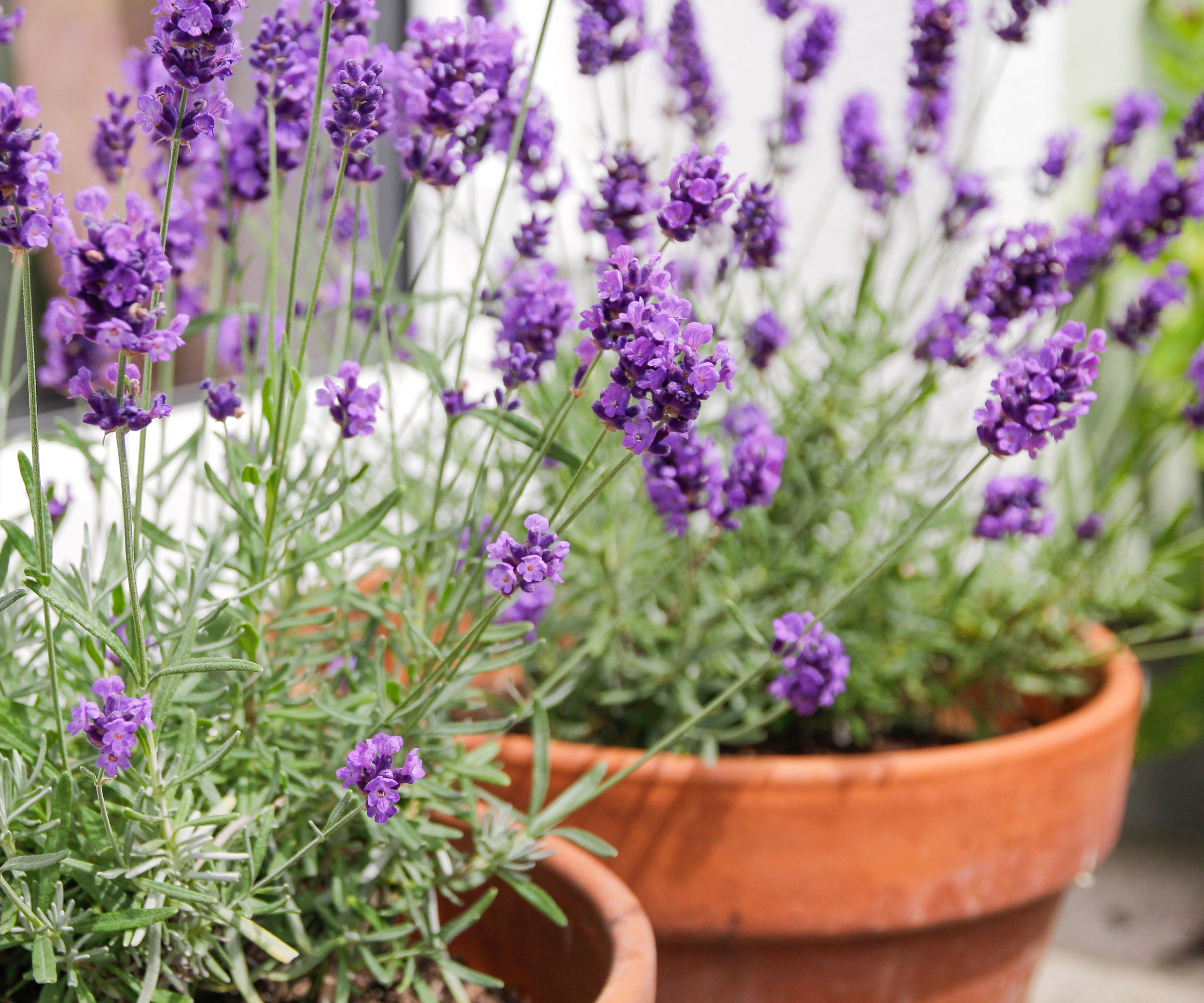
There’s a reason lavender turns up in almost every dream garden Pinterest board. Its silvery foliage, long purple flower spikes, and unmistakable perfume instantly make a garden feel calmer and more established.
Better still, it actively prefers full sun and well-draining soil, making it ideal for hot, dry spots where fussier plants struggle. And, once established, lavender is remarkably drought tolerant and flowers heavily throughout summer with very little input. Bees absolutely adore it, too.
Shop Lavender:
Nature Hills Nursery
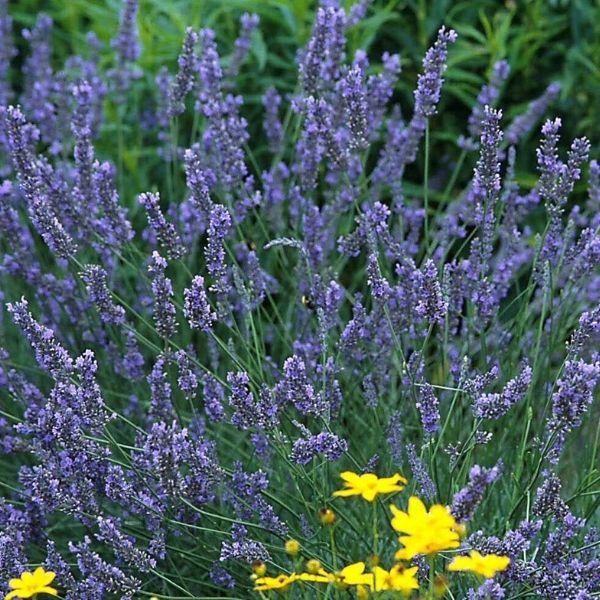
Grosso Lavender
Thriving in USDA Planting Zones 5-8, this showy lavender boasts a long season of blooms and color.
Nature Hills Nursery
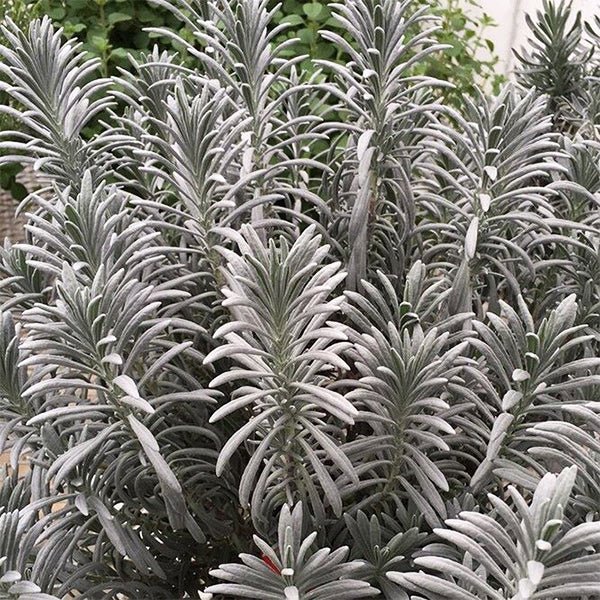
Sensational!® Lavender
This lavender blooms bigger and better than many other varieties (and it's cold tolerant, too, which means it works in Zones 5-9).
Nature HIlls Nursery
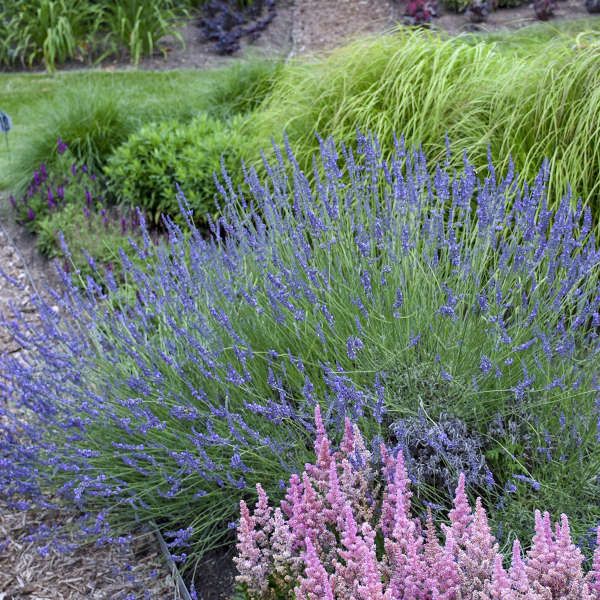
Phenomenal® Lavender
A hybrid French lavender, this one should reliably flower through summer until the first frosts (which means, yes, perfectly perfumed paths for longer).
2. Russian Sage
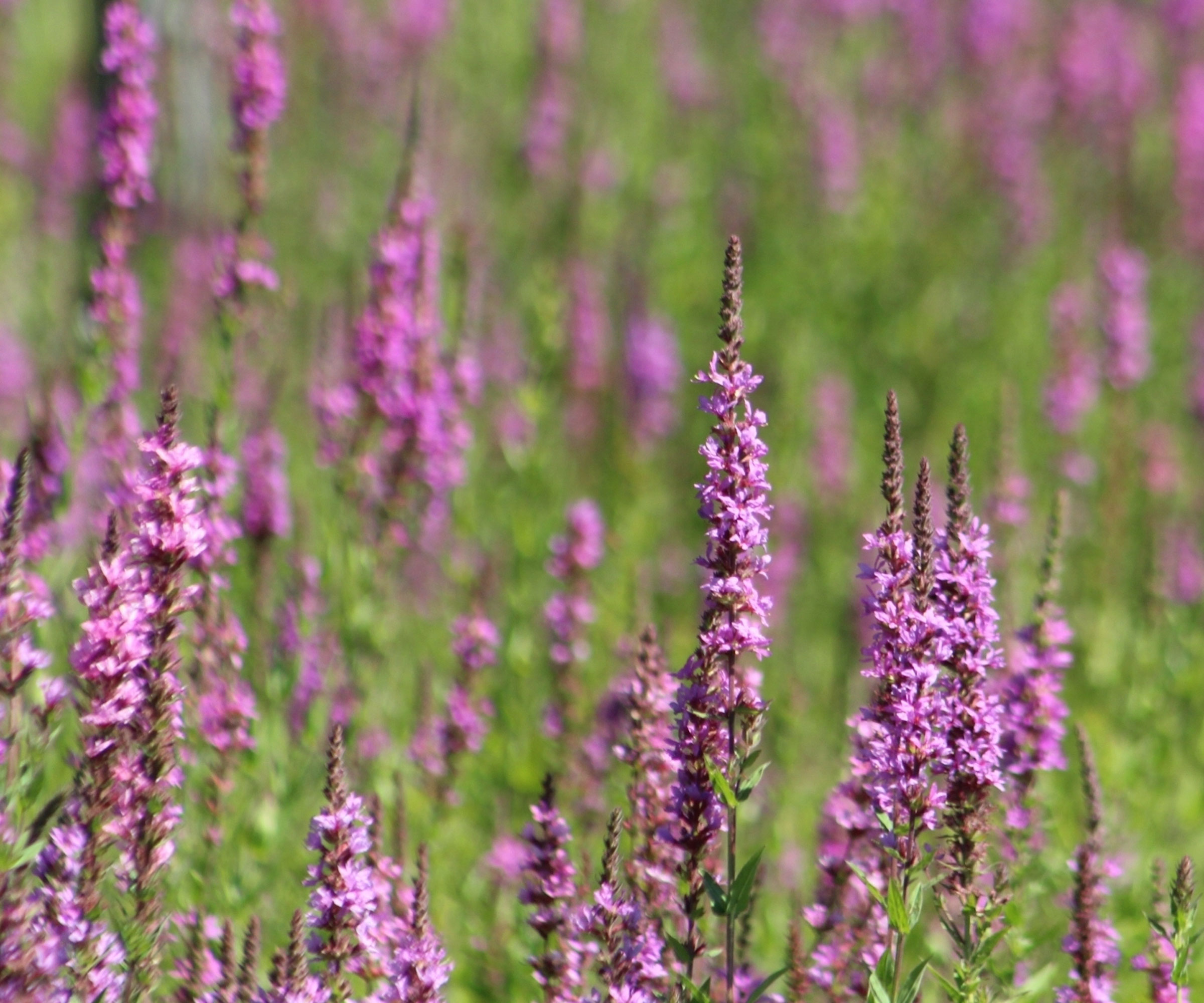
(Image credit: Katie Maraldo / Shutterstock)
One of those plants that quietly transforms a border, the soft, smoky-purple flowers of Russian sage seem to hover above silvery stems, creating that dreamy, layered “designer garden” effect with almost no effort at all.
This one thrives in heat, tolerates drought brilliantly, and keeps flowering long after many other perennials have faded. Which means, yes, if you want movement and softness in a planting scheme, this is one of the easiest ways to get it!
Go for something like Blue Jean Baby Russian Sage from Nature Hills if you want something a bit more compact; it delivers beautiful blooms in half the space, and it's cold hardy, too, making it ideal for anyone in Zones 4-9. Win!
3. Salvia
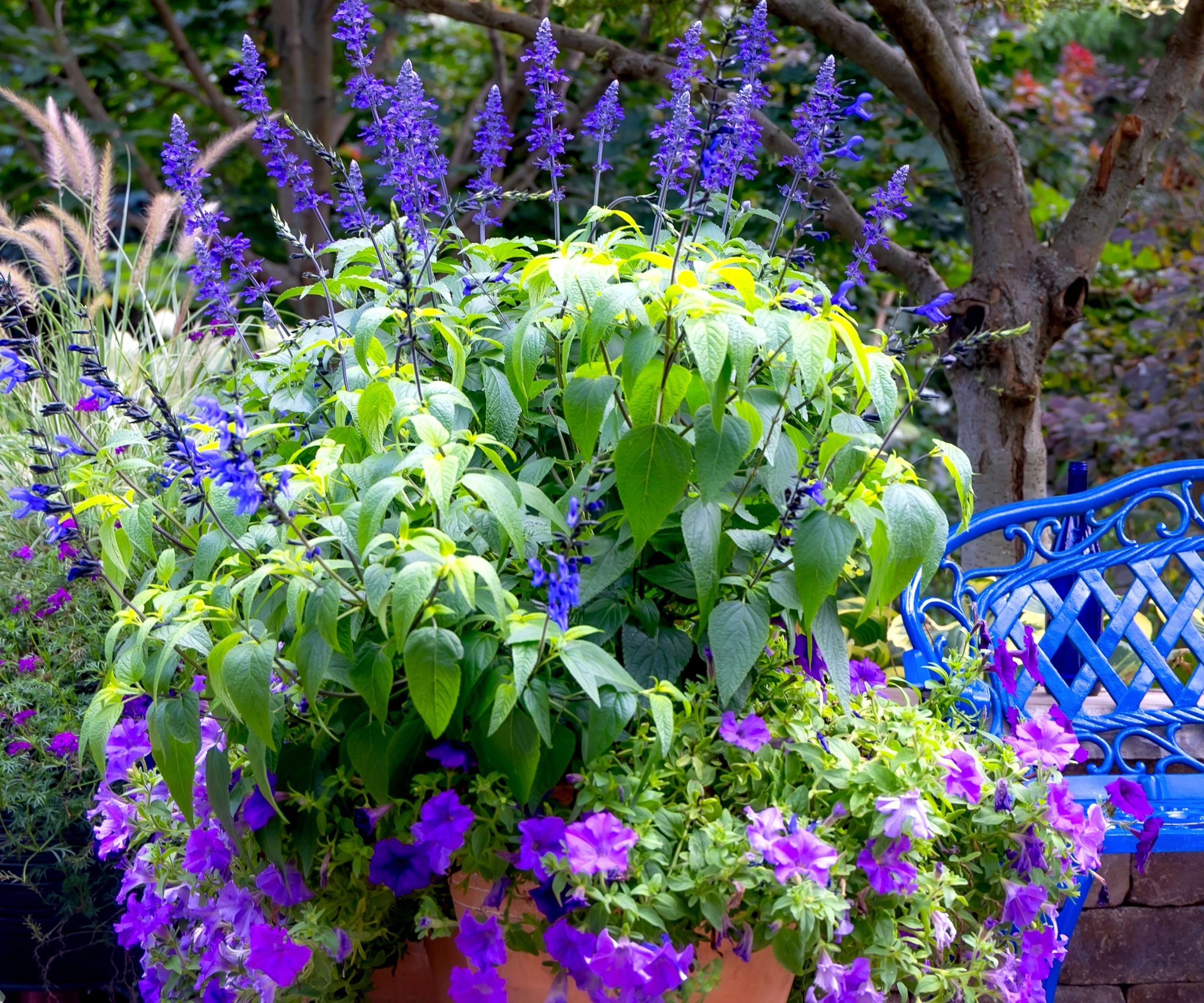
(Image credit: Molly Shannon / Shutterstock)
The devil works hard, but salvia works even harder!
Yes, few plants work harder in summer borders than salvia. Its upright purple flower spikes add structure and color for months on end, especially if lightly deadheaded every so often. And because many varieties cope beautifully with heat and dry spells, it’s become a staple in low-maintenance planting schemes across the US.
Hummingbirds, bees, and butterflies all flock to it, so be sure to plant something like Sensation® Sky Blue Salvia from Nature Hills if you want something as showy as it is hardy and deer resistant!
4. Clematis 'Diamantina'
If you want a plant that makes your garden look wildly more expensive than it actually is, this clematis might be it.
‘Diamantina’ produces huge double purple blooms with an almost old-fashioned, ruffled look that feels straight out of a show garden. And unlike some spring-flowering climbers that disappear after a brief moment of glory, this variety repeat flowers through summer with surprisingly little fuss once established.
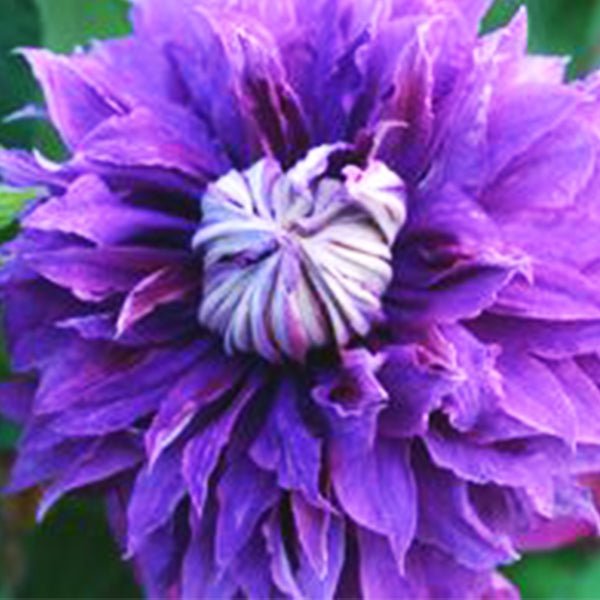
Nature Hills Nursery
Regal® Diamantina™ Clematis
Thriving in USDA Zones 4-9, this reblooming clematis produces stunning double-blooms that look like dahlia flowers.
It’s ideal for training up trellises, fences, arches, or even growing in large containers – adding height, softness, and that slightly romantic feel designers love so much.
Just keep its roots cool and watered while it establishes, and it’ll reward you with flowers for months.
5. Agastache
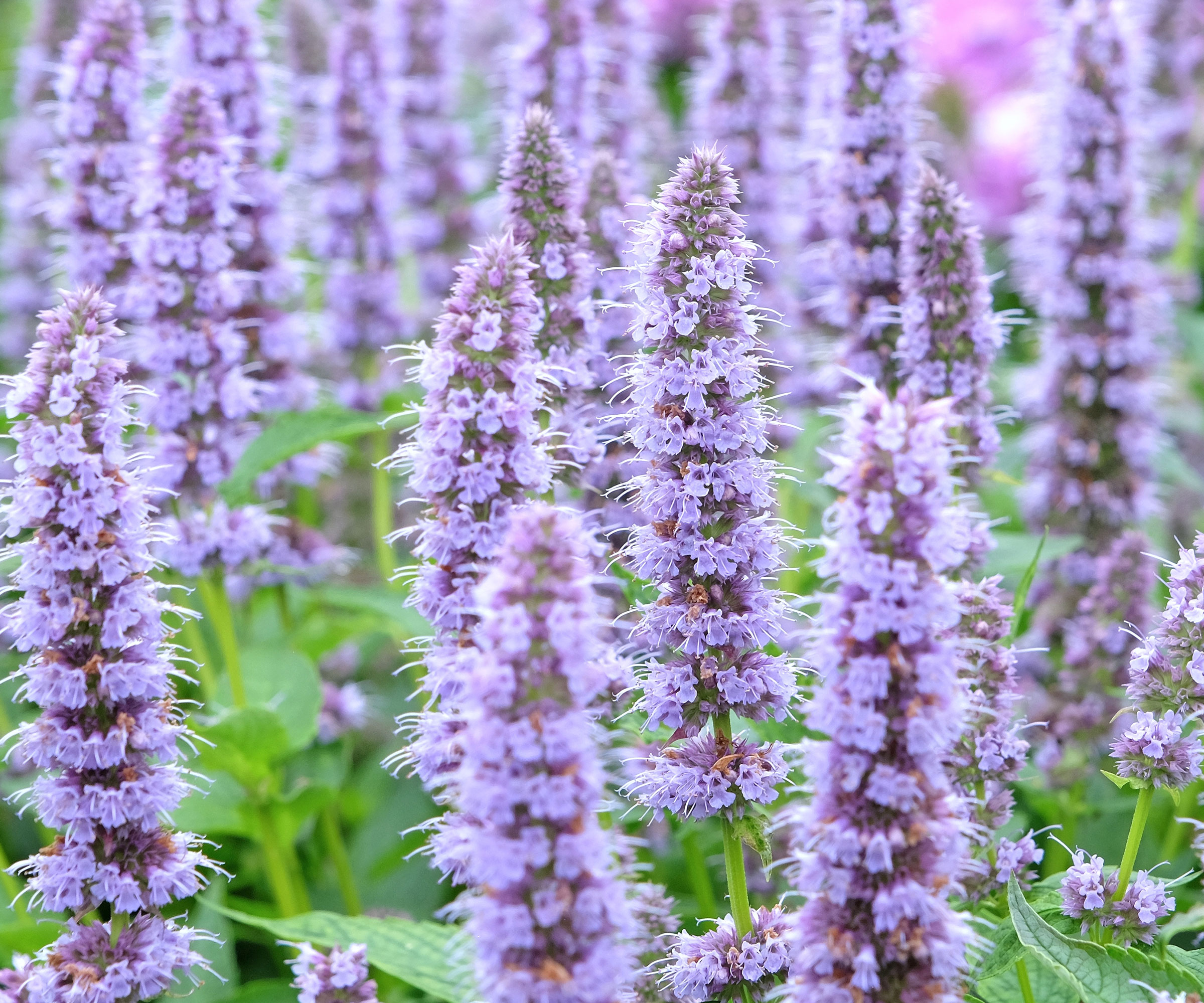
(Image credit: Alex Manders / Shutterstock)
Agastache is one of those plants that somehow manages to look delicate while being impressively tough underneath.
Its tall purple flowers bloom for months over the summer, turning into the hippest, most happening spot for hummingbirds, bees, and butterflies once established. And because it thrives in full sun and dry conditions, it’s become a favorite in low-water and prairie-style planting schemes across the US.
It truly is one of those low-effort, high-reward plants, making it ideal for gardeners who want maximum color with minimal fuss.
6. Bee Balm
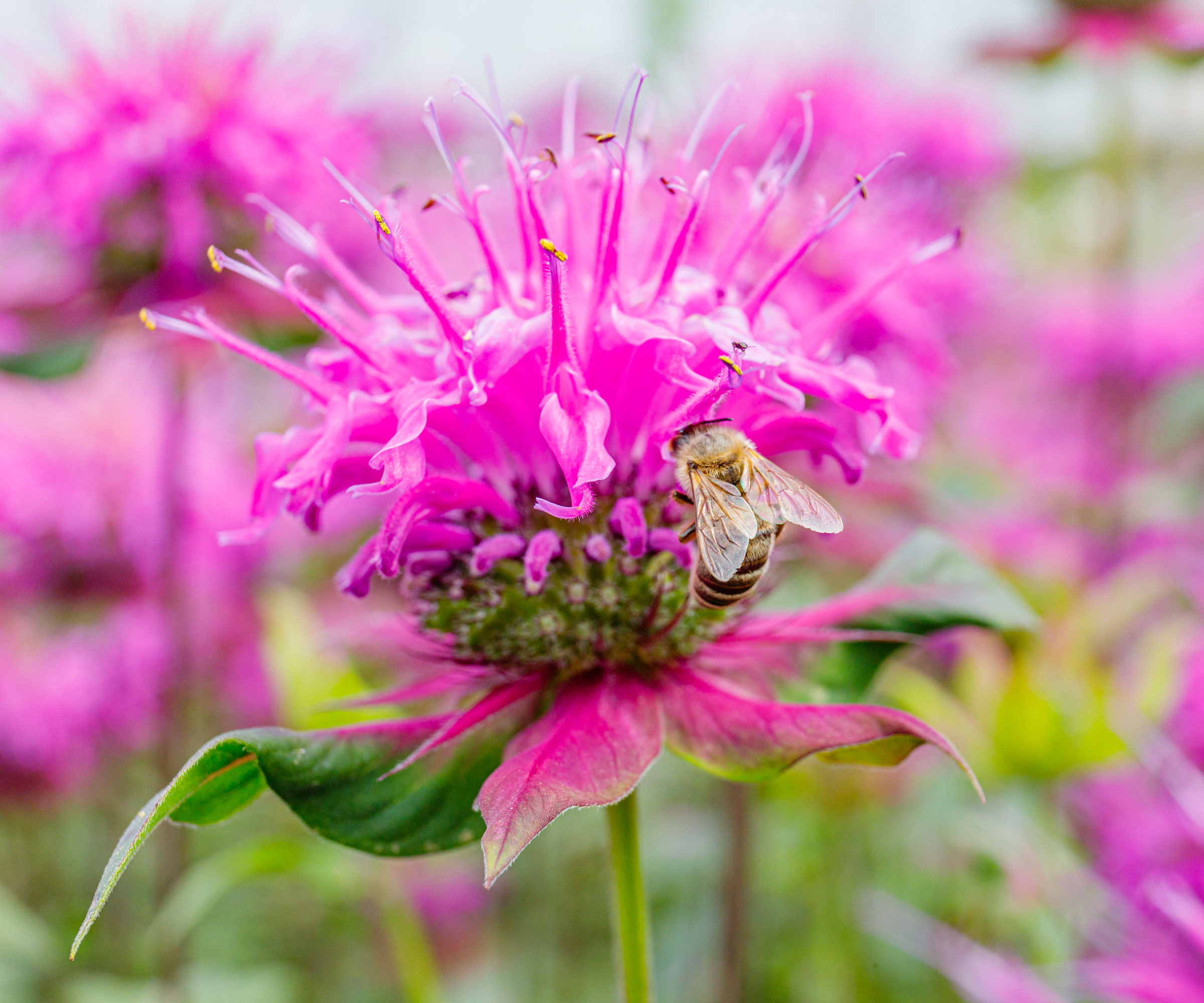
(Image credit: Nnattalli / Shutterstock)
Bee balm has a slightly untamed look that makes gardens feel alive. Its shaggy purple flowers attract bees and butterflies. in huge numbers, and the plant itself grows quickly once temperatures warm up.
It prefers slightly more moisture than some of the others on this list, but once settled in, it’s an incredibly rewarding perennial that brings movement and wildlife into the garden all summer long.
Just be aware that, while bee balm is not technically invasive, it is a super-spreader. You can control the plant easily enough, though, by dividing it in early spring, when its shoots first emerge, so don't let this put you off.
We particularly love the Pocahontas Purple Rose Bee Balm from Nature Hills.
7. Phlox
If you want low-maintenance impact, creeping phlox is hard to beat. This easy groundcover spreads steadily, softening edges and filling awkward gaps with dense mats of evergreen foliage and vivid purple-pink flowers in spring and early summer.
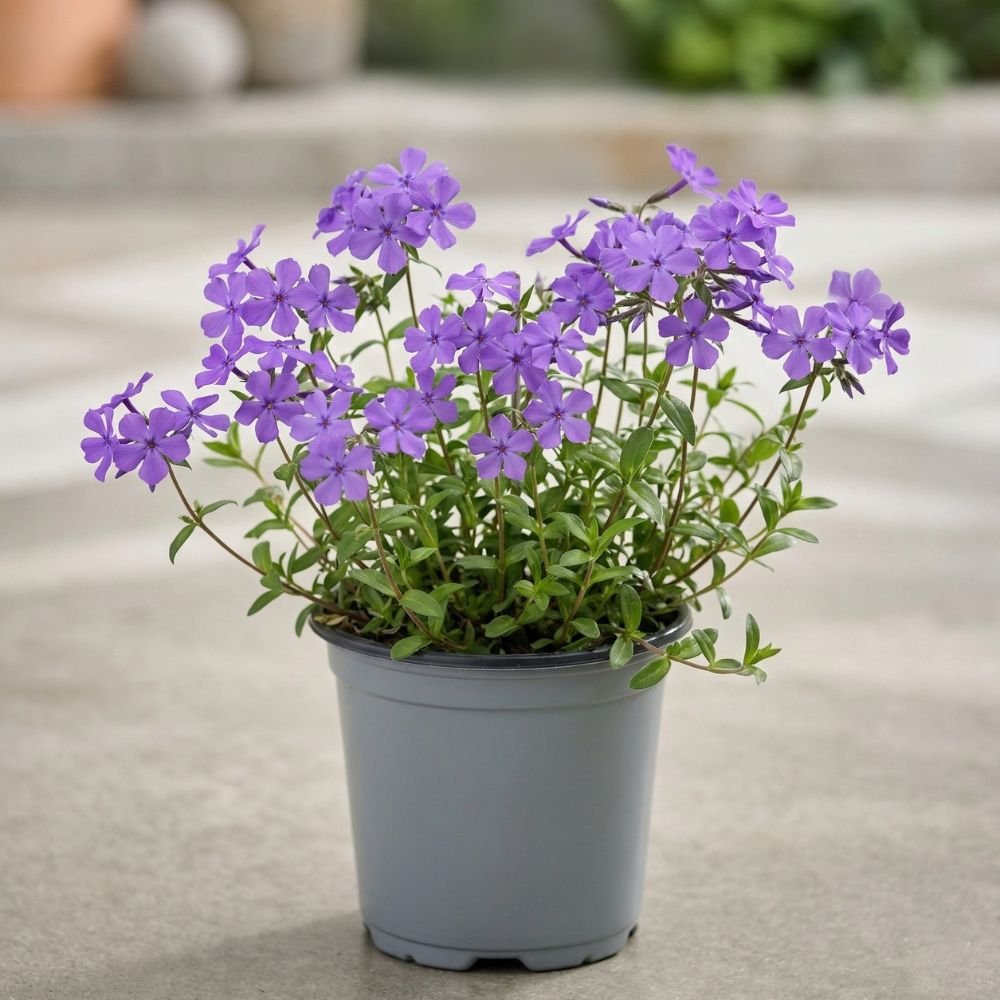
American Beauties
Sherwood Purple Creeping Phlox
Thriving in Zones 3-9, this beautiful phlox variety will treat you to a self-sustaining mass of lavender-hued blooms year after year.
If you want a true carpet of purple flowers, remember that phlox is particularly useful on slopes, edging pathways, or spilling gently over retaining walls. And once established, it asks for very little in return, which makes it one of our very favorite kinds of plant.
8. Tall Verbena
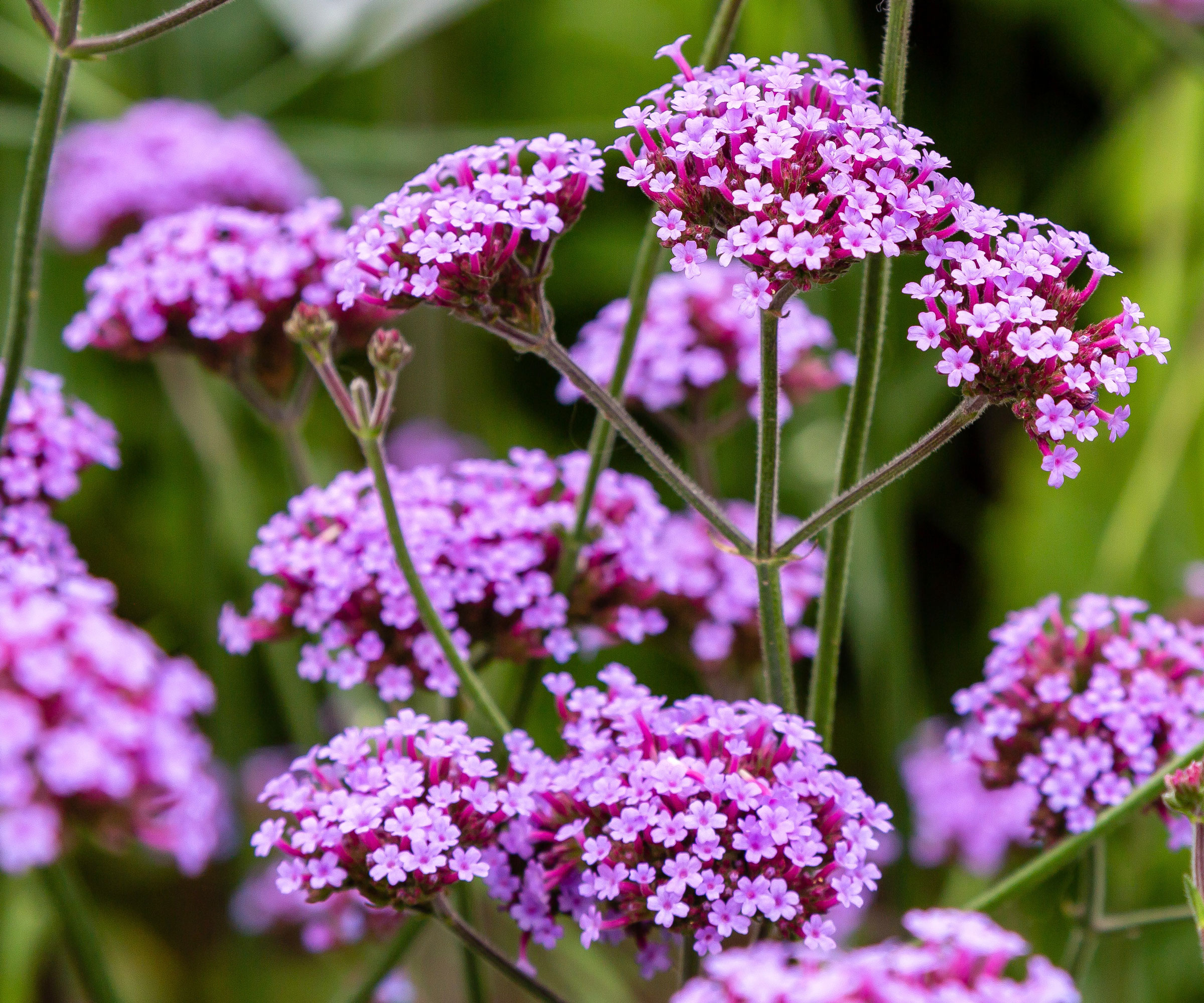
(Image credit: Flower_Garden / Shutterstock)
There’s something wonderfully chilled when it comes to growing Verbena bonariensis. Its tall stems sway above borders topped with clusters of small purple flowers that seem to float in the air, but, despite looking delicate, it’s surprisingly tough. In fact, it can cope well with heat, drought, and poor soil once established.
This one flowers for an extraordinarily long time, often right through late summer into fall, so it's well worth growing these verbena plants if you can. Try something like these Vervain Seeds from O'Neill Seeds and give it a whirl!
9. Coneflowers
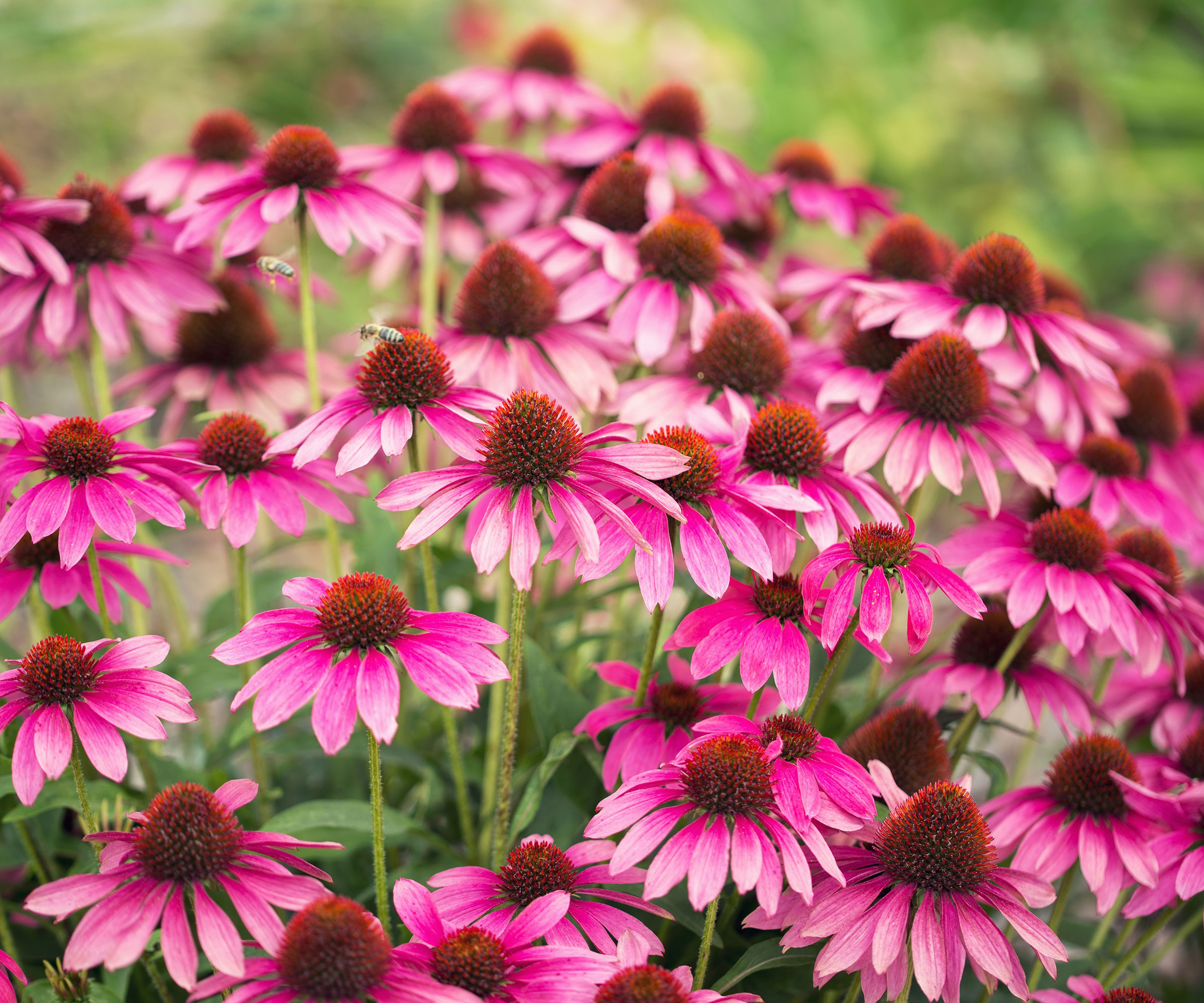
(Image credit: Katarzyna Derbich / Shutterstock)
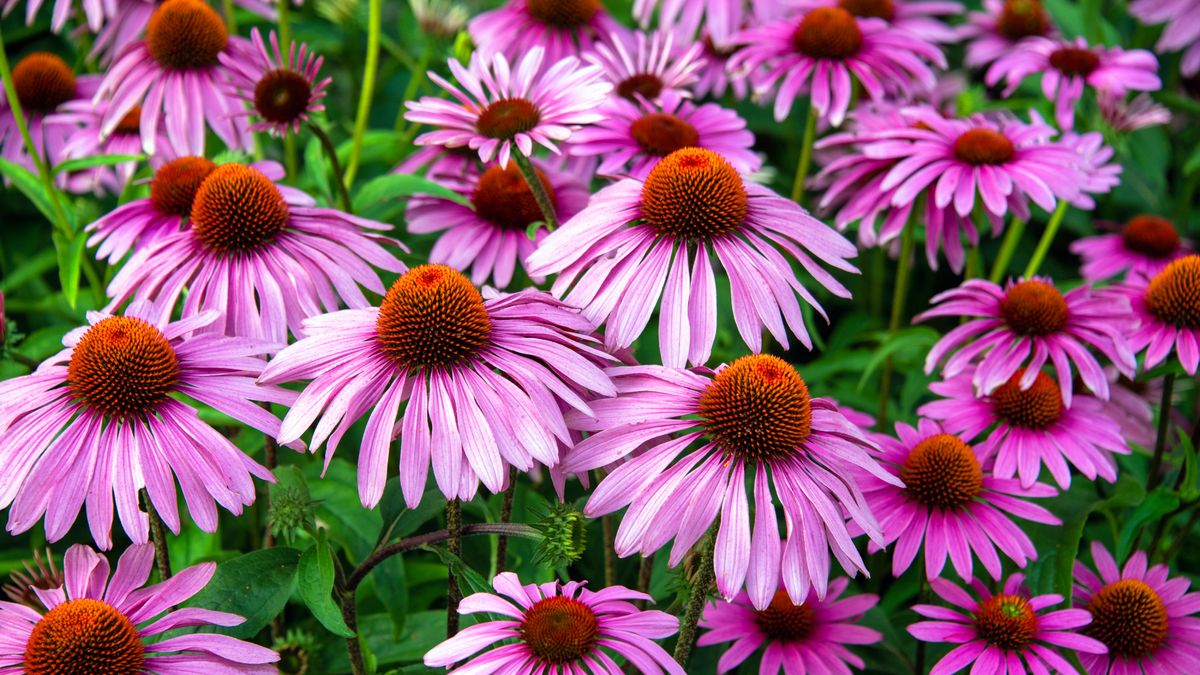
Look, it is a truth universally acknowledged that purple coneflowers are one of the easiest ways to add bold color to a sunny garden. Native to North American prairies, they’re built to handle heat, dry conditions, and unpredictable weather, and their large purple daisy-like blooms last for ages.
Honestly, even the seedheads on these add interest later in the season., so they're not one hit wonder for summer. And they're also brilliant for pollinators – and goldfinches often feed on the seeds afterward. Still, if you want to avoid the droop, try Magnus Purple Coneflower from Nature Hills, as their petals don't do so like other varieties.
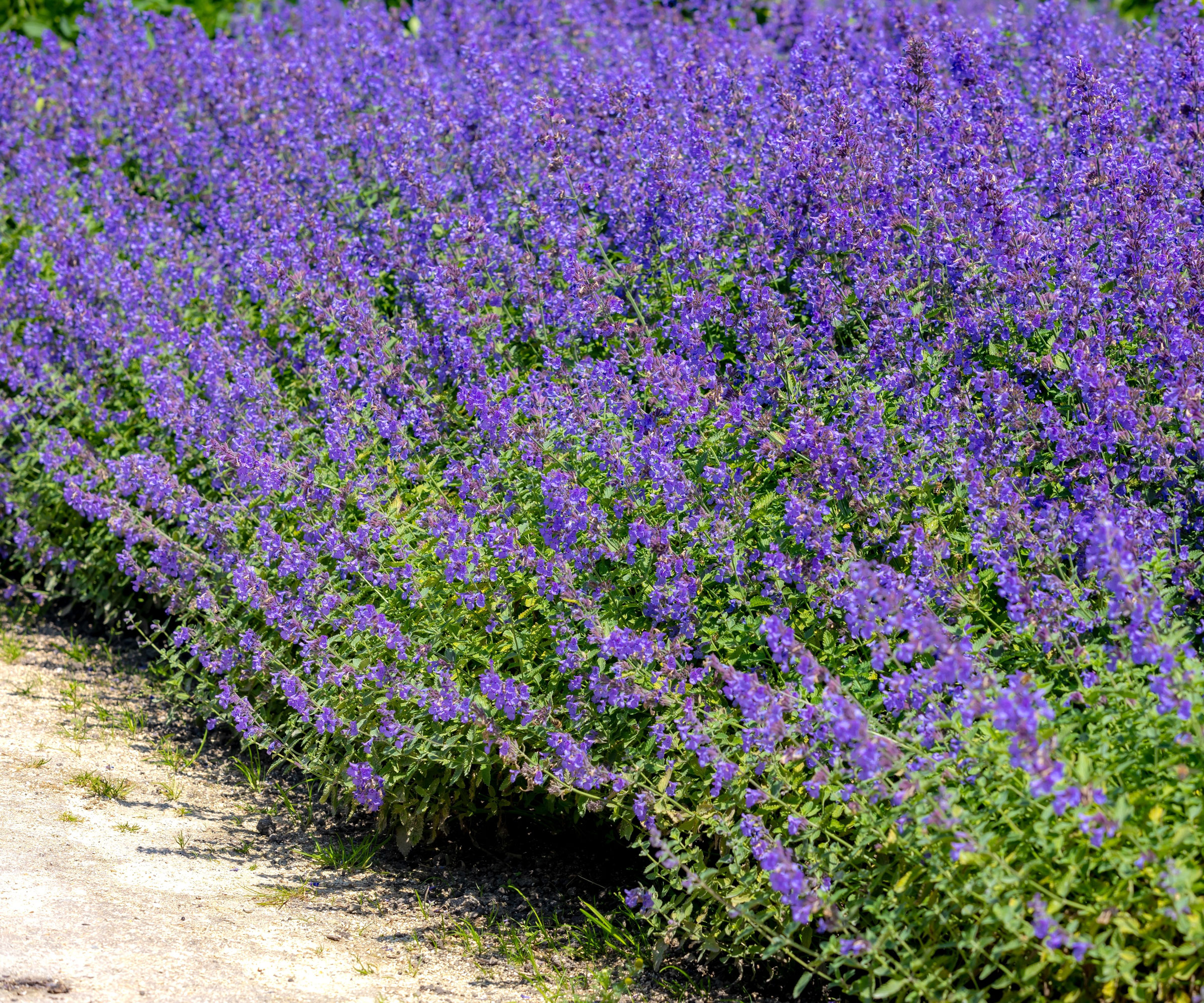
10. Catmint
(Image credit: Wut_Moppie / Shutterstock)
Catmint is one of the most forgiving perennials you can grow, spilling gently over paths and border edges and producing masses of soft lavender-blue flowers from late spring well into summer.
Unlike some flowering plants, it actually performs better without rich soil or constant watering; just be sure to give it a quick trim after its first flush of flowers and it’ll often bloom again. We're fond of the Serene Lilac Catmint from Nature Hills, which is hardy in zones 3-8 with excellent cold tolerance and adaptability to various climates.
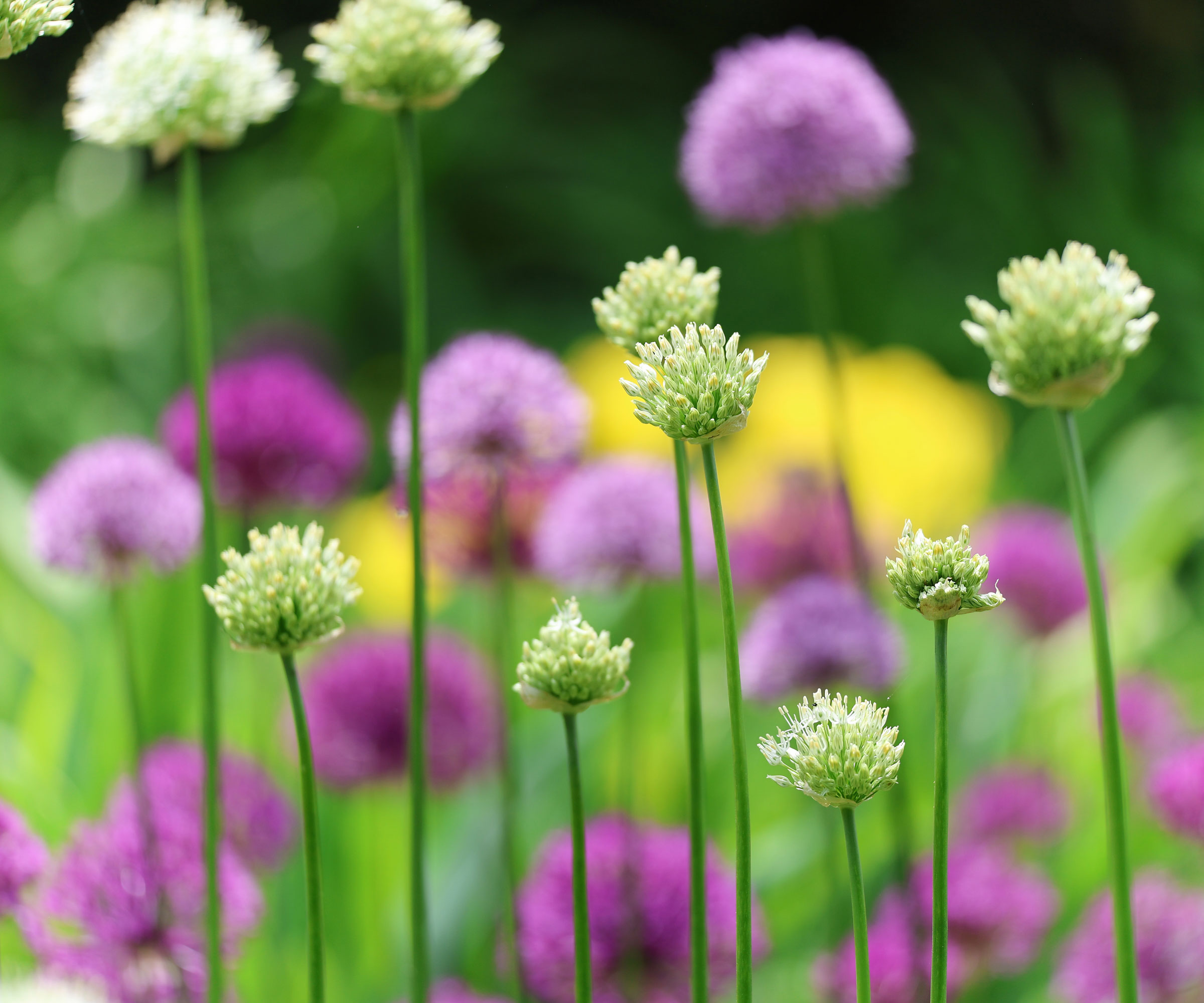
11. Alliums
(Image credit: MaCross Photography / Shutterstock)
Last but not least, it's the architectural purple flowers that make borders feel instantly expensive. Basically quiet luxury in floral form, alliums bring structure in a way few flowers can, as their globe-shaped purple blooms rise above borders in late spring and early summer, adding height and drama without making planting schemes feel heavy.
They’re surprisingly easy bulbs to grow, rarely troubled by pests, and return reliably year after year in many USDA zones. And, even after flowering, the dried seedheads continue adding shape to the garden. What a superhero plant, right?
Shop Alliums:
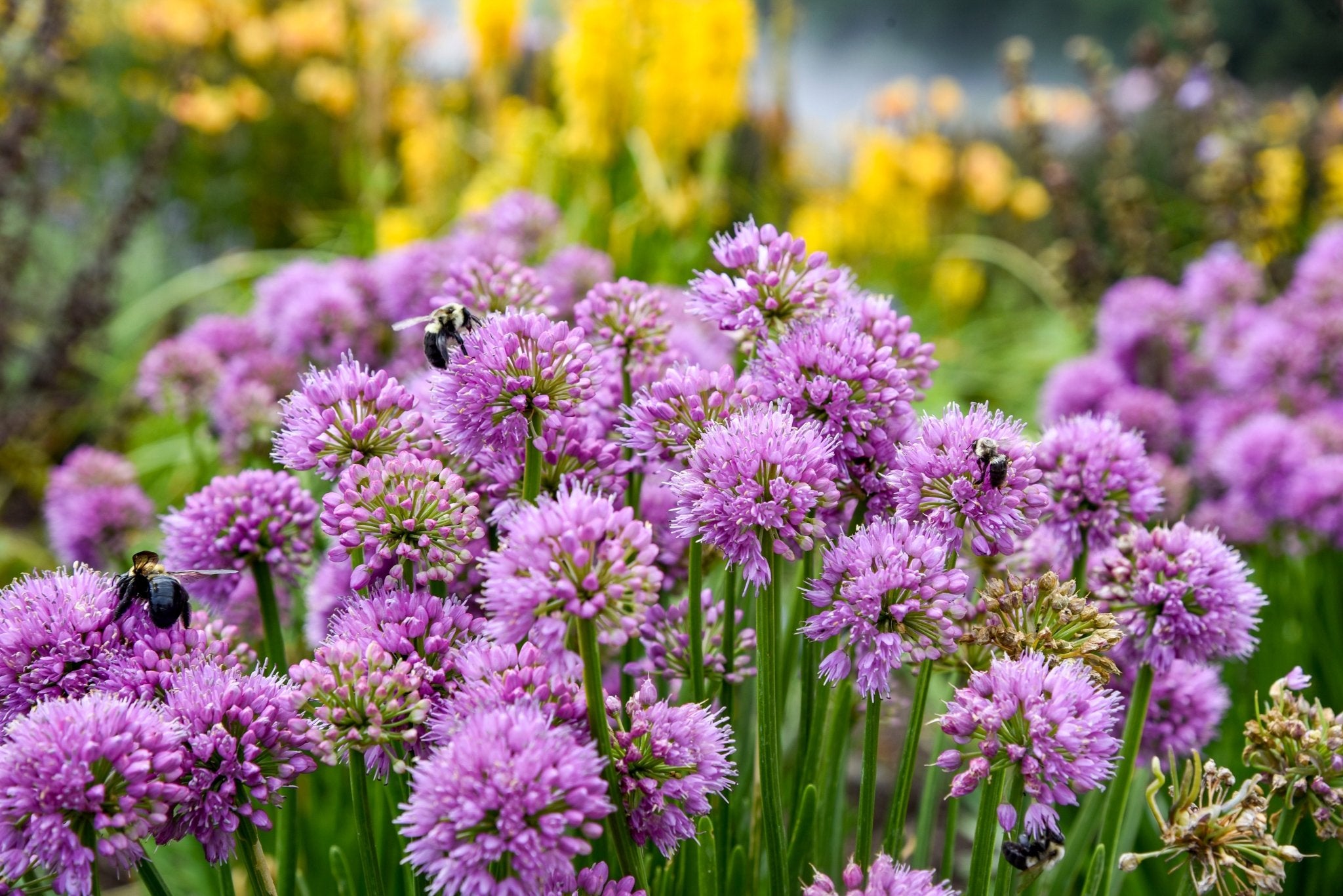
Proven Winners
All the Buzz Allium
This allium is hardy in Zones 4-8 with compact stems and rosy purple blooms.
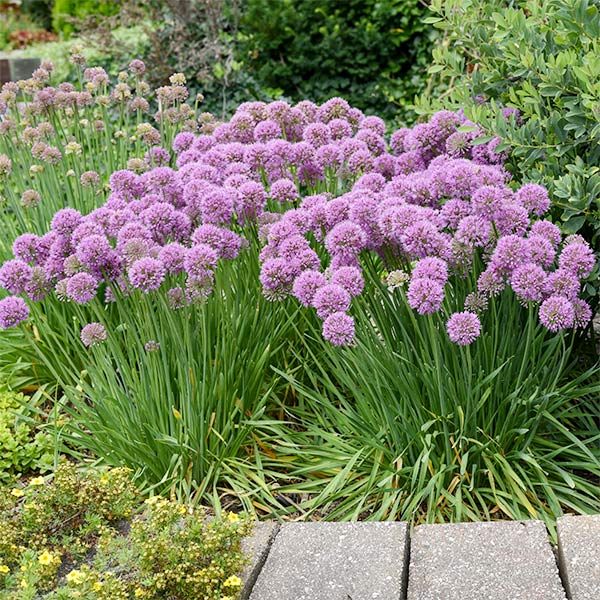
Proven Winners
Serendipity Allium
This allium will light up gardens in Zones 4-8 when other summer color has faded.
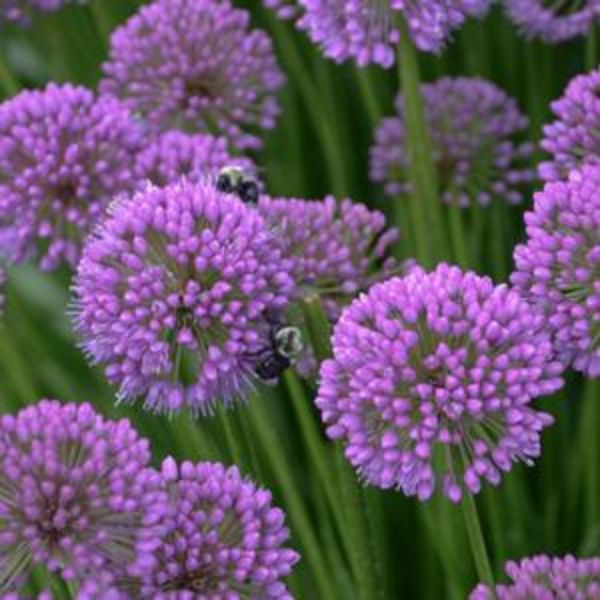
Nature Hills Nursery
Millenium Allium
Another one that works best in Zones 4-8, this is great for mass planting.
If you want a garden that looks lush, relaxed, and pollinator-friendly without becoming a full-time job, purple flowers are a very good place to start. These eleven pretty picks will keep blooming through the hottest months of the year, ask for remarkably little once established, and somehow make even the most casual planting schemes (read: messy gardens) look beautifully intentional.
Not bad for flowers that practically look after themselves.












 English (US) ·
  French (CA) ·