

 2 days ago
12
PROTECT YOUR DNA WITH QUANTUM TECHNOLOGY
Orgo-Life the new way to the future Advertising by AdpathwayNASA's Artemis II launch did more than send four astronauts around the Moon — a new study finds the rocket temporarily stripped electrons from Earth's upper atmosphere in two disturbances stretching about 3,100 miles (5,000 kilometers) each across the Americas, enough to cause GPS positioning errors of several meters.
The research, led by scientists at National Cheng Kung University in Taiwan, says the Artemis II effects were stronger than those of any rocket launch measured so far. According to Space.com, they were up to 10 times more intense than disturbances from SpaceX Starship test flights.
A Human-Made Kind of Space Weather
The ionosphere is the electrically charged layer of the upper atmosphere, beginning about 30 miles (50 kilometers) up. It is filled with free electrons, and GPS signals slow down slightly as they pass through it. Receivers correct for this delay using models, but a sudden change in electron density can throw those corrections off.
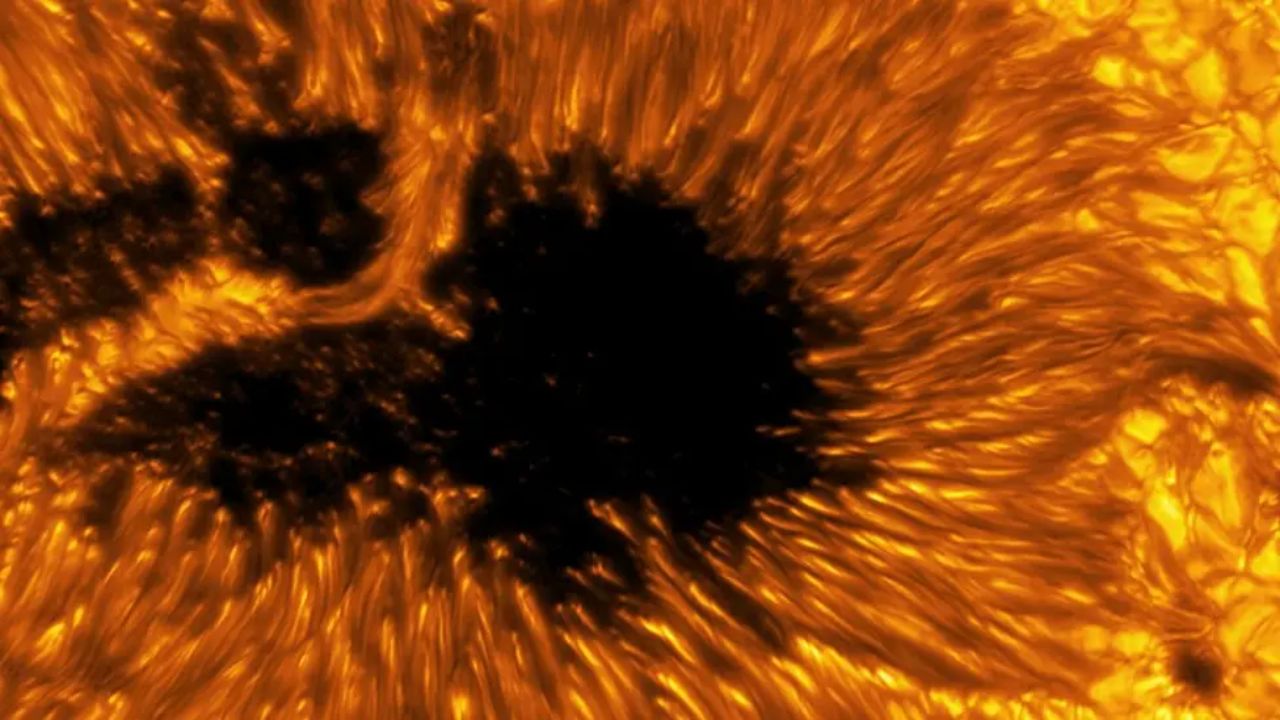
Solar storms are the usual cause of such disruptions. The new study shows a single large rocket can produce a similar, if shorter-lived, effect. Space.com reported that rocket disturbances fade much faster than storm effects, which can last for days.
Artemis II lifted off from Kennedy Space Center in Florida on April 1, 2026, at 6:35 p.m. EDT, according to NASA's mission page. The first disturbance came from the shock and exhaust of the 212-foot (65-meter) Space Launch System core stage climbing through the atmosphere.
The second, and more prominent, came more than an hour after liftoff. The upper stage fired its engine twice at about 115 miles (185 kilometers), directly inside the ionosphere. Exhaust released there can chemically react with the charged gas and deplete electrons over a wide area.
"We have never seen this kind of orbital maneuver in an interplanetary mission," said Charles Lin, an earth science professor at National Cheng Kung University and a co-author.
The comparison with Starship is telling. SpaceX's rocket has roughly twice the liftoff thrust of the Space Launch System, yet its test flights produced weaker disturbances, Starlust reported in its summary of the study. That points to where and when a rocket burns its engines, not raw power alone, as the main factor.
Ground Networks Built for Earthquakes Caught the Signal
The team did not need special instruments in space. It used high-precision networks of fixed, ground-based GPS receivers that U.S. scientific institutions operate to track tectonic plate motion. By measuring how long signals took to travel from satellites to those stations, researchers could rebuild a map of electron changes as the rocket passed.
The changes in electron density were equivalent to positioning errors of several meters. That figure is a calculated equivalent rather than a record of devices actually failing, and Space.com's report does not cite any documented navigation accidents on launch day.
These networks were built to watch the ground move by millimeters ahead of earthquakes, which makes them sensitive enough to see small changes in the sky above. It is the same kind of dual use that has turned seismic GPS arrays into space weather monitors in recent years.
The findings were posted as a preprint ahead of publication in Geophysical Research Letters, meaning the final version may still change. The work is based on one launch, so it shows what is possible rather than a fixed rule for every mission.
Several Meters Is a Big Deal for Machines
For a phone giving walking directions, a few meters rarely matters — for machines that rely on precise satellite positioning, it can. "A positioning error of a couple of meters is enough to cause an autonomous car to change lanes," Lin said. He added that drone positioning could also be affected.
Most self-driving systems combine GPS with cameras, radar, lidar and inertial sensors, so a GPS error alone would not necessarily cause a crash. The concern is that ionospheric errors arrive suddenly and affect a wide area at once, testing the backup systems that are supposed to catch them.
The pathway to households is already visible in solar storm research. A Boston University study of the May 2024 Gannon storm used a similar network of nearly 100 fixed GPS receivers to link storm conditions to ground-level navigation problems. Space.com later reported that the storm cost farmers an estimated $500 million in damages, a reminder that navigation errors reach the food system through GPS-guided farm equipment.
Those most exposed to launch-related errors are operators of precision agriculture, survey crews, commercial drone pilots and companies testing automated vehicles in regions under a rocket's path. Ordinary drivers using phone navigation are unlikely to notice anything.
More and Bigger Launches Ahead
Launch frequency is rising, and heavy rockets are getting larger. Artemis III, Starship flights and future Mars missions will all push large amounts of exhaust into the upper atmosphere. Lin expects space weather effects from Moon and Mars missions to become much more significant.
There is no immediate action for the public. For drone pilots and fleet operators, the practical step is to treat launch windows like minor space weather events. That means checking launch schedules, maintaining sensor backups, and not relying on satellite positioning alone for safety-critical tasks.
Several questions remain. Researchers have not yet shown how long the Artemis II depletion lasted at each location, whether it caused measurable errors in commercial receivers, or how much a launch's trajectory and burn altitude change the size of the effect. The final peer-reviewed paper and follow-up studies of upcoming launches should help answer those questions.
For now, the finding adds a new item to the list of things that can disturb GPS. Alongside the Sun, the rockets we launch toward it can now briefly reshape the sky our navigation depends on.
What Readers Want to Know
What did the Artemis II launch do to the atmosphere? It temporarily reduced the number of free electrons in the ionosphere, creating two disturbances about 3,100 miles long across the Americas.
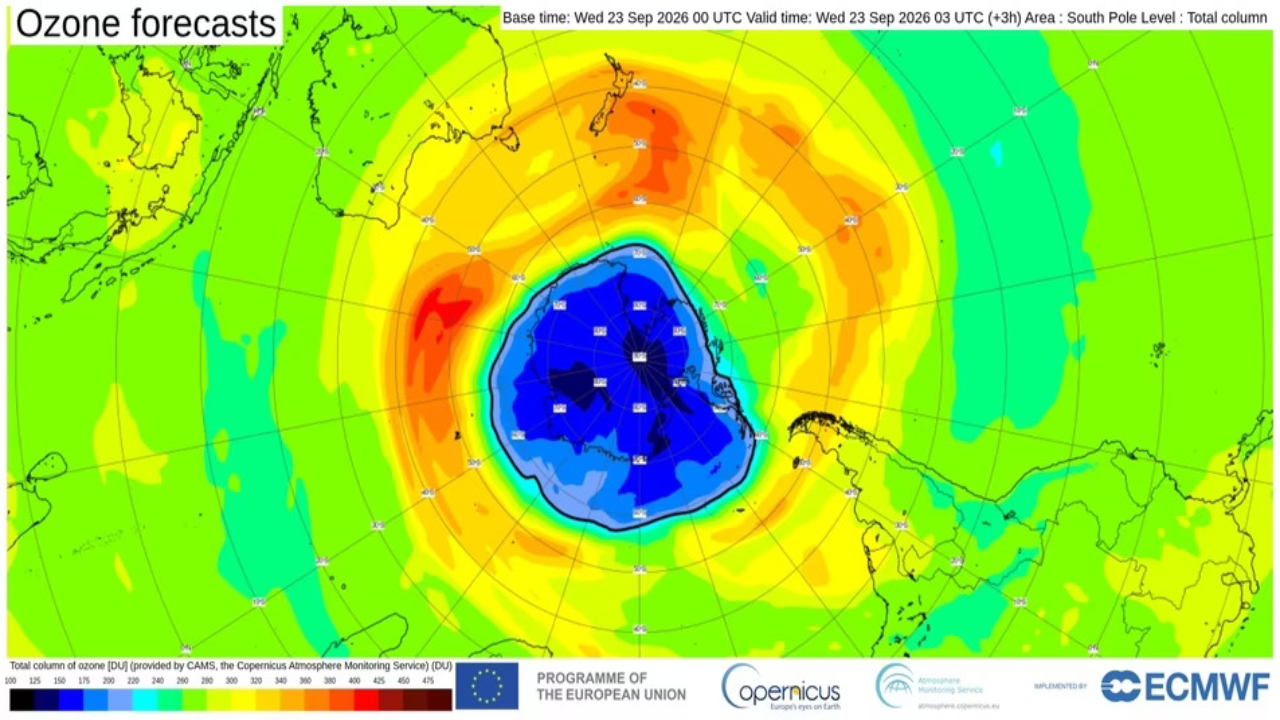
Did it damage the ozone layer? No. The study concerns the ionosphere, an electrically charged layer far above the ozone layer.
How large were the GPS errors? The electron changes were equivalent to positioning errors of several meters, according to the researchers.
Could this affect self-driving cars? The lead researcher says errors of a couple of meters could make an autonomous car change lanes. Most vehicles use backup sensors, which reduces the risk.
How long do these effects last? They are temporary and much shorter-lived than disruptions from solar storms, which can last for days.
Has the study been peer-reviewed? It was released as a preprint ahead of publication in Geophysical Research Letters, so the final version may change.
© 2026 NatureWorldNews.com All rights reserved. Do not reproduce without permission.













 English (US) ·
 French (CA) ·