

 2 hours ago
3
2 hours ago
3
PROTECT YOUR DNA WITH QUANTUM TECHNOLOGY
Orgo-Life the new way to the future Advertising by AdpathwayOnline prediction markets, saturated by money staked on sport, crypto and politics, have now set their sights on a promising new area of growth: betting on the future livability of the planet itself.
The rise of gamified predictions on the unfolding climate crisis, and shorter-term weather forecasts, has been underscored by a new deal that allows Kalshi, a leading online financial exchange, to access data from the Weather Company, owner of the Weather Channel, to verify weather-related betting outcomes.
The weather is “one of the fastest-growing and most crucial categories” at Kalshi, the company said, with monetized predictions made by people, and bots, on weather and climate events growing 500% in the past year into a $1.1bn market.
“The long-term vision is to financialize everything and create a tradable asset out of any difference in opinion,” Tarek Mansour, co-founder of Kalshi, said of the company’s broader objectives last year.
Startlingly, Kalshi even claims that this gauge of public opinion can not only act as a financial hedge for businesses exposed to extreme weather, but also help shape the weather forecasts themselves. Kalshi’s betting markets will appear on the Weather Channel’s app, which is used by more than 330 million people worldwide.
“Given the severity of the climate crisis, it’s crucial for policymakers and the general public to have well-calibrated forecasting data about future climate impacts,” said a Kalshi spokesperson, citing a company study on how accurate its markets’ predictions are. Asked whether this meant Kalshi saw its weather markets as part of delivering well-calibrated forecasting data, the spokesperson said this was the case.
“Weather is the ultimate equalizer – it fundamentally affects everyone and everything,” the spokesperson said.
People visiting Kalshi or Polymarket, its main rival, can bet on weather predictions such as how hot it will be in certain places on a given day, as well as longer-term bets – from how many climate-fueled disasters the US will have, to whether the world will avoid catastrophic global heating, to how severe the die-off of corals in Hawaii will be.
You can even wager how far Lake Mead, the US’s largest reservoir and a crucial water source for the American west, will drop below its already record-low levels. Last year, amid ruinous wildfires in Los Angeles, there were $1.2m in bets laid on Polymarket on the extent of the fires, with one user posting that “volume so high in this market it cause another fire”.
While Polymarket’s international platform still hosts wildfire bets, US consumers are barred from accessing them. Kalshi meanwhile has never offered wildfire markets, citing “perverse incentives”.
Distinctions can be hard to draw, though – the websites will allow betting on, for example, the severity of heatwaves in Phoenix, Arizona, even though up to 500 deaths in Maricopa county, which includes Phoenix, are being investigated as possibly heat-related. Excessive heat is the biggest killer among extreme weather events in the US.
For scientists and people affected by climate-related disasters, though, it has been troubling to see the painful consequences of an overheating world turned into an online money-making market.
When the Eaton fire swept through Los Angeles county last year, killing at least 19 people and razing thousands of buildings, the home of Kaitlyn Trudeau’s grandfather was among those destroyed.
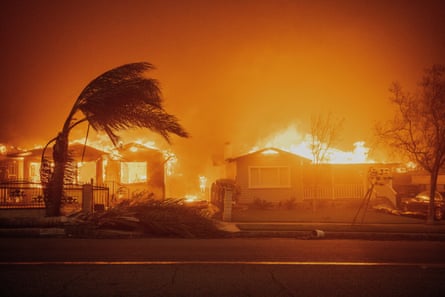
While he was unhurt, Trudeau, a climate scientist at the non-profit Climate Central, said it “left a bad taste in my mouth imagining people making money off it. People were posting ‘that was fun, until next time!’ I’d be lying if I said it didn’t hurt a bit.
“The dehumanization of these events really concerns me. I worry about the gamification of this because it distances us from the impacts of climate change, it affects our empathy,” said Trudeau, who added that she questioned Kalshi’s blurring of distinction of weather and climate and how such bets are adjudicated.
“I find it depressing because it’s distracting us from what we should be focusing on,” she said. “I’m not against prediction markets in general but we need to be clear about the downsides. They aren’t going to reduce the risks of climate change or solve climate change.”
Kalshi’s claims around weather forecasting are “confusing”, Trudeau added. “I’d be curious to know which resolved markets are related to future climate impacts and what sources they used to calibrate them,” she said. “Since calibration is measured by comparing many predictions against many realized outcomes, how can a market be calibrated on impacts that, by definition, haven’t happened yet?”
Placing bets on the weather or the broader climate is harmful “because of all of the perverse incentives this can create, especially among bad actors with malicious intentions”, said Michael Mann, a climate scientist at the University of Pennsylvania who said he worried about the bets fueling conspiracy theories about weather manipulation.
Other critics contend that the public’s understanding of actual weather data could be obscured or even altered by big-money betting. Kalshi, Polymarket and the Weather Company all dismissed concerns of potential improper practices, pointing to company policies and federal regulation deterring insider trading and conflict of interest.
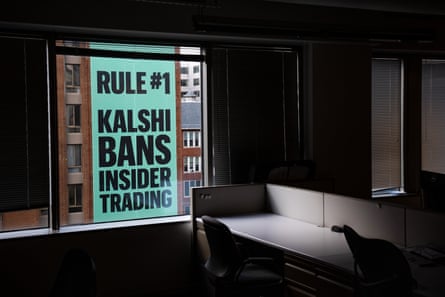
“We view weather data through the lens of decision intelligence and risk management – not gamification,” said a Weather Company spokesperson about the deal with Kalshi. “This partnership elevates weather data into a highly reliable tool, allowing both individuals and mission-critical enterprises to better quantify and manage real-world weather outcomes.”
Polymarket, meanwhile, said it saw itself in grander terms than a mere betting website for people facing the perils of a hurricane, wildfire or heatwave made far fiercer by the burning of fossil fuels.
“When tragedy unfolds, people turn to the news for commentary and they come to Polymarket for information,” said a company spokesperson. “While we are not blind to the risks, removing these markets does not prevent a tragedy but makes the most accurate information less accessible to the people who need it most.”
While they are booming in popularity, however, the wagering platforms are under increasing scrutiny from federal lawmakers and several states. Last week, a federal appeals court ruled that states can regulate prediction markets like gambling, after a case brought by Nevada, which had attempted to shut down Kalshi.
This mounting legal and regulatory pressure means that sites that allow wagers on everything from the value of gold to the words mentioned in a Donald Trump speech may find the climate crisis a less politically fraught arena to focus on, even though the topic still only attracts a small fraction of the bets laid online, experts point out.
“They have to convince the courts they aren’t a gambling platform for sports and crypto,” said Jamie Pietruska, an economic historian at Rutgers University. “The weather and climate are seemingly innocuous in comparison. There is a longstanding belief that the weather can’t be controlled so it’s perfect to bet on and different to other categories, such as geopolitics.”
Much like how CNN already includes prediction market outcomes in its political coverage, the Weather Channel could soon feature Kalshi odds amid its own forecasts, Pietruska said, further warping public trust in the National Weather Service, the bedrock federal forecasting agency that has faced deep cuts under the Trump administration.
“Who is the wisdom of the crowds in that situation? There are casual betters, dumb money and weather trading bots,” said Pietruska. “Is that going to produce a forecast better than a meteorologist? Is that just vibes weather?”
What will this all do to the public’s appetite to address global heating? One 2023 study found that participating in a climate prediction market elevated concerns about the climate crisis and even altered the viewpoint of those who denied established climate science.
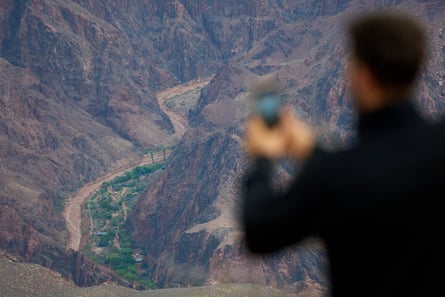
“The only thing that seems to work in changing minds of climate deniers [is] to let them put their money where their mouth is,” said Moran Cerf, a Columbia University researcher who led the study.
Still, Cerf said, the negatives of wagering on the climate outweigh the positives. “It’s bad, in one word,” he said. “The prediction markets have taken a turn to the dark side by gamifying disasters. The fact it’s unregulated, unlike the stock market, means it is getting worse, too.”
Pietruska shares these misgivings. “I’ve been uncomfortable with this sort of betting for some time. It has serious moral consequences,” she said. “An academic study isn’t the same as the speed and scale of the new casinos that are being set up.
“If I go online and see the perception that the world will pass 2C (3.6F) warming by 2050, it creates a sense of a predetermined future, even though this is an aggregation of public opinion. It’s not a truth machine.”
Listing climate-related disasters next to the timing of Taylor Swift’s next album or the winner of the next Super Bowl “casualizes and trivializes catastrophe and human suffering”, Pietruska said. “The wisdom of crowds isn’t going to encourage the community building and solidarity we need to address the climate crisis. That is not good, to say the least.”
















 English (US) ·
  French (CA) ·