

PROTECT YOUR DNA WITH QUANTUM TECHNOLOGY
Orgo-Life the new way to the future Advertising by AdpathwayWhen 10000 Birds first took its name, it was generally assumed that there were around 10000 species of birds in the world. We now know, thanks to AviList, that it’s an impressive 11,131, in no fewer than 252 families. Bird taxonomy is both fascinating and, at times, confusing. Establishing what exactly makes a species is by no means clear cut. Just because two birds look alike doesn’t necessarily mean that they are the same species, while sometimes birds that look quite different are, in fact, so closely related that they are classified as the same.
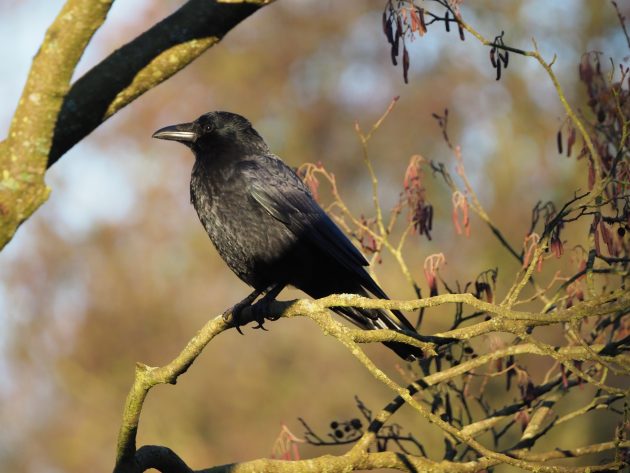
Carrion Crow and (below) Hooded Crow. Despite appearances, the same species
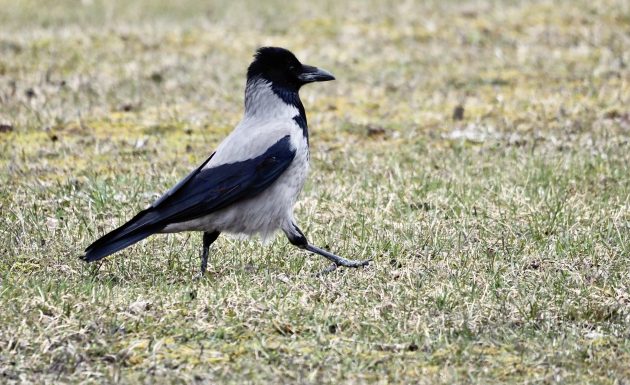
A classic example of the latter is the Carrion Crow, which looks quite different from the Hooded Crow. Despite appearances, the two birds are so alike that AviList lumps them as one species, Corvus corone, though recognising six sub species. If you are a lister, that means just one tick if you follow AviList’s taxonomy.
Until we had AviList, there were four world lists to choose from, each with slightly different taxonomy. There was the HBW and BirdLife International Checklist of the Birds of the World, The Howard and Moore Complete Checklist of the Birds of the World, the eBird/Clements Checklist of the Birds of the World and the IOC World Bird List. Both the latter recognised the Carrion Crow and the Hooded Crow as two distinct species.
Having just one list makes life simpler for everyone, from conservationists to serious listers, so the AviList has generally received a warm welcome from the ornithological world. The first AviList was published last year, and this year we have the first major revision. (Annual updates are promised for the future). The headlines from this revision are the species which have been split, forming two species where only one was recognised before.
From a North American perspective the most important here is the division of the Willet into two species: the Saltmarsh Willet Tringa semipalmata and Prairie Willet Tringa inornata. According to AviList: “Careful observation has revealed drastically different patterns of occurrence that have helped clarify that two species are involved. Saltmarsh Willet breeds in coastal saltmarshes from Atlantic Canada to Texas and sparingly in the Caribbean; it vacates North America almost entirely and primarily winters along the Atlantic Coast of South America, with Brazil hosting much of the population. Prairie Willet, by contrast, breeds in wetlands of the Prairie Provinces, Great Plains, and Great Basin Desert and winters along both the Pacific and Atlantic coasts from Canada south to the Southern Cone of South America.”
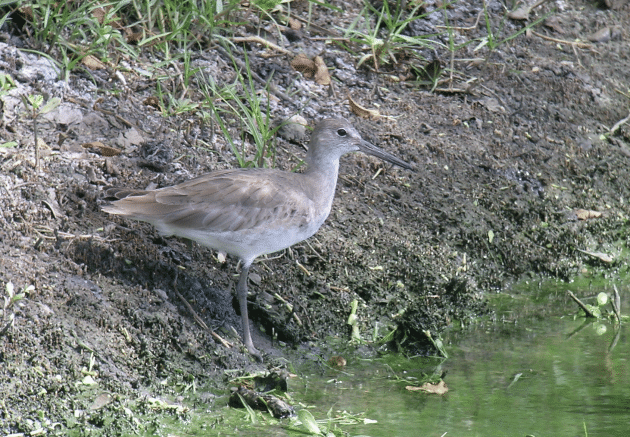
I photographed this Willet in Tobago in February 2007. Presumably it would now be called a Saltmarsh Willet?
Visually, the two can be separated most easily in juvenile plumage. Saltmarsh Willet is smaller and browner, while Prairie Willet is larger and greyer. I see that my copy of Sibley’s North American Bird Guide divides them into two, eastern and western, thus predicting the split. AviList comments “Much remains to be learned about the exact distribution, and having birders and ornithologists more focused on identifying these at the species level is sure to bring additional insights in the years to come.”
Surprisingly, no Willet has ever been recorded in the British Isles, though vagrants have been seen as close as France, Norway and Finland. When one does finally turn up (it’s reckoned to be one of the most likely additions to the British list), the challenge will be to identify exactly which species. I’ve seen Willets at a number of locations, from California to Louisiana, Costa Rice to Tobago, so I’ve no doubt seen both species (Saltmarsh in Tobago, Prairie in California and Costa Rica?) but I’m afraid that the at the time, they were just Willets. I gain an armchair tick.
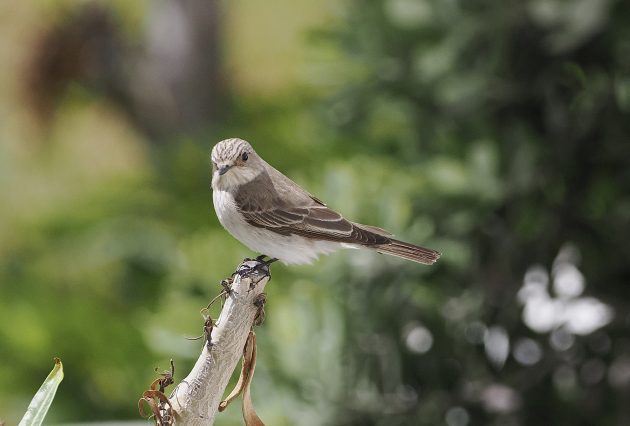
Mediterranean flycatcher Muscicapa tyrrhenica (above and below). These individuals were photographed on the Balearic island of Menorca, where they are common breeding birds
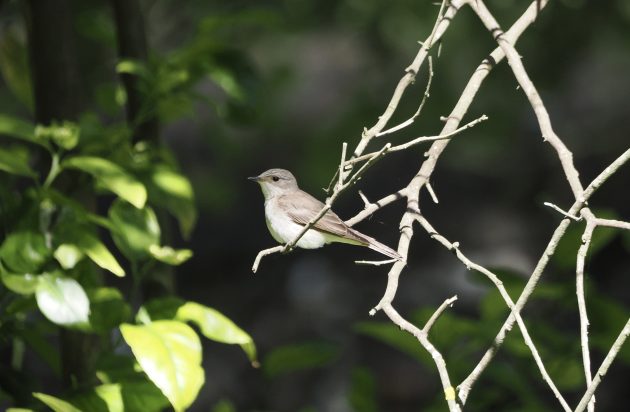
One split in the latest revisions that I am familiar with is Mediterranean Flycatcher (Muscicapa tyrrhenica), formerly regarded as a race of Spotted Flycatcher. Mediterranean Flycatchers breed in the Balearic Islands, Corsica, Sardinia, the Tuscan archipelago and a narrow stretch of Italy’s Tyrrhenian coast. The split was based on genetic, vocal, morphological and plumage differences. I spent a lot of time watching these flycatchers on the Balearic island of Menorca in May, but I’m forced to admit that the differences between Spotted and Mediterranean Flycatchers are subtle and far from obvious.
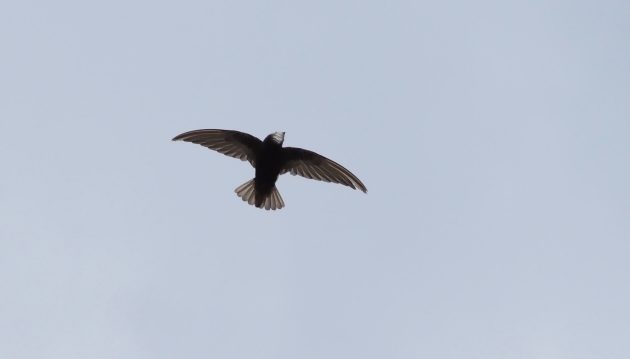
Little Swift (above and below) is now lumped with the almost identical House Swift
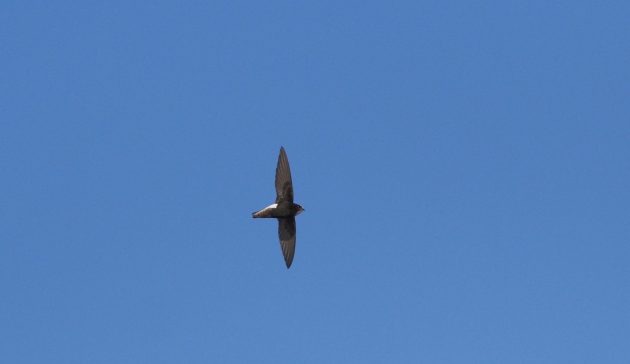
I’ve seen both House Swifts and Little Swifts on many occasions, and have always wondered why they were regarded as separate species. They are no longer: the House Swift has been absorbed into the Little Swift (Apus affinis). This is a curious bird, for it has a huge distribution that takes in all of sub-Saharan Africa, India, and now southern China, Malaysia, Japan and Borneo, but has just a single colony in Europe, in south-west Spain, where my photos were taken.
Lastly, a welcome split, at least by me. Maghreb Wheatear has been divorced from the closely related Mourning Wheatear, a split anticipated by the Collins Bird Guide, which notes that it is a separate species “on account of clear sexual dimorphism and allopatric range”. I ticked my first Maghreb Wheatear in Morocco in April, so it’s good to see its status recognised.















 English (US) ·
 French (CA) ·