

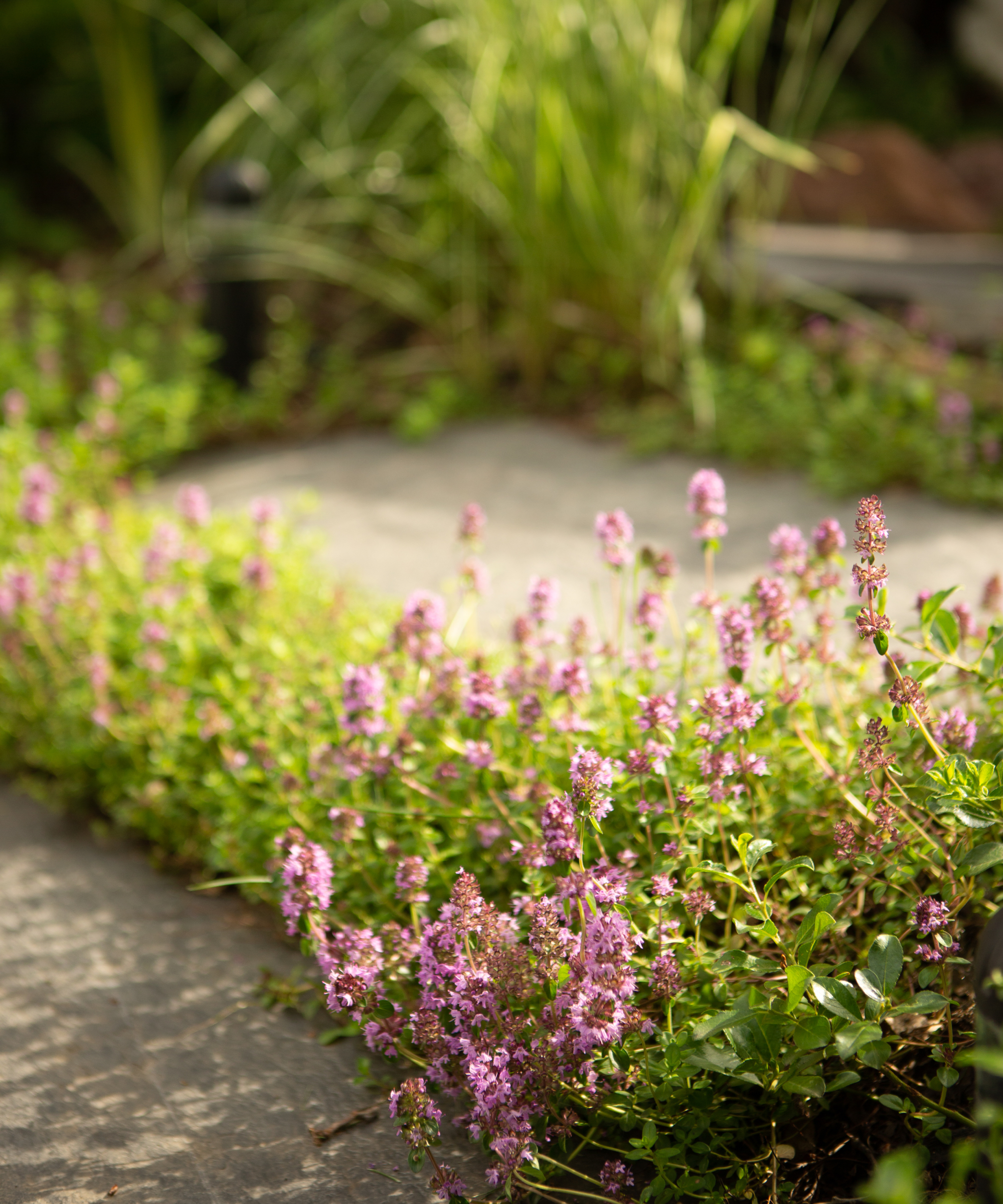
May is the perfect month to add this lovely little plant to your garden and let it fragrance a path or driveway. Its tiny leaves are packed with essential oils so release a fresh citrus scent whenever they’re crushed or brushed against. And don’t worry a jot about stepping on this low grower – it’s as tough as they come and will happily tolerate foot traffic, and many folk plant it as a lawn alternative or ground cover. As well as treating you to its lemony perfume, it’ll pretty up paving or gravel with tiny purple flowers through June and July and its foliage is evergreen in USDA Zones 4–9.
So what is this wonderfully aromatic plant? Creeping thyme, otherwise known as Thymus serpyllum only grows to 2 or 3 inches high, but gently spreads up to 20 inches, slowly filling gaps in paving and creeping through gravel. It originates from temperate areas of Europe, Asia and northern Africa where it grows wild on rocky slopes and dry hillsides, which is why it thrives so well in minimal soil between pavers or in gravel. Creeping thyme loves to bask in sunshine and is a very drought-tolerant plant once established, so it's a super addition to a low maintenance garden.
(Image credit: Getty Images)
How to Add Creeping Thyme to a Path or Driveway
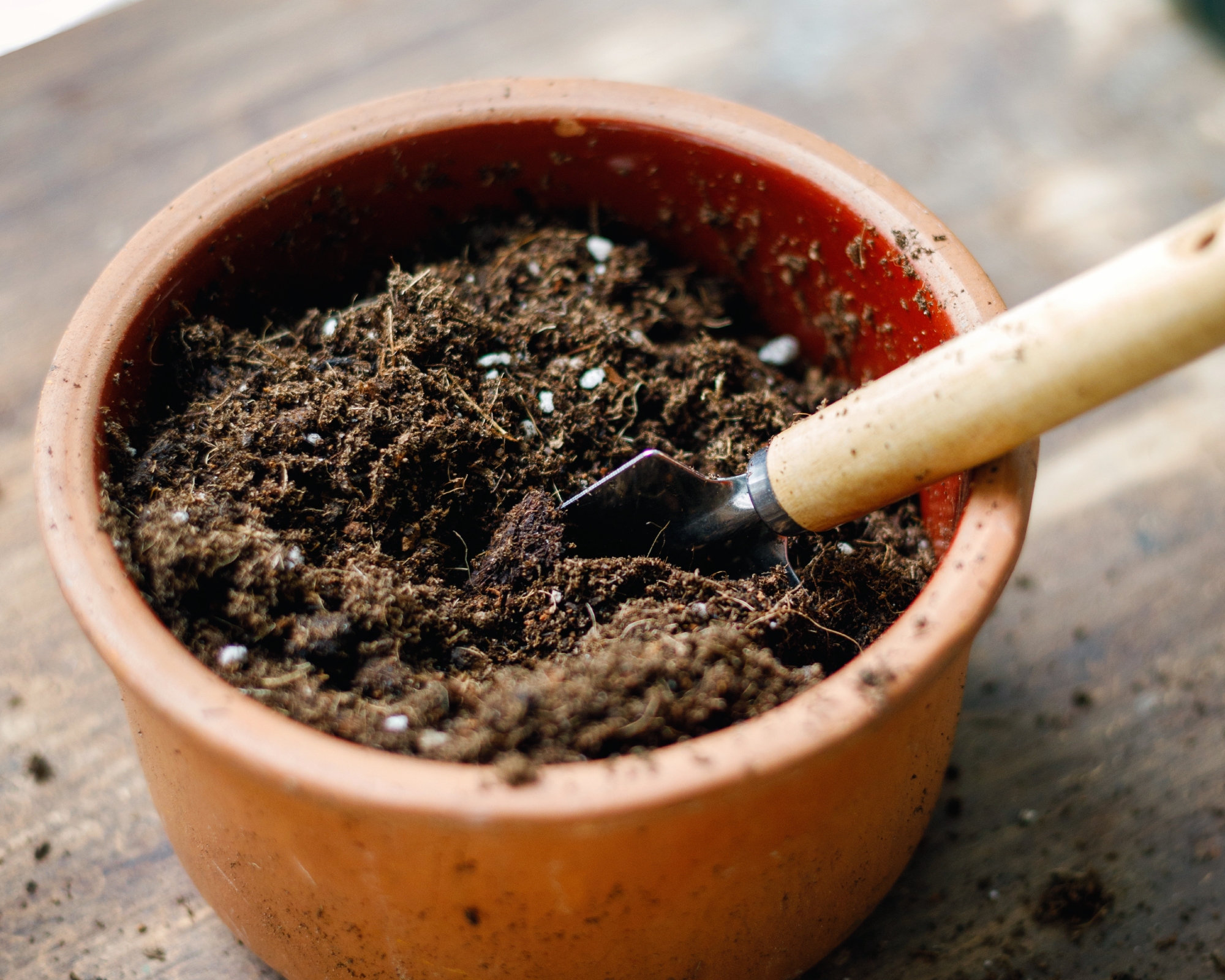
In May, you can start creeping thyme from seed, making this a very cheap garden project, and seed is available from Eden Brothers and Amazon. The trick to success is to first mix the seed with a handful of garden soil or any all-purpose potting mix such as this from Amazon, and a handful of composted cow manure, also available from Amazon. The cow manure is key, as it retains far more moisture than regular soil, so you’ll get a much better germination rate. This method also makes handling these teeny-tiny seeds far simpler.
Mix these three components together in a bucket, being careful not to add too much soil or manure as creeping thyme seeds need light to germinate. Add a little water so the mixture sticks together, then press into gaps between pavers and create planting pockets along path edges and in gravel. Keep moist and you should see shoots in 2–3 weeks. Keep watered for the first few months until the plants have grown a root system to source moisture themselves.
(Image credit: Getty Images)
How to Look After Creeping Thyme
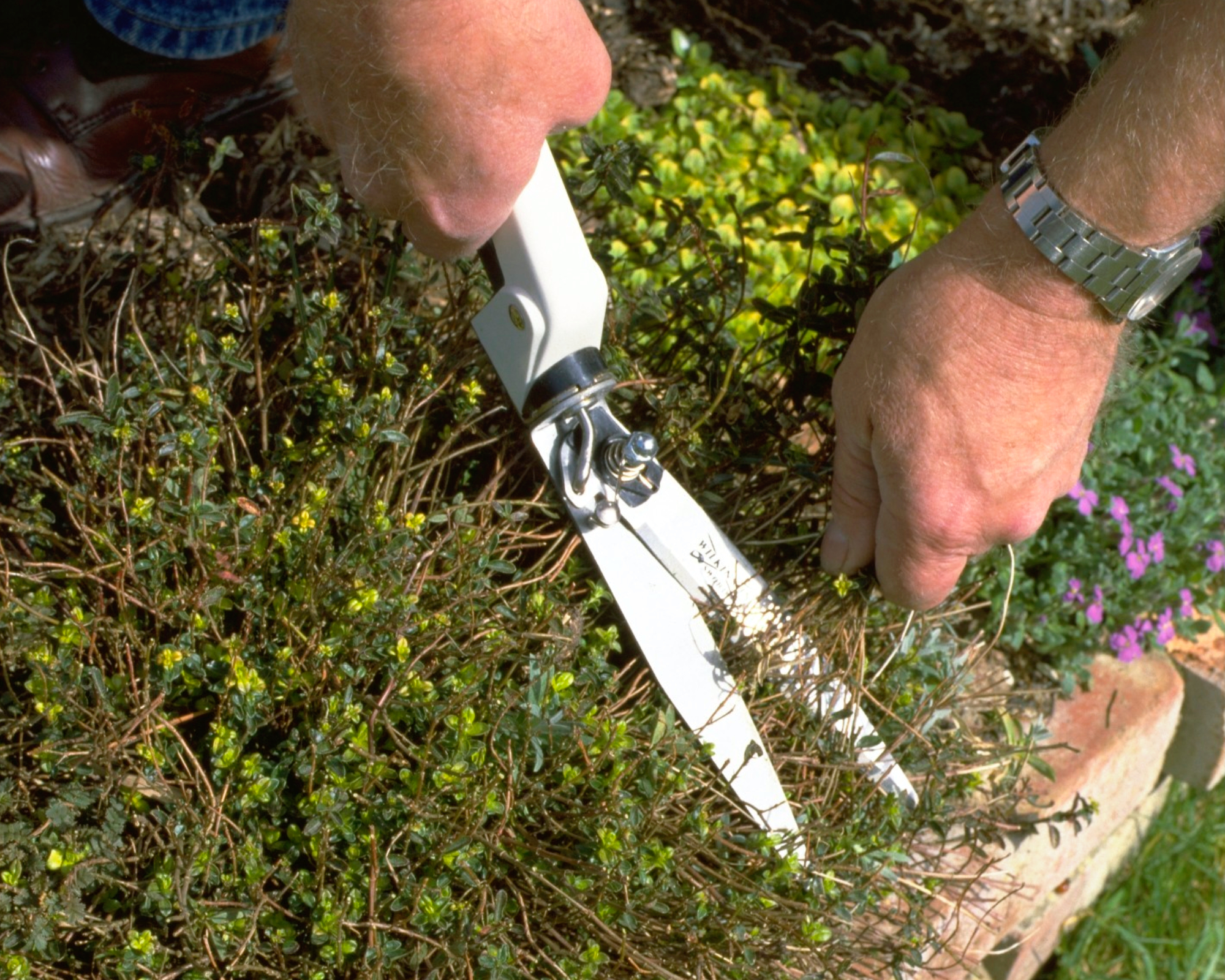
Thymus serpyllum is a very low maintenance plant so, once it’s settled into its new home and is growing well, you can pretty much leave it to look after itself. It will appreciate a drink during any prolonged dry spells. Giving it a good haircut once the flowers have finished blooming is also a smart move as this will keep the plant growing in a low, dense carpet. It’s a quick job with a pair of hedge shears such as these from Amazon.
Creeping thyme is resistant to deer and rabbits and doesn’t need fertilizing. While it's considered hardy and evergreen in zones 4–9, it's the wet rather than the cold that this plant finds difficult. Give it great drainage and it'll tolerate even extreme heat and cold down to 5°F, though it may lose its foliage through winter and regrow leaves again in spring.
(Image credit: Future)
Where to Plant Creeping Thyme
(Image credit: Getty Images)
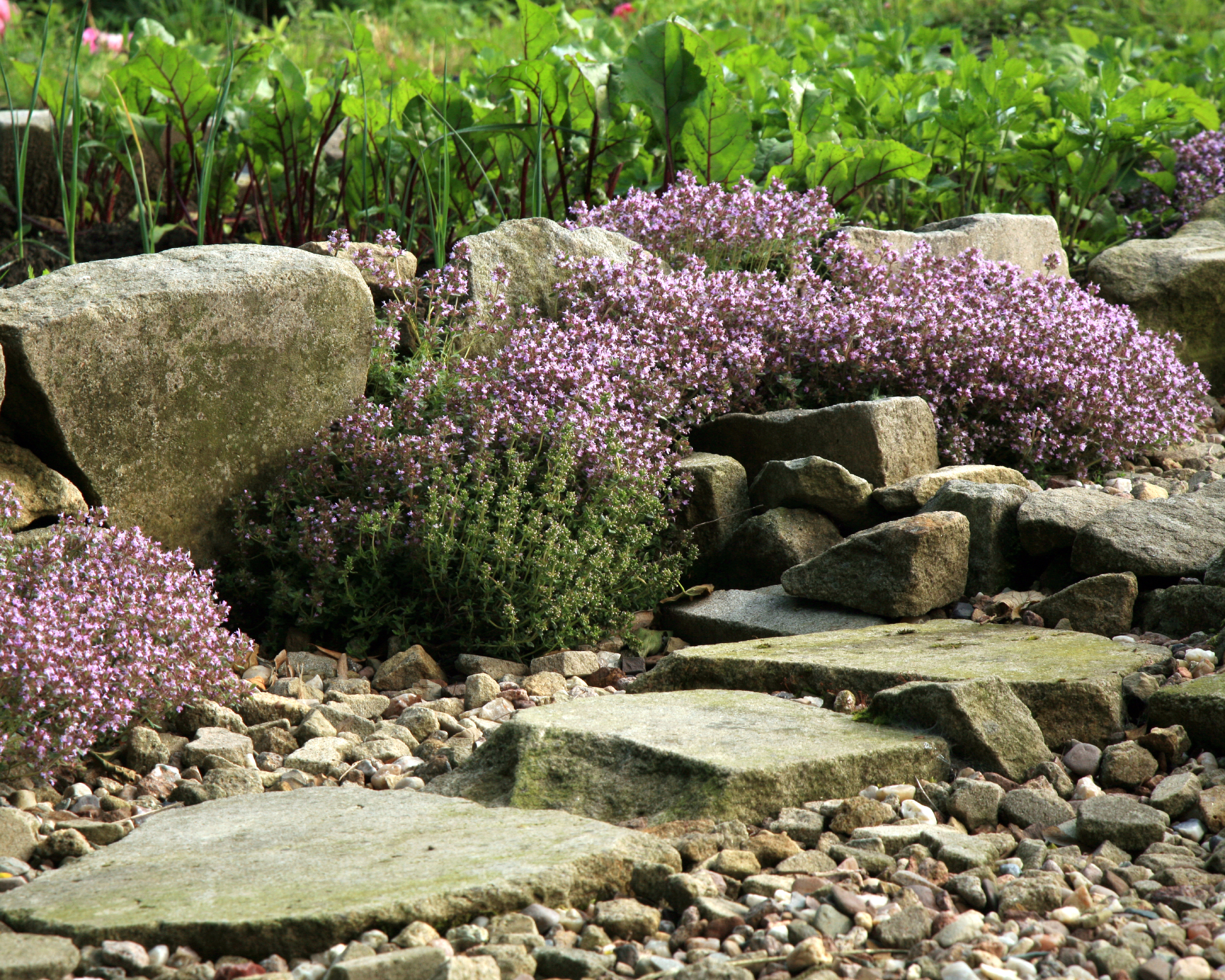
This tough perennial will thrive in any well-drained soil that gets plenty of sun. You can use it as ground cover, too, and it’s a useful front-of-border plant to keep weeds out. Because it’s so resilient, it’s a good choice for roadside beds, too.
If you like the look (and wonderful smell!) of creeping thyme in your path or driveway, then why not lift a patio paver and create a bigger planting pocket of this lovely low grower? Just be sure to drill a few holes through any base material to ensure the excellent drainage it needs to thrive. As patio ideas go, this is such an easy win, and a great way to make a small garden feel bigger.


















 English (US) ·
  French (CA) ·