

 17 minutes ago
1
PROTECT YOUR DNA WITH QUANTUM TECHNOLOGY
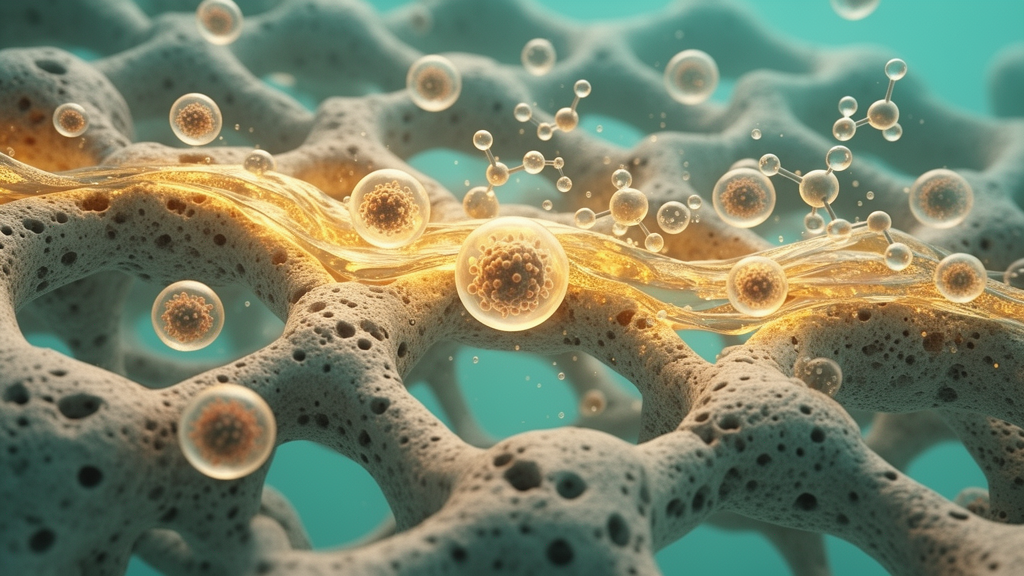
Orgo-Life the new way to the future Advertising by AdpathwayQuantum-chemical calculations utilizing density functional theory have mapped the complete molecular pathway through which the alpha-Ag2WO4 (110) crystal surface transforms hydrogen peroxide and water into an energetic burst of reactive oxygen species over activation energy barriers falling below 0.2 electronvolts. The theoretical investigation provides the first full mechanistic explanation for how this metal oxide catalyst drives the complete oxidation of sulfides into sulfones under exceptionally mild reaction conditions, resolving long-standing questions surrounding the behavior of short-lived oxygen intermediates on the material’s surface.
Oxidizing sulfides to sulfoxides and sulfones represents a fundamental chemical transformation required across the manufacture of pharmaceuticals, fine chemicals, and industrial catalysis. Despite its broad utility, the oxidation process conventionally requires harsh chemical oxidants and high operating temperatures to overcome substantial kinetic resistance. Metal oxides capable of generating reactive oxygen species—specifically singlet oxygen, superoxide radicals, hydroxyl radicals, and hydroperoxyl radicals—present a far gentler synthetic route. Previous laboratory experiments demonstrated that alpha-Ag2WO4 completely converts sulfides into sulfones within one hour at 50 degrees Celsius in total darkness using hydrogen peroxide as the oxidant, achieving this catalytic feat despite possessing a wide band gap of approximately 3.1 electronvolts. However, because reactive oxygen species exist only fleetingly, the underlying molecular mechanism responsible for this remarkable catalytic activity remained unknown.
To uncover the molecular steps driving this transformation, an international collaboration led by Prof. Juan Andrés from Universitat Jaume I in Spain, alongside Prof. Miguel A. San-Miguel from the University of Campinas in Brazil and first author Dr. Felipe Lipsky, reconstructed the full surface reaction pathway. Published in the Chinese Journal of Catalysis, the study represents the first comprehensive theoretical investigation of the complete sulfide oxidation mechanism on the alpha-Ag2WO4 (110) crystal face, tracking how surface structure directly governs reaction barriers and intermediate stability.
The density functional theory calculations established that under-coordinated silver atoms exposed at the surface act as the primary active catalytic sites, operating in tandem with adjacent lattice oxygen atoms that serve as proton acceptors. Together, these sites dissociate both hydrogen peroxide and water with minimal energetic resistance. The modeled reaction path exhibits an energy barrier of only 0.07 electronvolts to convert hydrogen peroxide into hydroperoxyl radicals and subsequently into singlet oxygen, alongside a barrier of only 0.12 electronvolts to split water molecules into hydroxyl radicals. Under these mild conditions, the computational model shows that approximately 90 percent of adsorbed surface water dissociates within roughly 10 picoseconds at 50 degrees Celsius.
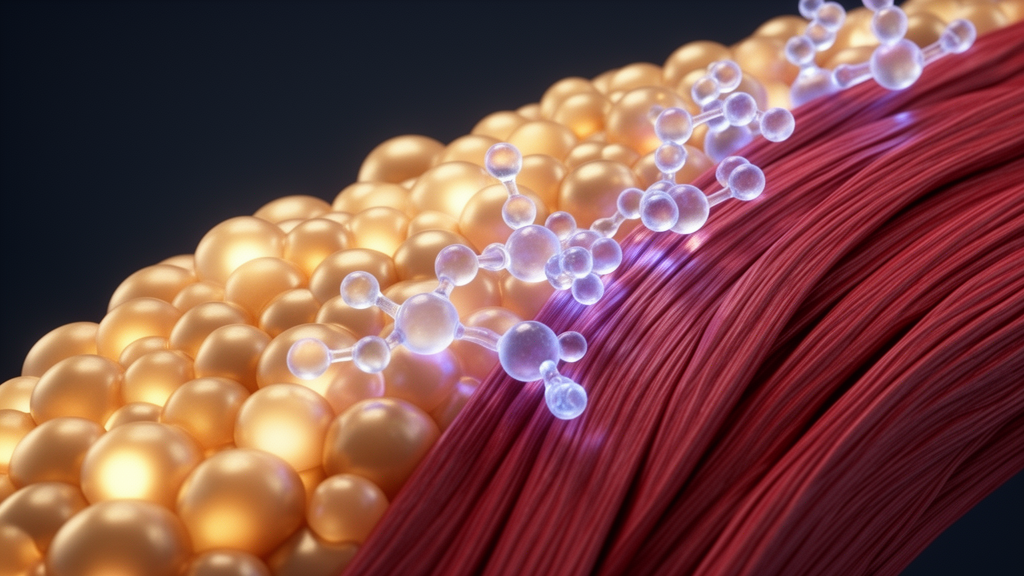
The catalyst’s ability to trigger this reactive intermediate surge is made possible by distinct electronic states residing inside the band gap that occur exclusively within the outermost atomic layers of the material. Acting analogously to a molecular bank for charge, these localized mid-gap states can donate electrons to an adsorbed reactant or accept charge back as individual reaction steps demand. This unique electronic buffering allows the identical silver tungstate surface to concurrently stabilize closed-shell singlet oxygen, in which all electrons are paired, alongside open-shell radical species carrying unpaired electrons.
The investigation further mapped the specific two-step oxidation sequence for dimethyl sulfide to elucidate the origin of overall reaction rates. The initial oxidation phase, converting dimethyl sulfide to dimethyl sulfoxide, proceeds smoothly with singlet oxygen over a modest activation barrier of 0.52 electronvolts. Conversely, the subsequent conversion of dimethyl sulfoxide to dimethyl sulfone forms the rate-limiting bottleneck of the entire catalytic sequence. Mediated by singlet oxygen alone, this secondary step must surmount an energy barrier of 1.65 electronvolts. However, the intervention of hydroperoxyl radicals derived from a second hydrogen peroxide molecule reduces the bottleneck barrier to 0.86 electronvolts, enabling the transformation to proceed on a rapid timescale of seconds and providing a clear rationale for why hydrogen peroxide is essential in laboratory experiments.
In addition to rationalizing empirical observations, the computational model establishes precise quantitative targets for future catalyst engineering. The authors calculated that lowering the rate-limiting barrier by a modest 0.1 electronvolts would accelerate catalytic turnover frequency by approximately 36-fold. To accomplish this, the researchers propose incorporating additional mid-gap electronic states through the controlled introduction of oxygen vacancies or through nitrogen and sulfur lattice doping, with the eventual aim of driving sulfide oxidation using ambient molecular oxygen alone. The fundamental principles governing radical stabilization identified in the work offer a broader framework for engineering advanced metal-oxide catalysts intended for selective organic oxidations and environmental remediation.
Subject of Research: Theoretical reaction mechanism of sulfide oxidation on the silver tungstate surface
Article Title: Inside the ‘ROS storm’: Quantum-chemical calculations reveal how silver tungstate oxidizes sulfides under mild conditions
Article References: Inside the ‘ROS storm’: Quantum-chemical calculations reveal how silver tungstate oxidizes sulfides under mild conditions. Original publication (Bibliographic details unavailable.)
Image Credits: AI Generated
DOI: Not provided
Keywords: silver tungstate, density functional theory, sulfide oxidation, reactive oxygen species, singlet oxygen, hydroperoxyl radicals, hydroxyl radicals, dimethyl sulfide, dimethyl sulfoxide, dimethyl sulfone, hydrogen peroxide, mid-gap electronic states, catalytic reaction pathway, activation energy barriers, oxygen vacancies, doping engineering, environmental remediation














 English (US) ·
 French (CA) ·