

 2 days ago
14
PROTECT YOUR DNA WITH QUANTUM TECHNOLOGY
Orgo-Life the new way to the future Advertising by AdpathwayA bar-tailed godwit called Phil has completed a 6,800-mile journey from Norfolk to Siberia and back again, in the first mapping of the endurance feats of this long-distance migrant.
A wading bird not much larger than a pigeon, the bar-tailed godwit is known for making the longest recorded non-stop migratory flight of any bird, with populations that visit Britain spending summers breeding in the Arctic Circle before retreating to the unfrozen wetlands of Britain in winter.
The full extent of its long-distance capabilities has been revealed thanks to RSPB scientists using a tracker weighing just 6g. This was fitted to Phil in January by the Wash Wader Research Group, which named the bird in honour of Phil Ireland, the group’s leader for many years.
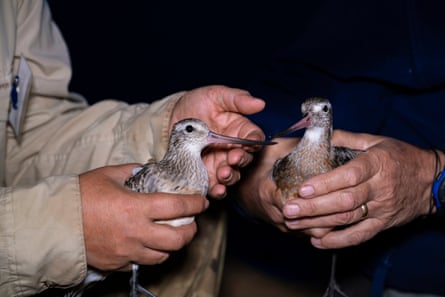
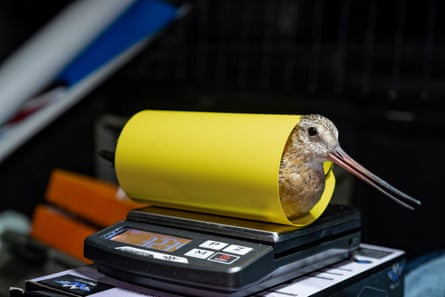
Since then, the tracker has followed Phil on his journey from the Wash to the Wadden Sea coasts of the Netherlands, Denmark and Germany in March, and then on to the Taymyr peninsula in central Siberia in late May. On his successful return journey, Phil cruised over the Arctic Ocean off northern Norway, pausing on three small Norwegian islands before returning to the Wadden Sea.
He has now been recorded safely back at RSPB Snettisham on the edge of the Wash, where thousands of birds flock together at the highest of tides in one of the greatest wildlife spectacles of a British winter.
“It’s amazing to think that a bird we tagged here on the Wash in January has travelled thousands of miles to Siberia and made it all the way back again,” said Jeff Kew, a coastal adviser for the RSPB.
“By tracking Phil, we’re reminded why protecting migratory birds needs to be a global effort. Many species cross borders and depend on a whole network of wetlands along the way.”
after newsletter promotion
Bar-tailed godwits that visit Britain use part of what is known as the east Atlantic flyway, a migratory superhighway that stretches from the Arctic to South Africa and is a route for millions of birds each year. The vast mudflats of the Wash are a vital feeding and resting place for scores of species.
Dr Nigel Clark, of the Wash Wader Research Group, said: “The Wash is the UK’s single most important coastal wetland for migratory waders and spectacular numbers can be seen here in autumn and winter.
“But tracking birds like Phil the godwit shows us how connected the Wash is with the rest of the flyway. This network of sites is more important than any single ‘service station’ alone.”















 English (US) ·
 French (CA) ·