

PROTECT YOUR DNA WITH QUANTUM TECHNOLOGY
Orgo-Life the new way to the future Advertising by AdpathwayLockheed Martin has unveiled an autonomous undersea drone that can hitch a ride on the surface of larger vessels to maximise efficiency.
The Lamprey Multi‑Mission Autonomous Undersea Vehicle (MMAUV) is designed to perform a wide range of missions, including surveillance and reconnaissance or deploying equipment to the seafloor. It can also be equipped to launch anti‑submarine torpedoes in active conflicts.
The rectangular craft is able to attach itself to the hull of larger sea vessels using either a docking mechanism or suction cups, allowing it to conserve energy. While attached it can use built-in hydrogenators – effectively mini generators – to recharge its battery, so it can reach its intended target completely charged and be deployed for the maximum amount of time possible, Lockheed Martin said. This is especially useful for data reconnaissance, with operators able to deploy a suite of Lampreys on the seabed to wait for a target or gather intelligence over an extended period.
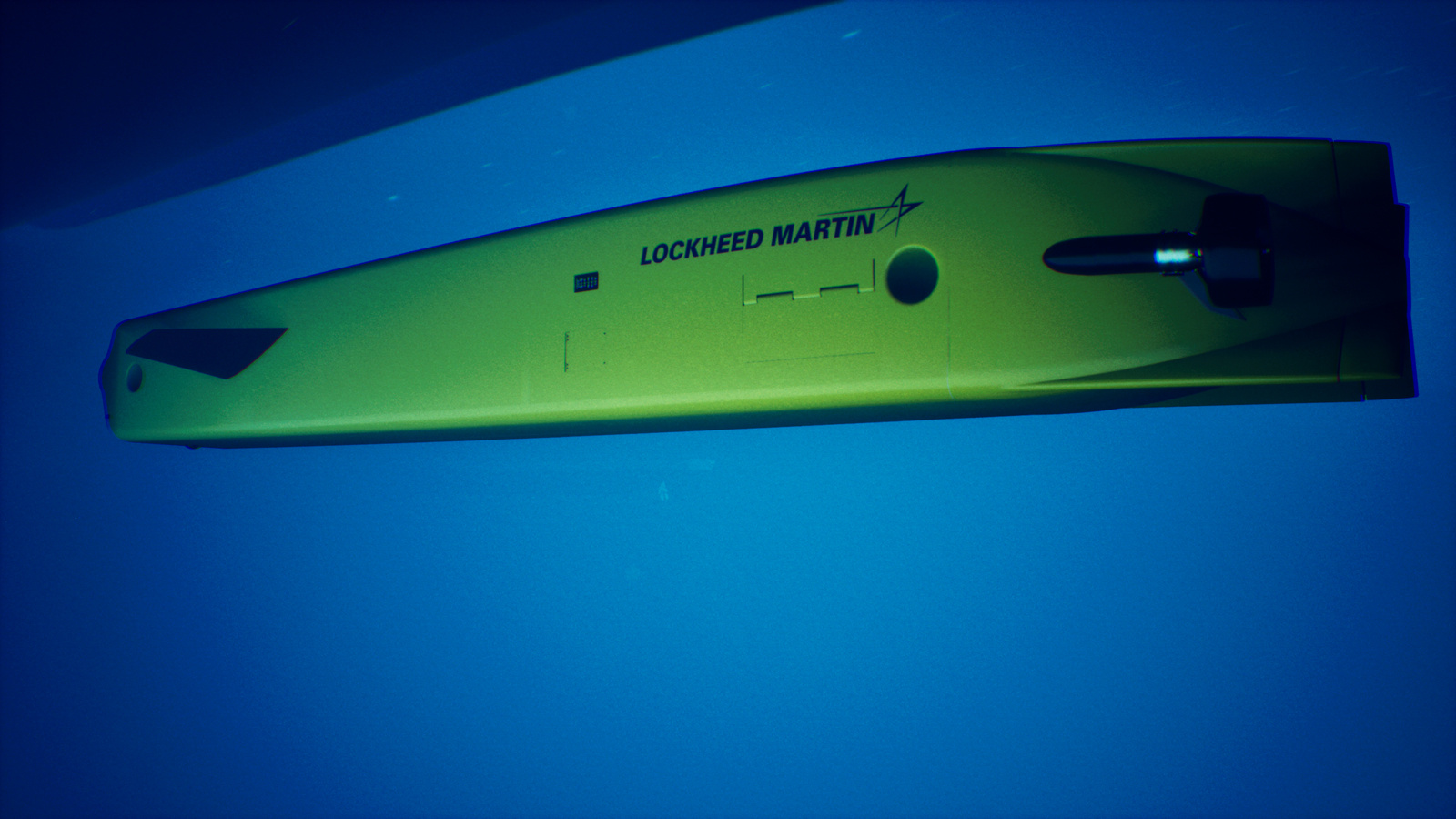
The MMAUV – Lockheed Martin
The system emerges as militaries around the world increase their focus on undersea dominance. Autonomous platforms are viewed as a way to monitor contested waters, protect subsea infrastructure and counter adversaries without risking crewed submarines.
“The modern battlespace demands platforms that hide, adapt and dominate,” said Paul Lemmo, vice president of sensors at Lockheed Martin. “LampreyMMAUV was internally funded, letting us iterate at lightning speed and hand the Navy a true multi mission weapon that detects, disrupts, decoys and engages on its own.”
Several projects are focused on developing autonomous underwater drones, including one that successfully completed a 300km journey beneath East Antarctic ice in December to deliver the first-ever data on ocean conditions and ice shelf melting. In July, another drone was deployed in ultra-deep waters near the Mariana Trench, Western Pacific, to collect data on previously unexplored polymetallic nodules as part of plans to find new critical mineral sources.
You may also be interested in...

Two landers capable of withstanding 1,200 times the pressure on the Earth’s surface will journey into the depths of the ocean later this year to gain a better understanding of the origin of ‘dark oxygen’.
Open-access content

The Institution of Structural Engineers has released comprehensive guidance about the design of permanent bamboo structures for the first time.
Open-access content

The EU has blamed TikTok for implementing an “addictive design” that could breach Europe’s new content rules.
Open-access content

Pornhub has said it will block access to all UK users that haven’t already generated an account on February 2 due to the “failed
Open-access content
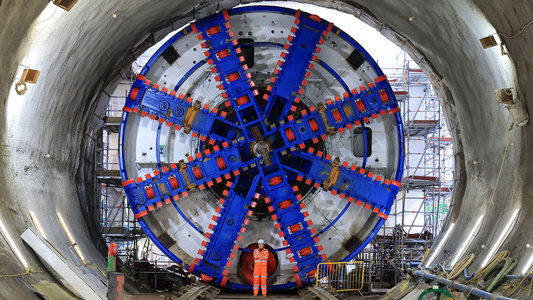
The first of two tunnelling machines has begun excavation works between Old Oak Common and Euston Station as part of HS2’s final 4.5-mile stretch into central London.
Open-access content

The US version of TikTok has been accused of suppressing content critical of President Donald Trump by governor of California Gavin Newsom just days after being acquired by a conglomerate of US companies.
Open-access content

Heathrow has scrapped the 100ml limit for liquids in cabin bags after it completed upgrades to its security scanners.
Open-access content

UK mobile operators have been warned to prepare well in advance for the forthcoming shutdown of legacy 2G networks or risk leaving customers without access to vital services.
Open-access content
More from Defence

Increased spending on UK defence programmes is set to increase the gap in funds allocated towards infrastructure projects to nearly £2tn, a report from EY-Parthenon has found.
Open-access content

Frederick Lamb has never forgotten that evening in July 1961 when John F Kennedy, only a few months into his presidential term, instructed Americans in a television address to build bomb shelters in their gardens to prepare for a possible escalation of the Cold War.
Members'-only content
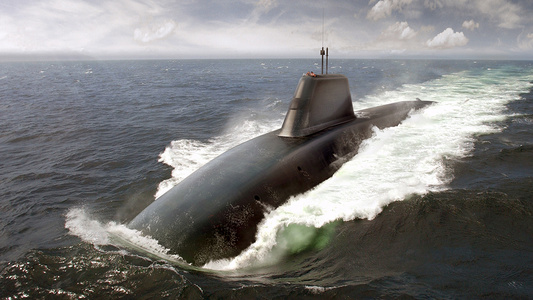
Rolls-Royce has signed a £400m supply chain deal to support the development of reactors for the next generation of nuclear-powered attack submarines.
Open-access content
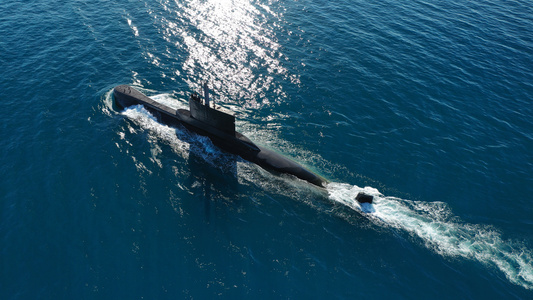
Russia’s efforts to target the UK’s critical undersea cables and pipelines will be countered with a defence force consisting of autonomous vessels, AI, warships and aircraft, the MoD has announced.
Open-access content
More from Research And Innovation
This issue, we highlight upcycling plastic waste and implants that harvest energy from flowing blood.
Members'-only content

A century into quantum research and, while the computers may not yet work in universal applications, people are getting excited…
Members'-only content

Cement absorbs and stores millions of tons carbon dioxide from the air over the lifetime of urban buildings and infrastructure, scientists have calculated.
Open-access content

Researchers have created a high-resolution 3D map representing all the buildings worldwide as a tool to model urbanisation, plan
Open-access content
More from Submarines
Rolls-Royce has signed a £400m supply chain deal to support the development of reactors for the next generation of nuclear-powered attack submarines.
Open-access content
HMS Agamemnon, the UK's newest attack submarine, has completed its first underwater test at BAE Systems’ shipyard at Barrow-in-F
Open-access content
Nauticus Robotics has sent an autonomous underwater vehicle to depths of 2,300 metres ahead of plans to launch a commercial service for monitoring infrastructure in the deep ocean.
Open-access content
UK defence firm Babcock has announced it has started building key components for the SSN-AUKUS next-generation nuclear-powered attack submarine programme.
Open-access content
More from Jack Loughran

The updated AirPods bring improvements to water resistance and battery life... but with still no way to change the batteries once they die, Apple continues to neglect its environmental impact.
Members'-only content
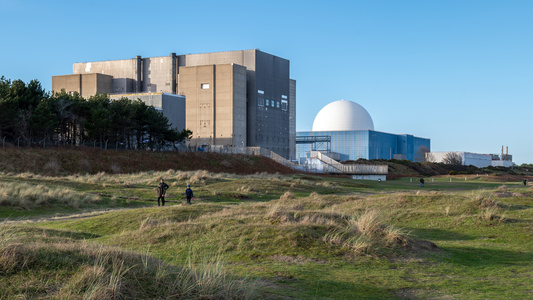
French energy giant EDF is petitioning the UK government to allow it continue operating the Sizewell B nuclear power plant for 20 y
Open-access content
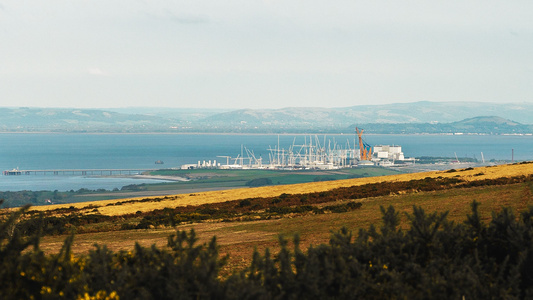
Government plans to cut environmental protections in a bid to make it easier to build nuclear power plants is “misguided” a
Open-access content

Honda has unveiled a solar-powered towable travel trailer designed to be lightweight so it can be attached to the back of compac
Open-access content
More from News

The US wants 40% of Taiwan’s semiconductor production to take place on American soil – a proposal firmly rejected by Taiwan.
Open-access content
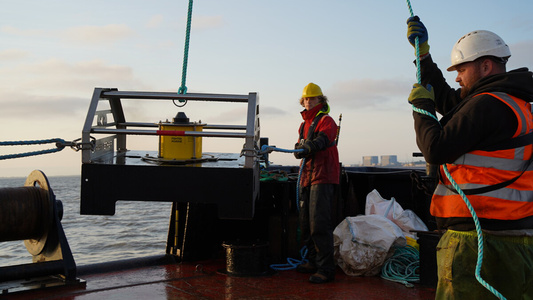
An acoustic fish deterrent system has been shown to keep target species away from Hinkley Point C’s cooling water intakes in the Severn Estuary
Open-access content

The use of robots in industry is nothing new. For decades, factories have relied on manufacturing automation to improve speed, p
Open-access content
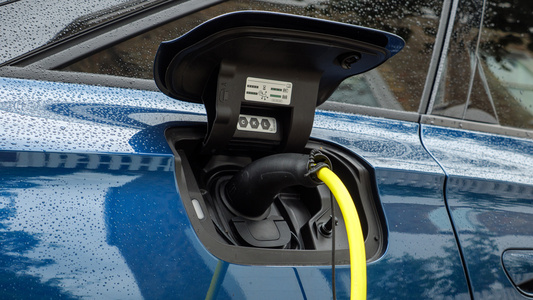
Battery electric vehicles and plug-in hybrid electric vehicles accounted for 32% of all new cars registered in January 2026, according to independent transport research organisation New AutoMotive.
Open-access content

















 English (US) ·
  French (CA) ·