

 7 hours ago
5
PROTECT YOUR DNA WITH QUANTUM TECHNOLOGY
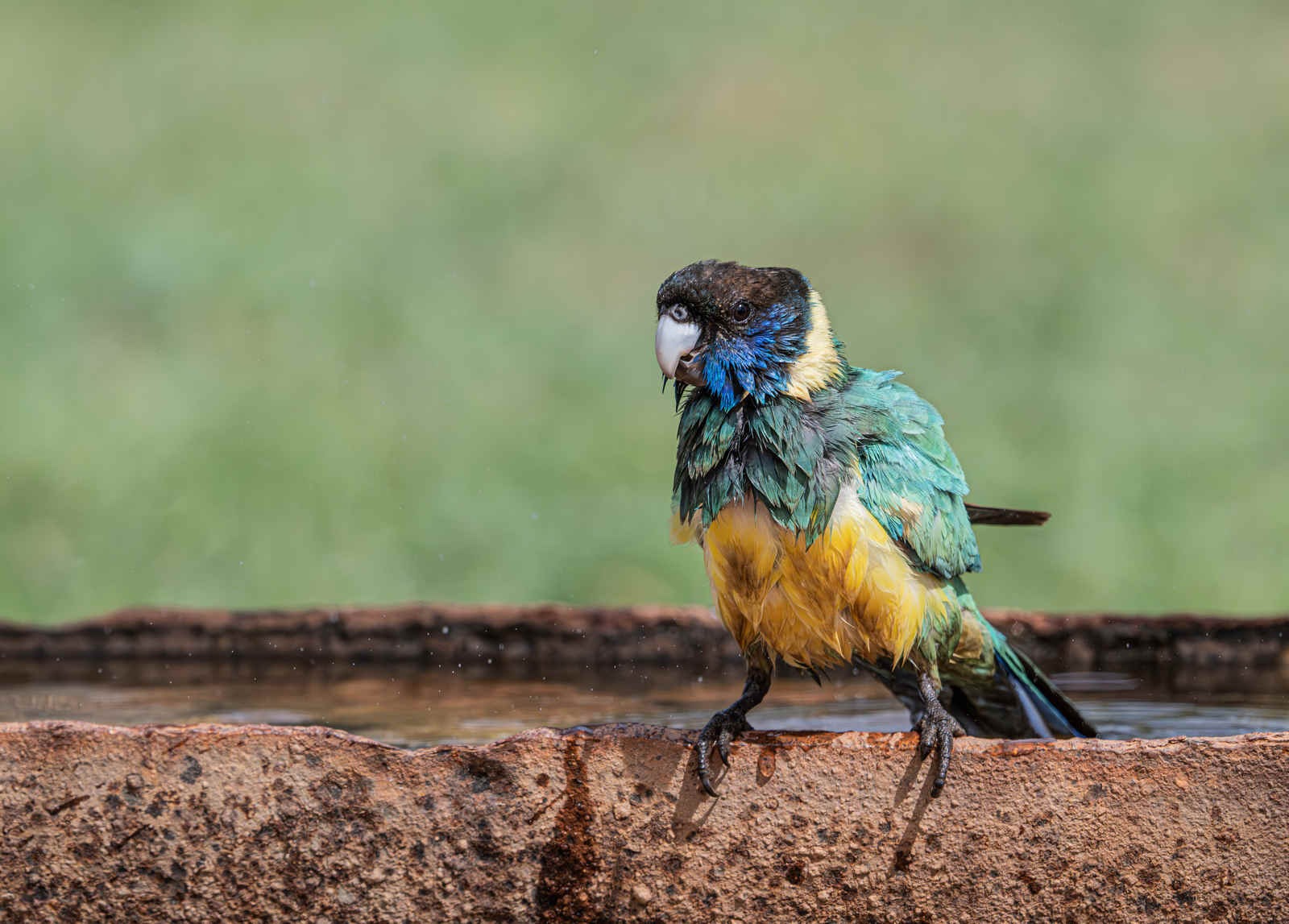
Orgo-Life the new way to the future Advertising by Adpathway All of these animals can see UV: goldfish, chameleon, western bluebird (by William Parker), house mouse (linked photos are from Wikimedia)
29 November 2026
The animals pictured at top are just four of the overwhelming majority of animal and insect species that can see ultraviolet light.
In most respects we have inferior vision to a lot of animals. … In every aspect of vision you can pick out an animal and it does it better than us.
— from The Hidden World of Ultraviolet Light | Colour: The Spectrum of Science | BBC Earth Science on YouTubeSince we can’t see UV light, how did we find out what we’re missing?
 Illustration of a prism splitting white light into a rainbow (by Spigget, CC BY-SA 3.0, via Wikimedia Commons)
In the 1880s, John Lubbock split a beam of light with a prism and shone the resulting rainbow onto ants. The ants scurried away from the light. But Lubbock noticed that they also fled from a region just beyond the rainbow’s violet end, which looked dark to his eyes. This area wasn’t dark to the ants, though. It was bathed in ultraviolet—literally “beyond violet” in Latin. Ultraviolet (or UV) light has wavelengths ranging from 10 to 400 nanometers.
— Science Friday: How Science Came To See Ultraviolet Light In AnimalsLubbock’s discovery was made only 146 years ago but since then a host of scientific studies have discovered animals and insects that can see ultraviolet, the genes that allow them to see it, and potential reasons why those genes are turned on or off.
This 2003 study — Molecular analysis of the evolutionary significance of ultraviolet vision in vertebrates— describes why we cannot we see UV and then delves into the difference in genes and amino acids that allow UV vision.
The use of UV vision is associated strongly with UV-dependent behaviors of organisms. When UV light is not available or is unimportant to organisms, the SWS1 gene [which turns on UV vision] can become nonfunctional, as exemplified by coelacanth and dolphin.
— from Molecular analysis of the evolutionary significance of ultraviolet vision in vertebrates, PNAS.org, June 2003The study made a table of species and whether they had the proper active genes. Those who can see UV include shallow water fish (sunlight reaches them), reptiles, birds and rodents. I’ve marked their table of animals with lavender lines to highlight the species that can see UV. Dashed line on frogs indicates that some frog species can see UV.
 An evolutionary tree of 21 vertebrate SWS1 pigments… (from Molecular analysis of the evolutionary significance of ultraviolet vision in vertebrates, PNAS.org)
Apparently primates don’t have UV-dependent behaviors. UV is unimportant to humans for finding food or signaling sexual fitness. Deep sea fish and mammals also don’t see UV because they live in deep blue water.
So we have something in common with dolphins other than working closely with together (photo below). Neither of us can see UV light.
 030318-N-5319A-002
NMMP bottle nose Dolphin with locator leaps out of the water in front Sgt. Andrew Garrett while training near the USS Gunston Hall (photo by U.S. Navy photo by Photographer’s Mate 1st Class Brien Aho., Public domain, via Wikimedia Commons)













 English (US) ·
 French (CA) ·

