

 4 hours ago
1
PROTECT YOUR DNA WITH QUANTUM TECHNOLOGY
Orgo-Life the new way to the future Advertising by AdpathwayThe world's fossil-fuel carbon dioxide emissions are projected to dip slightly in 2026, but the new estimate does not yet show a lasting reversal. The Global Carbon Project's 2026 Global Carbon Budget, published November 10, forecasts a 0.4% decline in fossil CO₂ emissions this year. It also estimates that total CO₂ pollution, including emissions from land-use change, will rise to 43.3 billion tonnes from 42.8 billion tonnes in 2025.
That difference matters. A small fall in emissions from coal, oil and gas can coexist with a rise in the total when land-use emissions increase. The report's figures are projections based on the best available data, not a final year-end measurement. They nevertheless offer a timely snapshot of how the energy transition, economic shocks and land management are shaping the climate budget.
Why a fossil-fuel decline is not the same as a total decline
The Global Carbon Budget tracks human-caused CO₂ from two broad sources: burning fossil fuels and making cement, and changes in how land is used, such as deforestation. The first category is forecast to produce about 38.2 billion tonnes in 2026. The second is projected to increase slightly, leaving total emissions higher than last year.
The headline fossil-fuel figure is encouraging but narrow. It does not mean carbon pollution has stopped growing overall, nor does it mean atmospheric CO₂ is falling. Carbon dioxide accumulates in the air because the world continues to emit far more than natural systems remove. The research team's methodology and data track emissions alongside how much carbon is absorbed by land and oceans.
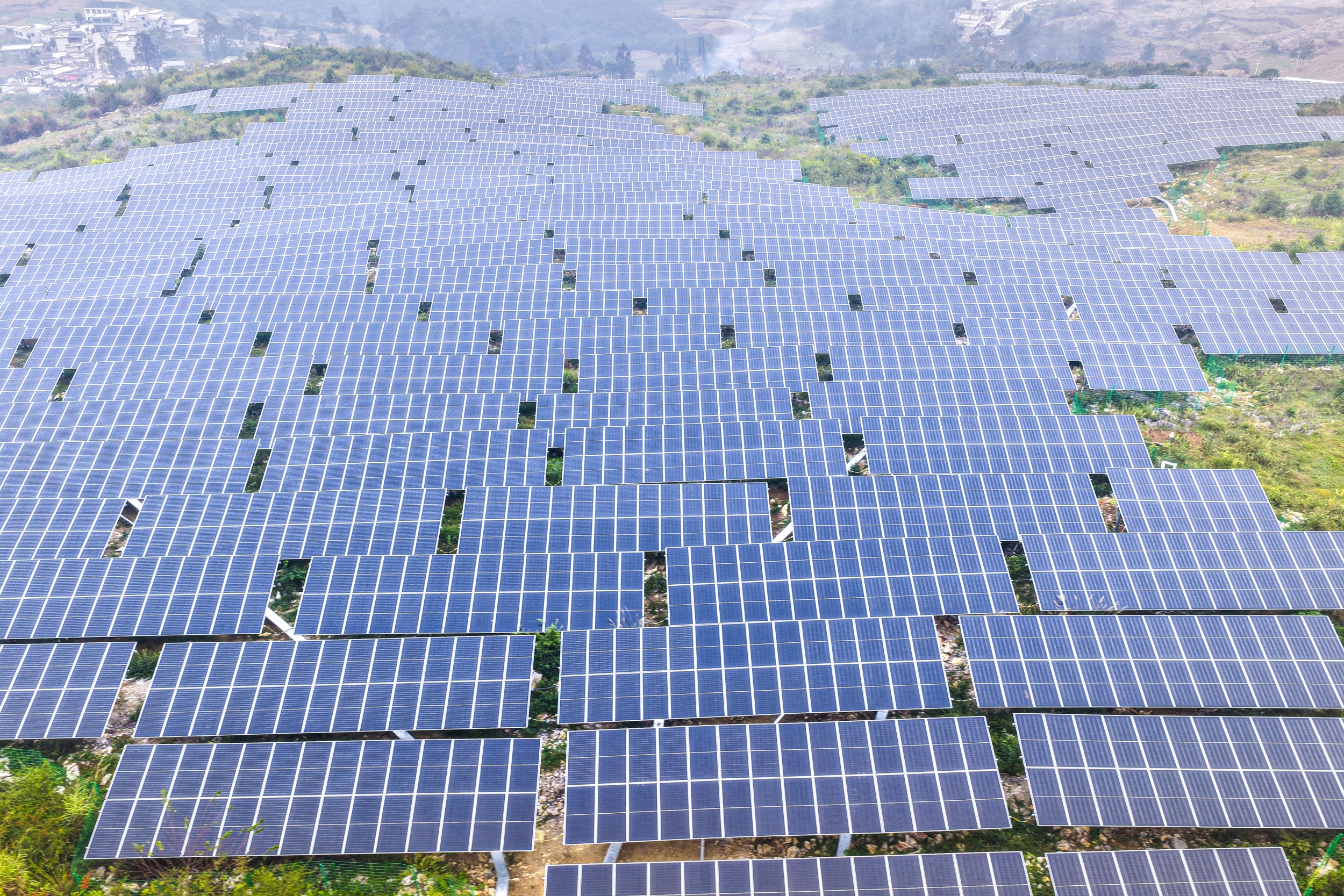
The report estimates that oil emissions will fall by 1.9%, while demand for energy continues to increase. Solar and wind power, along with electric vehicles, are meeting about two-thirds of the growth in energy demand, according to the project. Those additions are helping limit fossil-fuel use, but not yet enough to guarantee a durable decline across years.
Energy shocks can move the numbers without changing the underlying trend
The report attributes part of the projected oil decline to an energy shock linked to the Iran conflict. That explanation is important because a drop caused by disrupted supply or reduced activity is different from a planned, sustained shift to cleaner energy. The Global Carbon Project's lead researcher, Pierre Friedlingstein, characterized a decline partly driven by geopolitical shocks as an unstable basis for climate progress.
The United States is projected to cut emissions by 1.3%, mainly because coal emissions are expected to fall after rising the previous year amid high natural-gas prices and cold weather. That is a reminder that fuel switching, weather, industrial activity and prices can all affect annual totals. One year of change cannot establish a long-term trajectory.
The independent Associated Press report on the budget also notes a broader mismatch: clean-energy growth is strong, yet total fossil CO₂ remains near record levels. That is why a projected decline should be treated as a signal to examine, rather than proof that the world has solved the emissions problem.
The remaining carbon budget is small, but it is an estimate
The Global Carbon Project calculates a remaining carbon budget of about 150 billion tonnes of CO₂ before the world reaches 1.5°C of warming above preindustrial levels. At current emissions, that equals less than four years of emissions. The figure is not a countdown clock with an exact date. It is a scientific estimate tied to the likelihood of limiting warming and affected by uncertainty in climate response and future emissions.
The report also says land's role as a carbon sink recovered after weakening during the 2023–24 El Niño pattern. A carbon sink is a natural system, such as forests or oceans, that absorbs more carbon than it releases. The authors caution that a powerful El Niño in 2026 could affect the land sink again in the coming year. This is another reason annual changes can be volatile.
What readers should watch next
The strongest test will be whether fossil emissions fall again after temporary disruptions fade, and whether that decline is large enough to outweigh growth in other sources. Final data will also clarify whether the projected 2026 numbers hold. The budget is updated every year, and its transparent datasets allow researchers to compare estimates with observed energy use and land change.
For now, the report gives a mixed picture: renewable power and electric vehicles are meeting much of new energy demand, but global emissions remain extremely high and land-use pollution is projected to push the total upward. The meaningful question is not whether one category falls for one year. It is whether the world can keep reducing emissions while maintaining energy access and protecting the natural systems that absorb carbon.
Why the emissions mix matters
A reduction in fossil emissions is most meaningful when it comes from a persistent change in how energy is produced and used. If clean electricity replaces coal or oil, the lower emissions can continue as long as the new capacity stays online and demand is met without returning to fossil fuels. A disruption that temporarily limits fuel supply may produce a similar annual number but a different outlook for the following year. The budget's authors therefore separate the projected decline from the question of whether it can last.
The distinction between fossil emissions and land-use emissions also points to two different policy challenges. Energy systems can reduce carbon pollution through efficiency, electrification and low-carbon power. Land emissions are affected by forest loss, degradation and other changes that release carbon from vegetation and soils. One category cannot automatically compensate for the other, particularly when forests and other ecosystems also support biodiversity, water cycles and local communities.
The Global Carbon Project's annual budget puts these sources in one accounting framework so that readers can see when improvement in one area is offset elsewhere. It is an estimate assembled from energy, land and atmospheric information. Its value is not that it predicts a precise future, but that it allows researchers to compare the scale of human emissions with the capacity of land and ocean sinks.
A single-year decrease also needs to be compared with the longer-term trend. Researchers will be able to assess the 2026 projection against final data and against subsequent years. If fossil emissions fall again while land-use emissions also decline, that would be stronger evidence of a broad turn. If one category rises again, the overall climate burden may continue to grow even as clean energy expands.
How to read the forecast
The word "projected" signals that researchers estimate a full-year total before every country has reported final energy and land-use data. The budget's annual dataset is designed to be transparent about the methods and sources used, but estimates can be revised when new information arrives. That is common in global carbon accounting and does not mean the preliminary result is unreliable; it means readers should not treat it as a final audited number.
The report also estimates how much carbon is absorbed by oceans and land. A stronger natural sink can slow the rise of atmospheric CO₂, but it does not erase the emissions that remain in the atmosphere. Sinks vary with weather, fires, drought and ocean conditions. Protecting ecosystems can maintain their capacity to store carbon, but the most durable way to limit accumulation is still to reduce the amount released.
These distinctions help avoid a misleading headline. The projected fossil-fuel dip is real news, especially alongside rapid solar and wind growth. The full budget, however, shows that land-use emissions and total CO₂ remain part of the picture. Policymakers will need the final annual data to determine whether 2026 marks the start of a sustained fall or a temporary pause.
Approximate article-body word count: 1,262 words
Related NatureWorldNews.com Coverage
- U.S. Logged the Biggest Emissions Jump in the G20 as a New UN Report Says 1.5°C Will Be Breached — related climate context; this draft focuses on the newly published 2026 emissions estimate.
Key Questions Answered
Does the report say total global CO₂ emissions will fall in 2026? No. Fossil-fuel CO₂ is projected to fall slightly, while total CO₂ including land-use change is projected to rise.
Why might oil emissions decline? The report links part of the projected decline to an energy shock related to the Iran conflict, alongside ongoing clean-energy growth.
Is the 1.5°C carbon budget an exact deadline? No. It is an estimate of remaining emissions consistent with a temperature limit, with uncertainty around climate response and future emissions.
© 2026 NatureWorldNews.com All rights reserved. Do not reproduce without permission.

















 English (US) ·
 French (CA) ·