

 4 months ago
50
4 months ago
50
PROTECT YOUR DNA WITH QUANTUM TECHNOLOGY
Orgo-Life the new way to the future Advertising by AdpathwayIn recent years, advancements in artificial intelligence have revolutionized numerous fields, and one of the most compelling applications lies within the realm of acoustic image recognition. A groundbreaking study conducted by Li, Zhang, and Pan, set to be published in 2025, showcases a novel approach using a two-stream convolutional neural network (CNN) that effectively utilizes time-frequency maps. This development not only promises enhanced accuracy in sound classification but also opens new avenues for various applications, including audio analysis and automated surveillance systems.
The research emphasizes the need for improved acoustic image recognition due to the increasing volume of audio data being generated in diverse environments. Traditional methods have struggled with accurately identifying sound sources, particularly in noisy or cluttered contexts. By leveraging the latest advancements in deep learning, the two-stream CNN developed in this study uniquely addresses these challenges through a dual-input model that processes both waveform and spectrogram representations of audio input simultaneously.
The two-stream architecture is key to the CNN’s success. By utilizing two distinct streams, one for traditional waveform data and the other for time-frequency maps—representations that visually illustrate sound over time—the network is capable of capturing both temporal and spectral features more effectively. This simultaneous analysis allows for a richer understanding of acoustic inputs, which is crucial for tasks such as environmental sound recognition and voice identification.
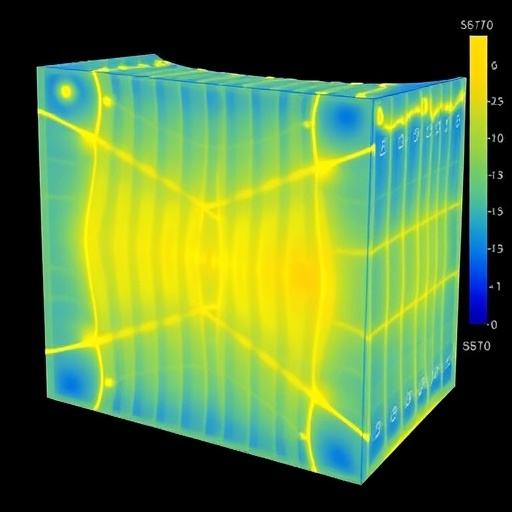
A significant component of this study involves the generation of time-frequency maps, which are derived from short-time Fourier transforms (STFT). These maps provide a visual synthesis of audio signals, where time is plotted along one axis and frequency along the other. Through this representation, various patterns become discernible, revealing essential characteristics of the sound, such as pitch, timbre, and volume fluctuations. Integrating these visual cues into the deep learning model enables the network to identify and classify sounds with a higher degree of accuracy.
Moreover, the training process for the two-stream CNN involves extensive datasets that reflect a variety of acoustic environments. By exposing the model to diverse soundscapes, including urban noise, musical compositions, and natural sounds, the researchers ensure the model learns to generalize effectively across different contexts. This comprehensive training approach is crucial for enhancing the model’s robustness, making it more capable of real-world applications where sound sources can be unpredictable and multifaceted.
One of the standout features of the study is the CNN’s performance metrics, which are set to surpass those of existing models. Early results indicate that subjects trained using the two-stream approach can achieve accuracy rates exceeding 90 percent on benchmark datasets. This is a significant improvement over previous models which often struggled to break the 80 percent accuracy threshold when dealing with complex auditory inputs.
The implications of this research extend beyond mere performance metrics. Enhanced acoustic image recognition has profound societal implications. For instance, applications in smart city infrastructure could significantly benefit from this technology. Automated systems equipped with this two-stream CNN could monitor urban noise pollution levels, allowing city planners to better manage soundscapes and improve quality of life for residents.
Furthermore, the applications of this research reach into security and surveillance domains. Enhanced acoustic recognition systems could accurately identify distress sounds or unusual noises in public spaces, triggering immediate responses from law enforcement or emergency services. This proactive approach could revolutionize how safety and security are maintained in urban environments, potentially saving lives.
Educational environments, too, can capitalize on advancements in acoustic recognition technologies. Imagine classrooms equipped with systems that can discern student engagement through auditory cues, such as tones of voice or collective sound levels. This could help educators tailor their approaches to learning, ensuring that every student’s voice is heard and acknowledged.
In the field of healthcare, the potential of the two-stream CNN could be transformative. By analyzing sounds from medical imaging devices, such as ultrasounds or heart monitors, the technology could assist healthcare professionals in diagnosing conditions more accurately and rapidly. Reducing human error in auditory analysis would improve patient outcomes while also alleviating the burdens that currently plague healthcare systems, including diagnostic delays.
Moreover, as the digital world continues to expand with the advent of social media and streaming platforms, the demand for effective content analysis and management tools grows. This new acoustic recognition technology could automate the process of flagging audio content, enhancing algorithms designed to manage copyright issues or monitor inappropriate content in real-time.
The transition from traditional methods to advanced deep learning models presents an opportunity not only for increased efficiency but also for democratizing access to technology. Individuals and smaller organizations can benefit from these advancements, as widespread availability of acoustic image recognition tools could level the playing field, empowering a new generation of innovators and creators.
In conclusion, the upcoming publication highlights a significant advancement in acoustic image recognition through the innovative use of a two-stream convolutional neural network. The capability to process and interpret vast streams of auditory data in a multifaceted way represents a leap forward that could impact various sectors from urban planning to healthcare, security, and entertainment. As researchers continue to refine and expand these technologies, the potential for real-world applications appears limitless, promising a future where sound is not just heard but intelligently understood.
Subject of Research: Acoustic Image Recognition
Article Title: Two-stream convolutional neural network for acoustic image recognition using time-frequency maps.
Article References:
Li, Y., Zhang, X. & Pan, H. Two-stream convolutional neural network for acoustic image recognition using time-frequency maps.
AS (2025). https://doi.org/10.1007/s42401-025-00393-7
Image Credits: AI Generated
DOI: 11 August 2025
Keywords: Acoustic image recognition, convolutional neural networks, deep learning, time-frequency maps, audio analysis, urban noise management, security applications, healthcare technology.
















 English (US) ·
  French (CA) ·