

 1 day ago
19
PROTECT YOUR DNA WITH QUANTUM TECHNOLOGY
Orgo-Life the new way to the future Advertising by AdpathwayResearchers at the University of Colorado Anschutz and the University at Buffalo have discovered that the immune system’s complement proteins can divert cancer-targeting nanoparticles away from ovarian tumors, uncovering a significant biological barrier to precision drug delivery. Microscopic particles engineered to deliver therapeutic agents directly to malignant cells hold substantial promise for treating tumors while sparing healthy tissues from collateral damage. However, new research published in the journal ACS Nano reveals that protective immune defenses can actively intercept these engineered particles before they reach their intended targets, shedding light on a persistent obstacle in targeted oncology and identifying a potential path forward for improving treatment delivery.
The investigation focused specifically on ovarian cancer, a malignancy that remains notoriously difficult to detect during its earliest and most treatable stages. To address this persistent diagnostic and therapeutic challenge, the team evaluated nanoparticles engineered to recognize claudin-4, also designated as CLDN4, a specific protein expressed on approximately 80 percent of the most common type of ovarian cancer. By attaching molecules that selectively recognize and bind this biomarker to the surface of nanoparticles, scientists have aimed to advance both early detection and therapeutic intervention by guiding therapeutic particles directly to malignant cells rather than dispersing them across normal tissues.
Although the claudin-4-targeted nanoparticles demonstrated clear success in recognizing and targeting ovarian cancer cells during laboratory experiments, their performance differed dramatically when tested in animal models. In living experimental models, the engineered particles proved to be far less selective for the tumor cells. Rather than homing directly into the malignant tissue, immune cells and other non-cancerous cells surrounding the tumors absorbed a large portion of the nanoparticles, severely restricting the quantity of therapeutic carriers capable of actually reaching the cancer cells.
According to senior author Dmitri Simberg, PhD, an associate professor at the CU Anschutz Skaggs School of Pharmacy and Pharmaceutical Sciences and co-director of the Colorado Center for Nanomedicine and Nanosafety, the investigation represents the first study that comprehensively explores the targeting of CLDN4 in ovarian cancer using nanoparticles while focusing specifically on the immune barriers that dictate targeting efficiency. Simberg emphasized that for years, nanomedicine research has focused heavily on making particles better at recognizing cancer cells, but these findings indicate that surface recognition is only part of the solution, underscoring the necessity of understanding and preventing immune interference.
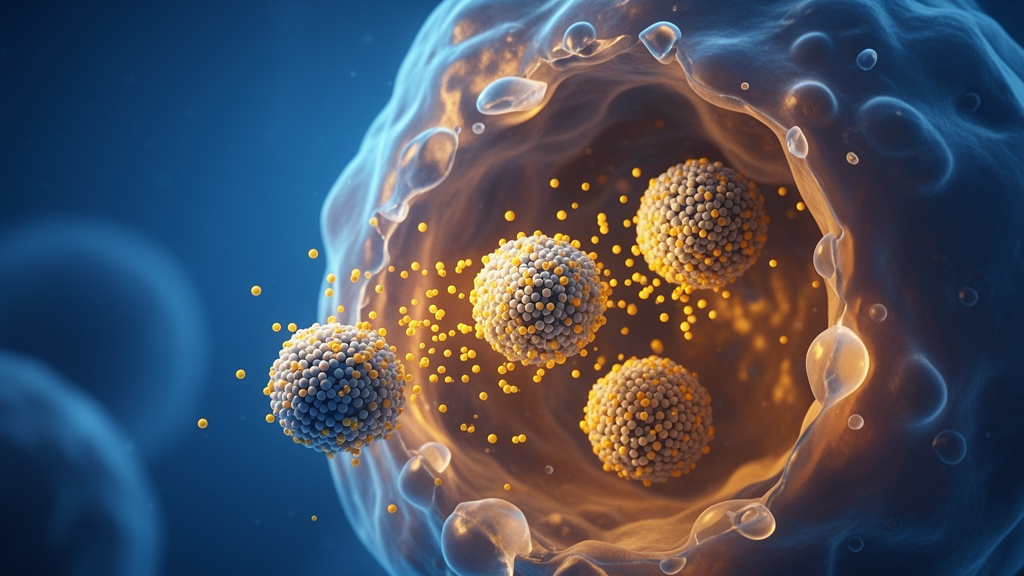
The findings point directly to the complement system, an integral branch of the body’s natural immune defenses, as a central contributor to this interference. In healthy physiology, the complement cascade serves to protect the body by recognizing foreign materials and tagging them for rapid uptake and destruction by immune scavenger cells. However, the study uncovered evidence that this identical protective mechanism can work directly against synthetic nanoparticles designed to fight cancer. When circulating complement proteins bind to the surface of the nanoparticles, they flag the carriers, making them substantially more likely to be absorbed by nearby immune cells before ever reaching their tumor targets.
To evaluate this mechanism directly, the investigators conducted controlled laboratory experiments to observe how immune cells reacted when complement activity was altered. In these laboratory trials, researchers discovered that removing functional complement dramatically diminished the uptake of nanoparticles by immune cells. By preventing complement proteins from marking the particles for clearance, a relatively higher proportion of the engineered nanoparticles remained available to associate directly with the targeted ovarian cancer cells, establishing complement activation as a primary barrier to successful tumor localization.
Because pharmaceutical medications capable of inhibiting specific components of the complement system are already clinically available and approved for patient care in other medical contexts, the authors suggest that blocking certain parts of the complement cascade could offer a practical strategy to enhance the accuracy of nanoparticle delivery. The researchers noted that incorporating complement-inhibiting approaches could pave the way toward significantly more precise cancer imaging and targeted drug therapies, although they emphasized that further experimental studies are essential before such strategies can transition toward clinical applications.
The research was conducted by pharmaceutical sciences graduate student David Angarita within the Simberg laboratory, in close collaboration with faculty members across several specialized departments at the CU Anschutz campus. Key contributors to the multi-disciplinary effort included Benjamin Bitler, PhD, and Kian Behbakht, MD, MBA, from the Department of Obstetrics and Gynecology, Natalie Serkova, PhD, from the Department of Radiology, and John Janetzko, PhD, from the Department of Pharmacology and the Department of Pharmaceutical Sciences.
Subject of Research: Immune barriers and complement system interference in nanoparticle targeting of ovarian cancer
Article Title: Why nanoparticles struggle to reach ovarian cancer cells
Article References: Why nanoparticles struggle to reach ovarian cancer cells. Original publication (Bibliographic details unavailable.)
Image Credits: AI Generated
DOI: Not provided
Keywords: nanoparticles, ovarian cancer, claudin-4, CLDN4, complement system, immune barriers, targeted therapy, cancer imaging, drug delivery, ACS Nano, CU Anschutz, University at Buffalo, Dmitri Simberg, David Angarita, immune clearance, complement proteins, nanomedicine, tumor microenvironment
















 English (US) ·
 French (CA) ·