

PROTECT YOUR DNA WITH QUANTUM TECHNOLOGY
Orgo-Life the new way to the future Advertising by AdpathwayCould you introduce your organization and the main conservation work you do?
Avian Conservation Uganda (ACU) is a youth-led non-profit organization founded by young Ugandan conservationists, birders and environmental enthusiasts. We are committed to safeguarding the country’s bird species and their habitats. Uganda is one of Africa’s richest birding countries, with over 1,090 documented species, about half of Africa’s birds, so there is a great deal to protect. ACU’s work is anchored on four interlinked pillars:
Research and Monitoring: bird counts, ringing exercises, habitat assessments and citizen-science data collection (e.g., through eBird) to track population trends and inform conservation action.
Rescue and Rehabilitation: treating and rehabilitating injured, orphaned, trafficked or confiscated birds, with the goal of releasing them safely back into the wild.
Community Education and Awareness: school talks, radio programs, IEC materials and public campaigns, including our Run for Bird event, which combines fitness with conservation to raise funds and awareness, and our Birds Uganda magazine, which brings stories about birds and conservation to a wider audience.
Birding Excursions: guided trips to Important Bird Areas (IBAs) and wetlands that build local guiding skills and generate conservation-linked income and appreciation for nature-based tourism.
Is there a particular project, species, or place you’d like to tell our readers about?
Yes, our Feathered Future program. It is a school-based avian conservation education project that uses schools as a way to reach young people, and through them their families and communities. Schools bring together large groups of learners over many years, so they are one of the best places to build lasting care for birds. The project will:
- Set up student-led bird and wildlife clubs.
- Increase knowledge and awareness of avian biodiversity and conservation among students and teachers
- Train teachers as club patrons.
- Take learners on hands-on birding excursions.
- Involve students in citizen-science bird monitoring.
- Train student ambassadors to carry conservation messages home.
Our goal is at least 100 functional school clubs around the country especially in schools near the Important Bird Areas(IBA,s), reaching 30,000 to 40,000 students directly and many more family members indirectly.
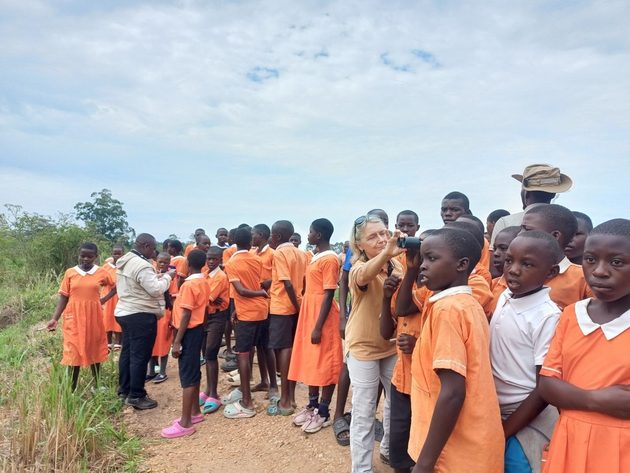
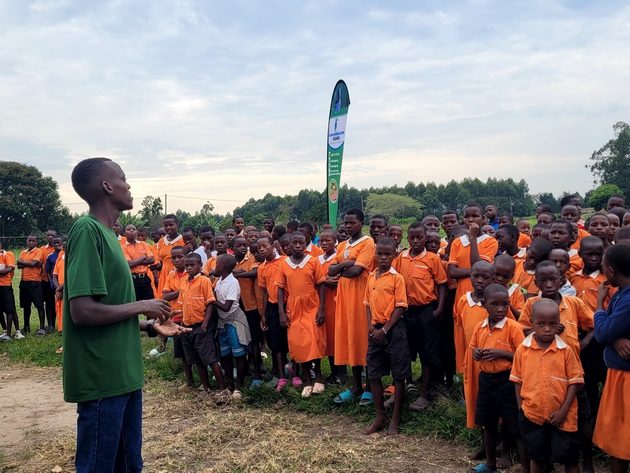
For the baseline study, we have engaged three schools: Kameme and Matanda Primary Schools in the Ishasha sector of Queen Elizabeth National Park, and Victoria High School Entebbe. In Ishasha, we reached 760 pupils across the three schools. In Kameme and Matanda Primary Schools students learned to identify birds, using binoculars and a telescope, and recorded 89 bird species on their walks. Wildlife clubs were formed with sub-clubs named after local birds, such as the Crested Crane Club and the Weaver Bird Club, and the pupils planted 45 trees to restore bird habitat.
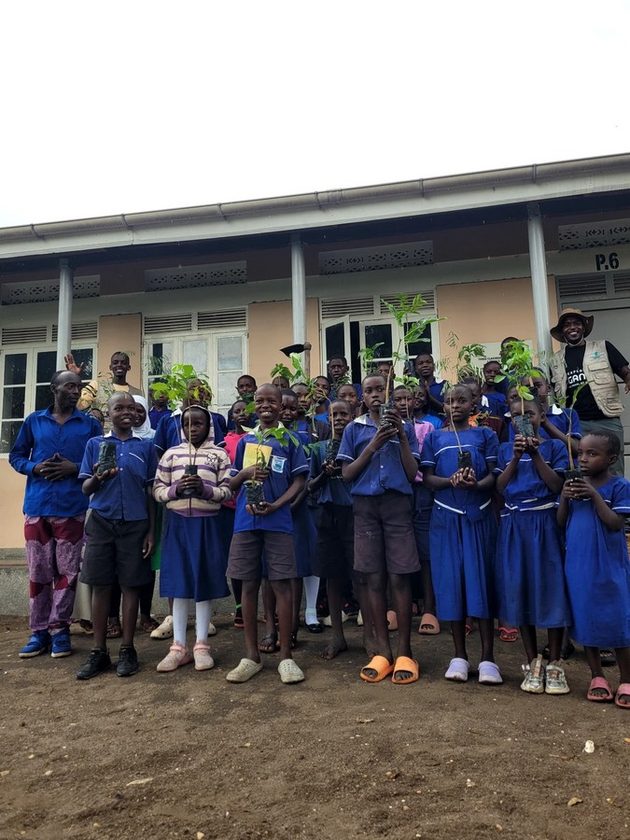
The pupils also told us that their biggest concern about birds is crop damage, especially from Mousebirds. This tells us that conservation messages must come with practical, bird-friendly ways of protecting crops.
We are now looking forward to engaging more schools, starting with those around Bwindi Impenetrable Forest in Buhoma.
What are the biggest challenges facing birds or their habitats in the areas where you work?
Birds in Uganda face a range of interconnected threats, and our work across Lake Opeta (Magoro Sub-county), Lake Mburo, Ishasha, Kasese, Bushenyi and other farming landscapes shows that most of them come from competition and conflict between people and wildlife.
Food competition and hunting. Around Lake Opeta, people and Shoebills fish in the same waters. This competition often ends with Shoebills being killed. Some communities also eat wild birds, and in the Ishasha landscape, refugee communities hunt birds for food. Targeted community sensitisation is needed to reduce this pressure.
Habitat loss and degradation. Indigenous trees are being removed, wetlands and riparian vegetation are degraded, and agriculture is expanding into park boundaries and bird habitats. Uncontrolled bushfires and unsustainable land use make this worse.
Human-wildlife conflict. Grey Crowned Cranes and doves raid newly sown cereal fields, and seed-eating birds return when the crops ripen. The resulting losses threaten household food security and reduce local tolerance for conservation. Many children are also kept out of school to scare birds from the fields, which harms their education and their future conservation awareness. This was experienced in Ishasha, in Kihihi kanungu District
Poisoning and chemical use. Scavengers such as vultures are being poisoned, especially around Lake Mburo near Mbarara. Heavy reliance on chemical pest control, with little awareness of ecologically friendly alternatives.
Limited awareness and participation. Schools and communities bordering the parks have few conservation education opportunities, and youth and community involvement in biodiversity monitoring and citizen science is weak.
Together, these challenges show that bird conservation in Uganda must address livelihoods, education and community participation alongside habitat protection.
Could you share a recent success or a moment that shows why this work matters?
A recent success: 2026 has been a year of turning conservation into community action.
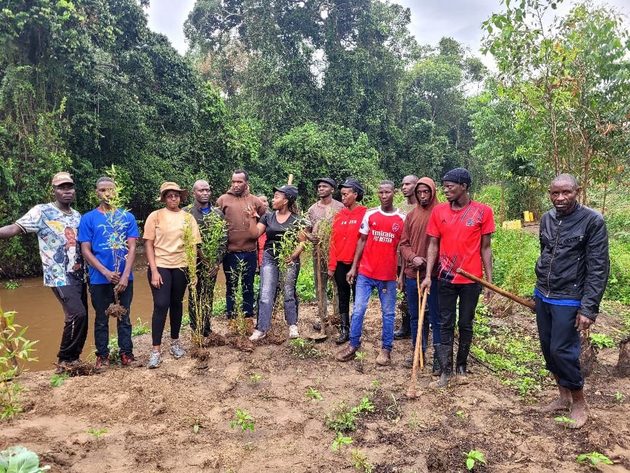
River Rwizi restoration. In June 2026, together with the Rotaract Club of Kampala Maisha and with funding from Nile Breweries Limited, we carried out a three-day restoration and community engagement activity at Rwentango in Isingiro District. The Rwizi supplies water to more than 2.5 million people, but its banks are badly eroded and its flow has dropped sharply. We planted over 50 bamboo seedlings along a vulnerable stretch to stabilise the banks and trap silt. We also ran guided birding and community discussions. Three local landowners donated riverside land and committed to caring for the bamboo.
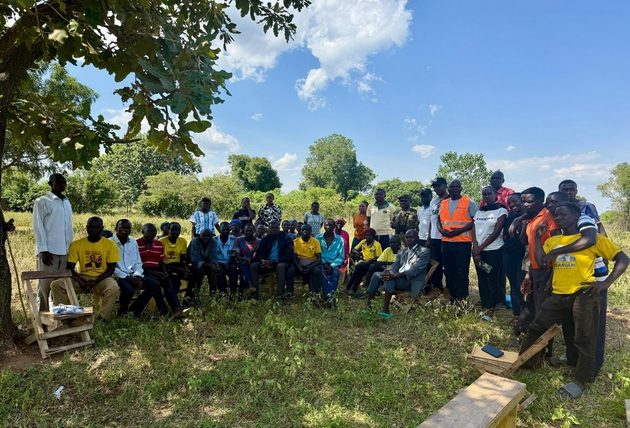
Lake Opeta and Pian Upe excursion. In June 2026 we held a three-day community education excursion in the Lake Opeta wetland ecosystem, working alongside the Uganda Wildlife Authority at Pian Upe Wildlife Conservation Area. We held consultations with UWA and with local leaders, women’s groups, youth and fisher representatives in Magoro Sub-county. We also gave a live radio talk on Joshua FM and ran bird surveys, including one on the lake with local fishermen that recorded more than 30 bird species. The community sensitisation workshop led to the start of a community conservation association to protect Lake Opeta and its Shoebills. UWA has encouraged us to develop a full Shoebill conservation and sustainable tourism project for the area.
Ishasha excursion, Kihihi, Kanungu District. In September 2026 we worked with Kameme and Matanda Primary Schools, reaching about 260 pupils with birding walks, conservation talks (including from UWA) and a game drive in Queen Elizabeth National Park. The pupils and our team recorded 89 bird species. We formed wildlife clubs with seven bird-named sub-clubs, and the pupils planted 45 trees that they will look after. The pupils also told us that birds raiding crops is their main concern. This will shape how we pair conservation with practical solutions for farmers.
Birds of Uganda magazine. We prepared and launched the first edition of the Birds of Uganda magazine at Run for Birds 2026. It is an awareness tool that brings Uganda’s rich birdlife to the public, and it is meant to inspire pride in the country’s birds and support for protecting them.
Run for Birds 2026. On 18 October 2026, the second edition of our flagship awareness run took place at Sheraton Gardens, Kampala, with satellite runs in Kasese, Kisoro, Lake Mburo, Kween, Bigodi and Bwindi-Ruhija. It carried the theme “Protecting the Grey Crowned Crane,” Uganda’s national bird, which has declined by over 80% since the 1970s. About 547 people took part.
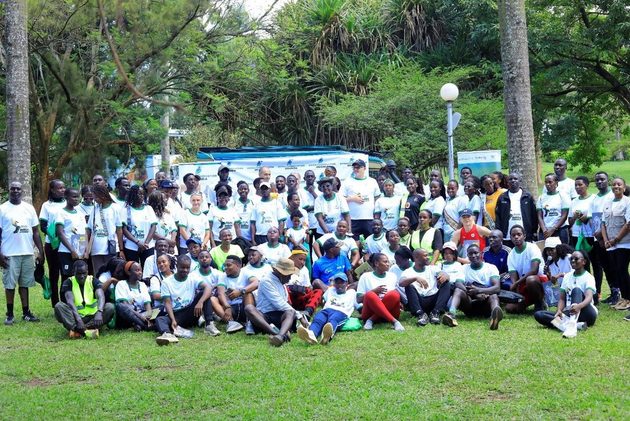
Why this matters: across rivers, wetlands, schools and city streets, local people, partners and young people are taking ownership of protecting Uganda’s birds and the places they live
How do local communities, volunteers, or other partners take part?
Communities, volunteers and partners are involved in our work at every stage, from planning through to action on the ground:
- Birding excursions: Participants join our guided excursions, both paid and free, to key bird habitats. Paid trips help generate income for conservation, while free trips open the experience to students, youth and community members who might not otherwise afford it.
- Organised events: Volunteers, supporters and partners register for flagship events such as Run for Birds, which raises awareness and funds for bird conservation.
- Community sensitisation workshops: Local communities take part in workshops that build understanding of why birds and their habitats matter and how people can protect them.
- Tree planting and bird walks: Community members and volunteers join hands-on habitat restoration and guided bird walks, helping them connect directly with local biodiversity.
- Stakeholder consultations: Before and during project implementation, community members, local leaders and other stakeholders are consulted in the target areas. Their input shapes the project design, so interventions reflect local priorities.
- Community mobilisation: Participants help bring in other community members, which widens our reach and builds local ownership of conservation actions.
Together, these activities make communities active partners in conservation rather than just beneficiaries
What can people support your work?
There are several ways to support Avian Conservation Uganda:
- Become a member. Our membership packages keep you updated on upcoming activities and connect you with a community of people who care about birds.
- Donate or fund our projects. Donations and grants go directly into our conservation, research, education and community programs.
- Join a paid birding excursion. Our guided trips to important bird sites generate income for conservation and give participants a first-hand experience of Uganda’s birdlife.
- Take part in our events. Register for events like Run for Birds, where your participation raises awareness and funds for bird conservation.
Every contribution, big or small, helps us protect Uganda’s birds and their habitats.
Is there anything else you would like to highlight or mention?
Beyond our field conservation work, we also run the Online School of Ornithology, which teaches students the basic skills of bird identification. It makes bird knowledge accessible to anyone, wherever they are, and helps build a new generation of birders, citizen scientists and conservation advocates who can contribute to bird monitoring and protection across Uganda.
Are there a website or social media pages you’d like us to link to?
Yes:














 English (US) ·
 French (CA) ·