

PROTECT YOUR DNA WITH QUANTUM TECHNOLOGY
Orgo-Life the new way to the future Advertising by AdpathwayI got married in Venice, in St. Mark’s Square, and I’ve been coming back to the city since I was fifteen, when my parents first brought me here and a thunderstorm chased us across that same piazza. I’m also a professional travel photographer, and I’ve spent a good chunk of those return trips shooting the lagoon and the wider Veneto. So when people ask me which day trips from Venice are actually worth giving up a day in the city for, I have opinions, and they’re not the ones you’ll find on a generic list of seventeen interchangeable towns.
Here’s the version I’d give a friend. Some of these trips earn the early train. A couple are better swapped for a second day in Venice itself, and I’ll tell you which. I’ve been to all nine, so for every one you get the real travel time from Santa Lucia, whether you can do it yourself or need a tour, and a straight answer on whether it’s worth a full day.
Quick Take: The Best Day Trips from Venice
If you only get one day out of Venice, take the train to Verona. It’s an hour and change away, it’s a beautiful city in its own right, and it asks nothing complicated of you. That’s my single pick.
Beyond that, here’s how I’d choose:
- For colour and the lagoon without really leaving Venice: Murano and Burano.
- For food, and a city most people skip: Bologna.
- For wine, with the logistics handled for you: the Prosecco hills, or Valpolicella from Verona.
- For mountains: the Dolomites, but only as an organised tour, and only in summer.
- For art history that moves you: Ravenna and its mosaics.
- For the closest mainland classic: Padua, as long as you book the Scrovegni Chapel ahead.
Here’s the whole shortlist at a glance, then I’ll go through each one in turn.
Day Trips from Venice Compared
| Verona | 1h10 to 2h15 | Train | An easy classic, opera in summer | Yes, my top pick |
| Murano & Burano | 40 to 60 min | Vaporetto | Colour, glass, photography | Half a day |
| Padua (Padova) | 15 to 45 min | Train | Giotto frescoes, closest mainland city | Yes, book ahead |
| Bologna | About 90 min | Train (high-speed) | Food, arcades, fewer tourists | Yes |
| Prosecco Hills | About 1h to the wineries | Organised tour | Sparkling wine and vineyards | Yes, as a tour |
| Lake Garda (Sirmione) | 1h05 to 2h | Train, then bus or boat | Lakeside, a castle, a swim | Yes in summer |
| Vicenza | 25 to 45 min | Train | Palladian architecture | Yes if buildings are your thing |
| Ravenna | About 3h, change at Ferrara | Train | Byzantine mosaics | Only for mosaic lovers |
| The Dolomites & Cortina | 2h or more | Organised tour or bus | Mountains, alpine lakes, photos | Long. Tour only |
First, Should You Even Leave Venice?
This is the question no list asks, so I will. If you have only two or three days in Venice total, my advice is to stay. Venice rewards slow time more than almost anywhere I know, and a rushed day trip on day two usually means you leave the city itself half-seen. I’d much rather you spent that day getting lost in Cannaregio or Dorsoduro than sat on a regional train to a town you’ll see for four hours.
So before you plan an excursion, read my guide to one day in Venice and, if you have longer, my two days in Venice itinerary. If you’ve given Venice its due and still have a spare day, or you’re basing yourself nearby for a week, then yes, the Veneto and Emilia-Romagna around it are some of the best day-tripping country in Italy. That’s who the rest of this guide is for.
One more thing before we go. The lagoon islands below are technically still Venice, not a mainland day trip at all. I’ve included them because people search for them as one, but treat that section as a half-day within the lagoon rather than a true day out.
1. Verona: The One I’d Send a First-Timer On
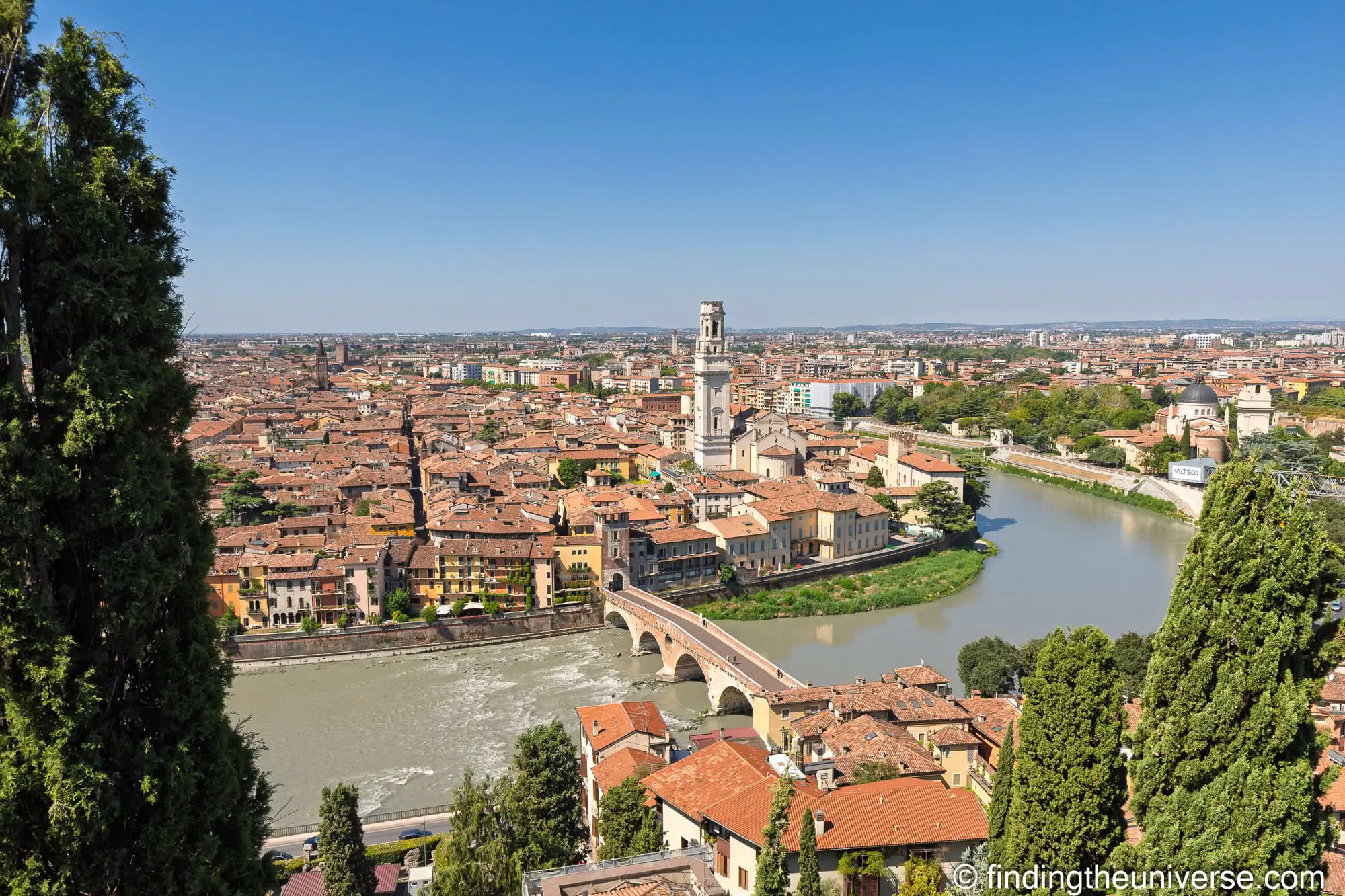
Verona is the day trip I recommend most often, because it’s the most reliable. It’s a real, lived-in city rather than a museum piece, the historic centre is compact and walkable, and the fast train gets you there in not much over an hour.
On the fastest Frecciarossa or Italo services, Venice Santa Lucia to Verona Porta Nuova takes about 1 hour 10 minutes. The cheaper regional trains stretch that to anywhere from 1 hour 30 to 2 hours 15, so it pays to check the timetable and book a fast one if your day is short. You can compare times on Trenitalia or book through Trainline, which I find easier to use in English.
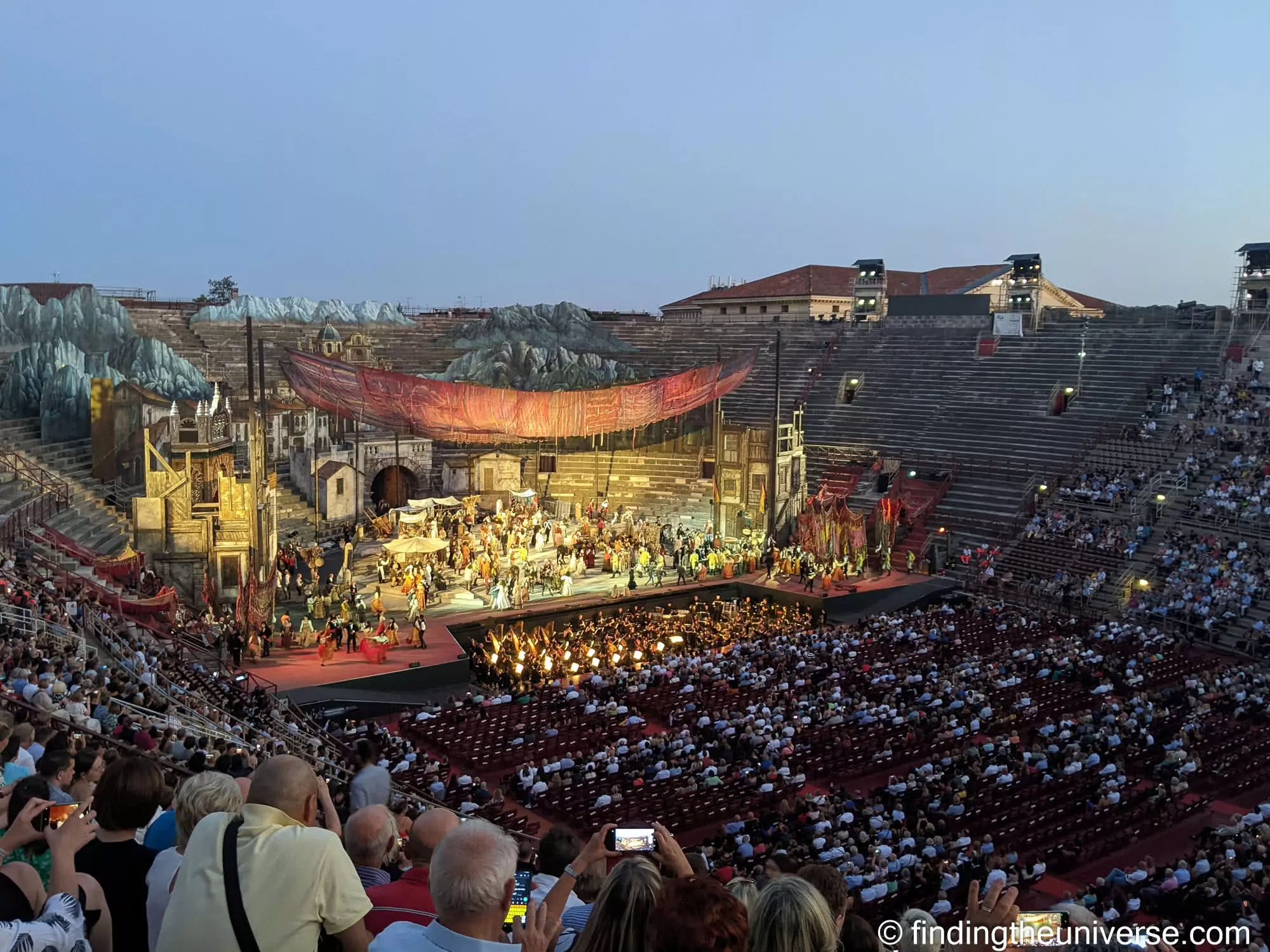
Once you arrive it’s a 15-minute walk or a quick bus from Porta Nuova to the Arena, the Roman amphitheatre on Piazza Bra. If you’re visiting in summer, the Arena hosts its famous opera festival, and in 2026 the season runs from 12 June to 12 September with around fifty evening performances. Watching Aida under the stars in a 2,000-year-old arena is one of those experiences that lives up to its reputation, but tickets sell, so book ahead on the official Arena site rather than turning up. From there it’s a short stroll to the Casa di Giulietta with its much-photographed balcony, the market square of Piazza delle Erbe, and the river views from Castelvecchio.
Verona is also the obvious base for Valpolicella wine country, which is where I’d point you if you have tasted your way around Italy and want to go deeper. We’ve drunk our way through plenty of Valpolicella, Ripasso and Amarone over the years, and a half-day winery tour out of Verona is a lovely way to do it without driving. I’ll come back to that under wine country below.
If Verona pulls you in and you’d rather give it proper time, I have a full two days in Verona itinerary as well. Plenty of people start it as a day trip and wish they had stayed over.
2. Murano and Burano: Colour Without Leaving the Lagoon
Murano and Burano are the easiest “day trip” of the lot, because you never actually leave Venice. They’re lagoon islands, reached by public vaporetto, and they make a perfect half-day if you’ve already seen the main sights.
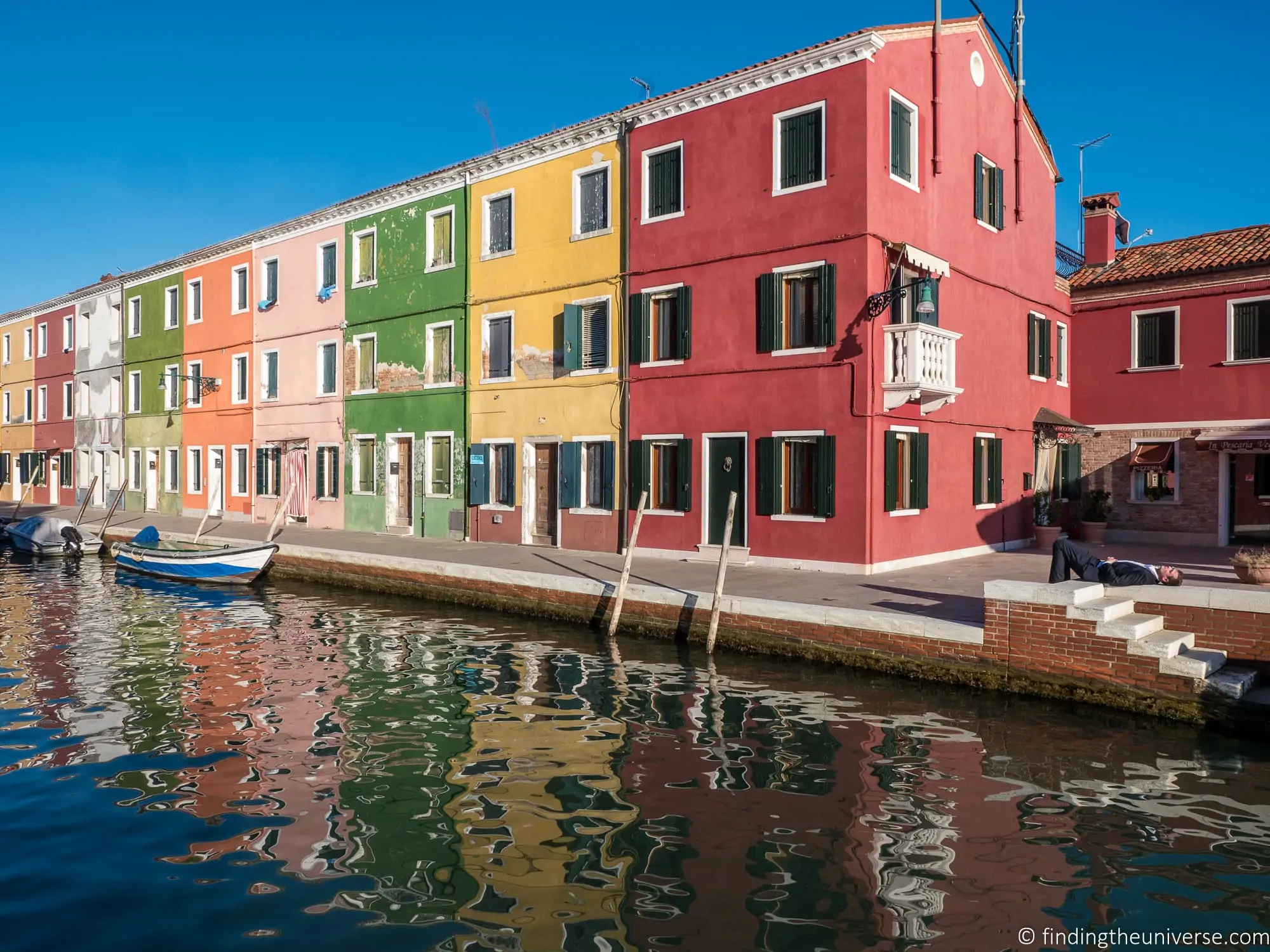
The workhorse route is ACTV Line 12, which leaves from Fondamente Nove on the northern edge of the old city. Murano, the glass-making island, is only about 10 to 15 minutes out. Burano, the one everyone comes for, with its rows of fishermen’s houses painted in saturated reds, blues and greens, is around 40 to 45 minutes on the same line. Allow 40 minutes to an hour each way once you have walked to Fondamente Nove and waited for a boat. You can check live times on the ACTV site.
As a photographer, Burano is one of my favourite places in the whole lagoon. Early morning, before the day boats arrive, the light bounces off the coloured walls and the canals are still. Murano is more about the glass, and while some of the showroom demonstrations are tourist theatre, watching a working furnace is worth half an hour. If you have time for a third stop, Torcello is a quiet, almost empty island with a remarkable Byzantine cathedral and a fraction of the crowds.
Because the islands really are part of Venice, I cover them in more depth as part of my two days in Venice itinerary, where they fill a natural half-day. Don’t give them a full day at the expense of a real mainland trip unless colour and glass are exactly what you came for.
3. Padua: The Closest Classic, If You Plan Ahead
Padua, or Padova, is the closest major mainland city to Venice, and on the fast trains it’s barely 15 minutes away. Even slower regional services rarely take more than 45 minutes, which makes it the lowest-effort day trip on this list, and after the obvious classics it’s the one I’d send you to first.
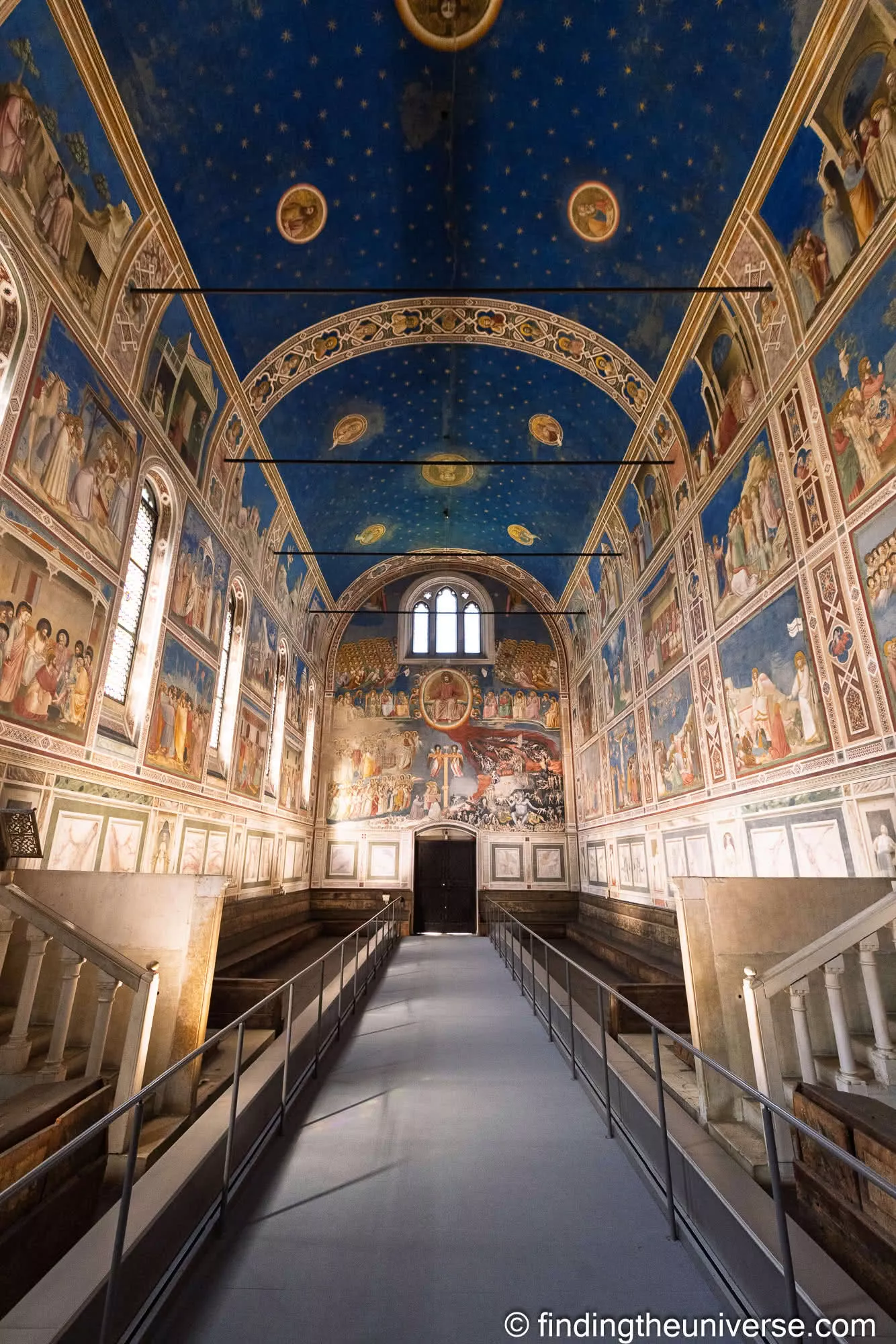
The reason to come is the Scrovegni Chapel, whose interior Giotto covered in frescoes around 1305 in a cycle that changed Western art. Standing under that deep-blue, star-flecked ceiling with the fresco panels running round the walls is the kind of thing that justifies the day trip on its own.
The catch is the logistics: visits are strictly timed and you must book a slot in advance, usually at least a day ahead, on the official chapel site. The chapel is open daily, roughly 09:00 to 19:00, but turn up without a reservation and you’re very unlikely to get in. You’re held in a climate-controlled room for a few minutes first to stabilise the air, then let into the chapel itself in a small group for about 15 minutes. Book it, and build the rest of your day around the slot.
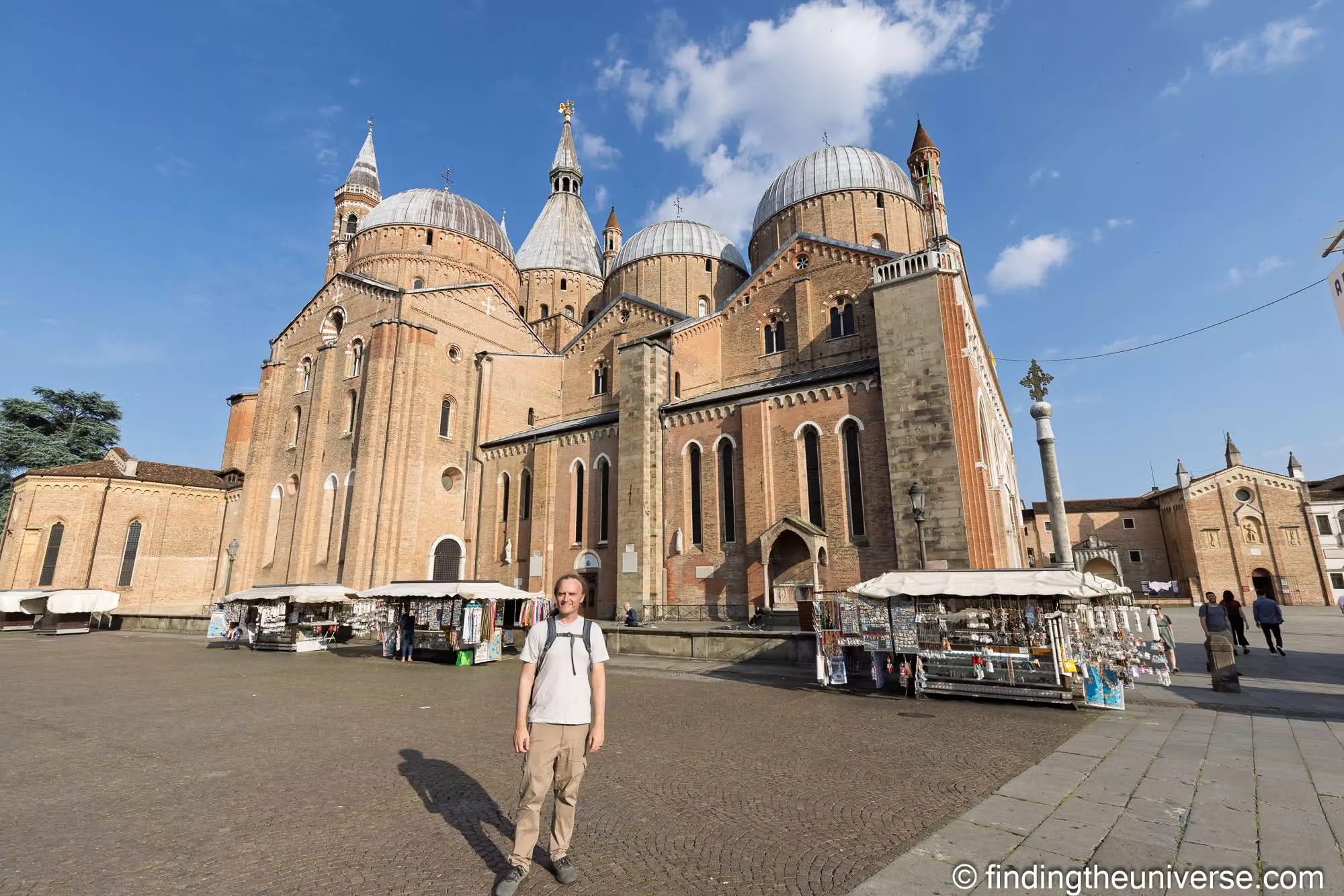
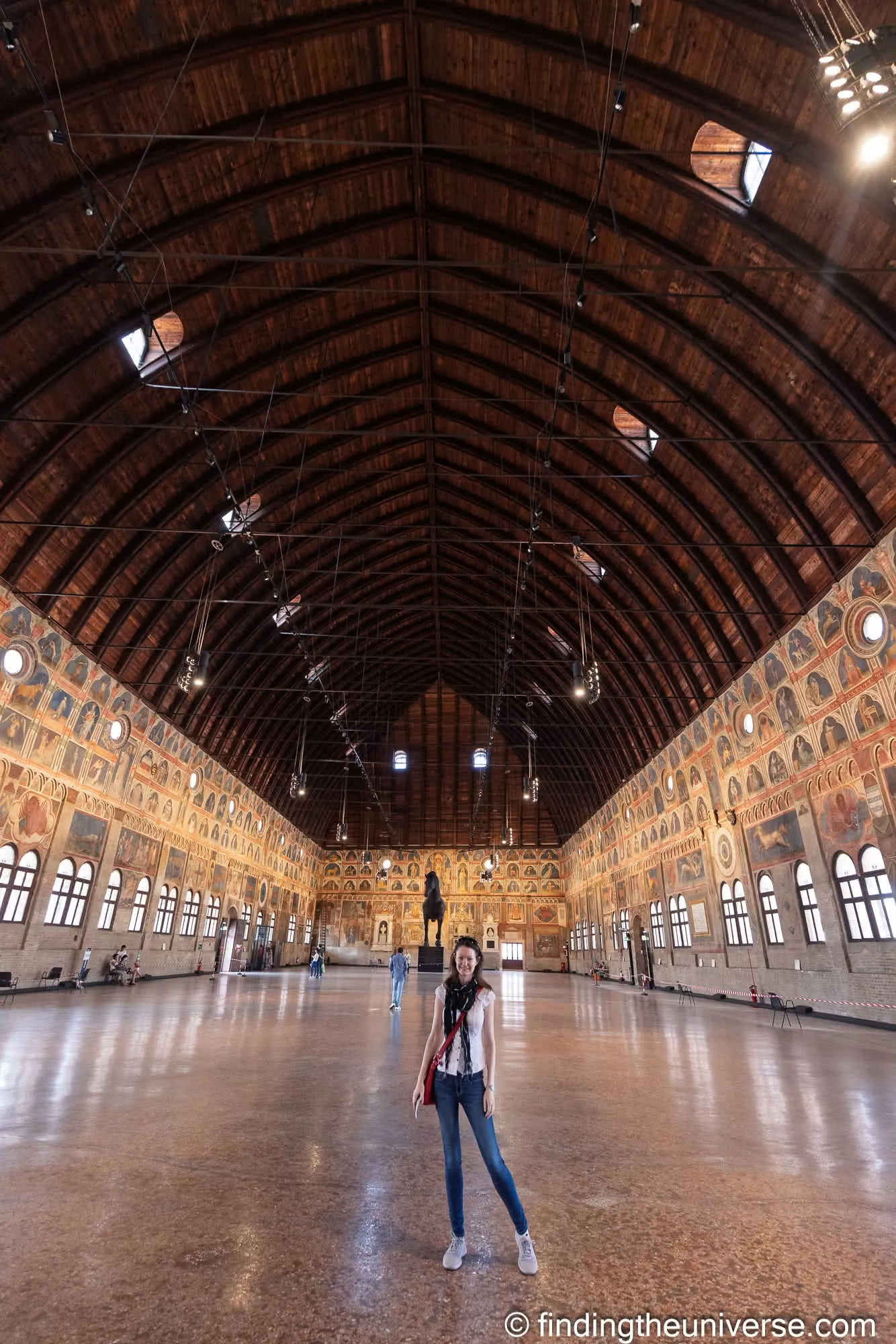
Beyond the chapel, give yourself time for Prato della Valle, one of the largest squares in Europe, a vast ellipse ringed by a statue-lined canal. The pilgrimage Basilica of Saint Anthony draws the faithful from across Italy, and the medieval Palazzo della Ragione, between the two market squares, hides one enormous frescoed hall under a keel-shaped wooden roof. Add the student life of one of the oldest universities in Italy, founded in 1222, and you have an easy, civilised day out, with a short enough hop back to Venice that you’re not racing the clock.
4. Bologna: Italy’s Food Capital, and Still Underrated
Most people skip Bologna, and I think that’s a mistake. It’s about 90 minutes from Venice on the high-speed train, it’s the food capital of the country, and it sees a fraction of the tourists of Florence or Venice. If you care about eating, this is the day trip I’d push you towards after Verona.
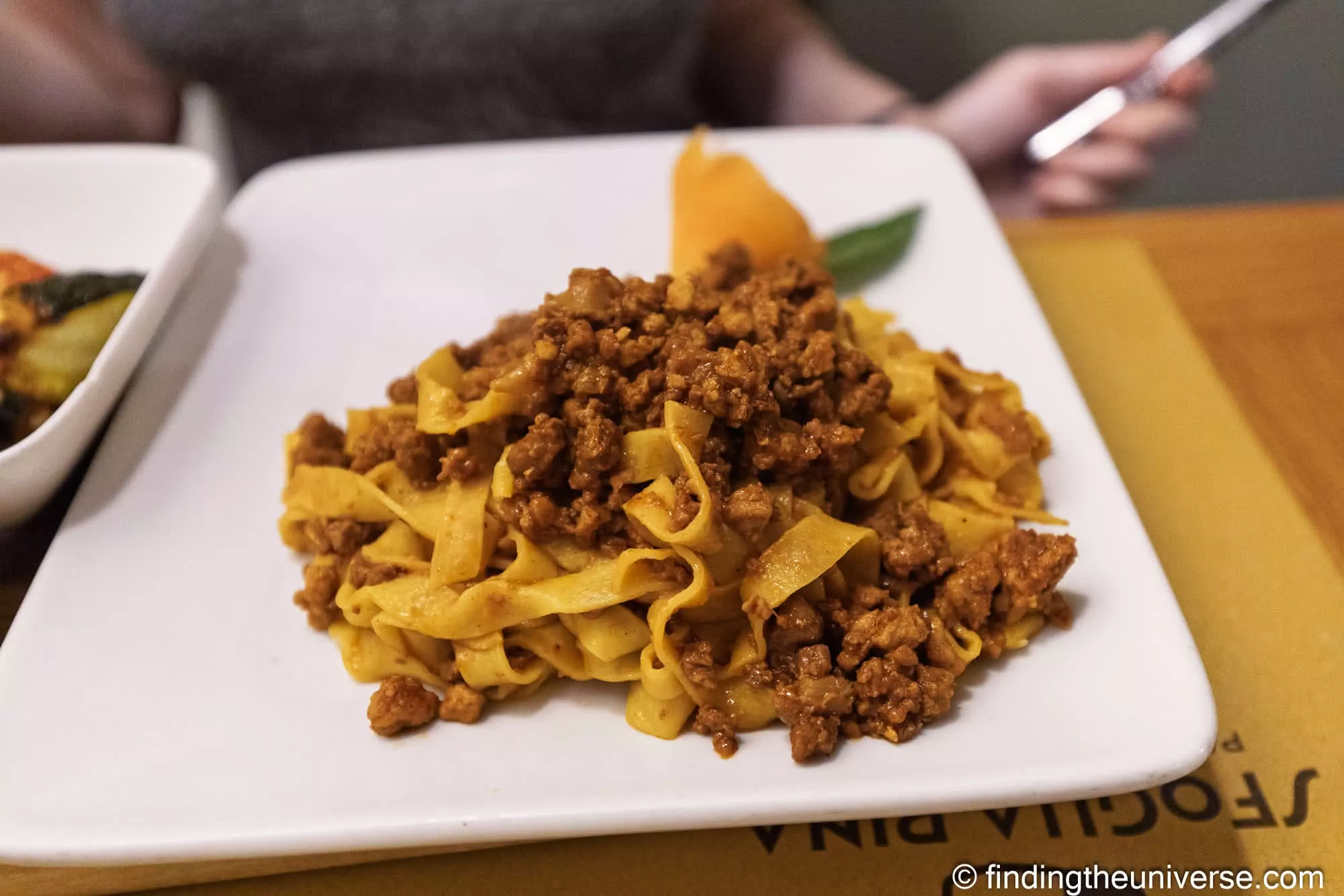
This is Emilia-Romagna’s capital, and the region gave the world Bolognese ragù, tortellini in brodo, mortadella, Parmigiano Reggiano, balsamic vinegar and Parma ham. One small but important note: order tagliatelle al ragù, not spaghetti. In Bologna the traditional pairing is with tagliatelle, and once you’ve had it that way you’ll understand why the rest of the world got it wrong. Our favourite spot has long been Sfoglia Rina near Piazza Maggiore, where they roll fresh pasta by hand in front of you and you can eat in or take it away.
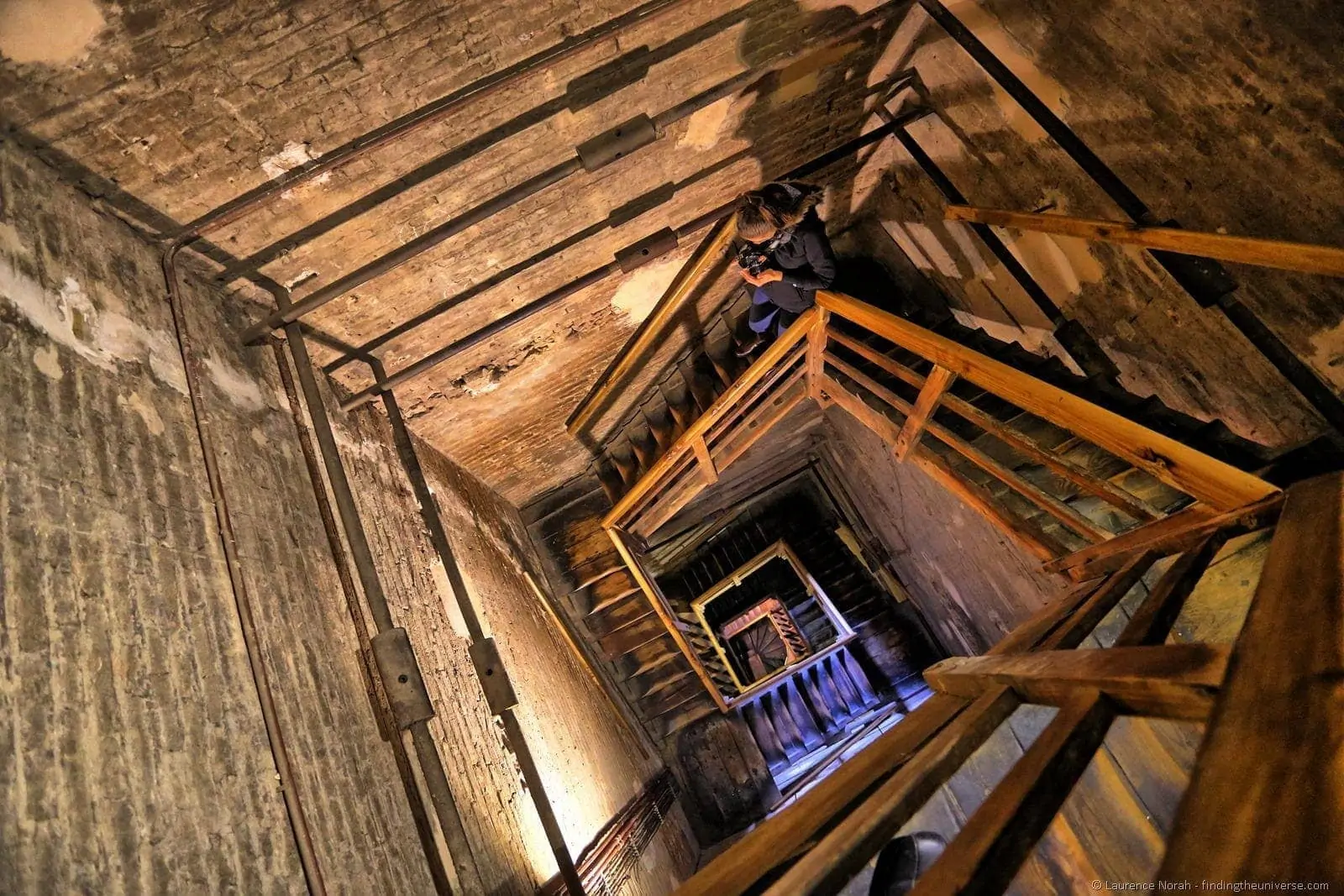
The city itself is built for wandering. Bologna has over 30 miles of arcaded walkways, a UNESCO World Heritage Site in their own right, which keep you dry in the rain and shaded in the heat. They radiate out from Piazza Maggiore, the grand central square. One thing to know before you go: the Asinelli Tower, often described as the tallest leaning medieval tower in the world at around 97 metres, has been closed to visitors since October 2023 because of stabilisation work on its neighbour, the Garisenda. No reopening date has been announced, so don’t plan your day around climbing it. Its lean, by the way, is a gentle 1.3 degrees or so, nothing like Pisa, so manage your expectations there too. For a panorama you can still get, the Clock Tower on Piazza Maggiore is open and you can book it through Bologna Welcome.
Book the fast train on Trainline and make sure you’re heading back to Venezia Santa Lucia, the station on the island, rather than Venezia Mestre on the mainland. If Bologna wins you over, it makes a good overnight, and you can look at hotels in Bologna rather than rushing the last train.
5. The Prosecco Hills: Wine Country, Logistics Handled
This is the day trip for anyone who wants to drink properly without worrying about driving back, and it’s one we keep recommending to friends. North of Venice, the hills between Conegliano and Valdobbiadene are where Prosecco comes from, a UNESCO-listed landscape of steep, vine-striped ridges that’s beautiful to drive through.
The logistical truth is that this is hard to do well by public transport. The wineries are spread across the hills, often up single-track roads, and you want to be tasting rather than driving. So this is the one excursion where I’d tell you to book an organised tour from the start. A typical small-group day trip collects you in Venice, drives you up into the hills, and stops at two family-run wineries for tastings with lunch. Prices tend to start in the region of 150 euros per person. We’ve spent enough time with a glass of Prosecco in our hands in these hills to say it’s money well spent for a relaxed day. This Prosecco hills tour from Venice is a good example of the format.
If your taste runs to bigger reds rather than sparkling, the alternative is Valpolicella, which sits the other side, near Verona. The Amarone and Ripasso reds from there are some of my favourite wines in Italy. You can combine it with the Verona trip above by adding a half-day Valpolicella and Amarone tasting from Verona, which runs from around 105 euros. Either way, let someone else drive.
6. Lake Garda and Sirmione: A Lakeside Escape
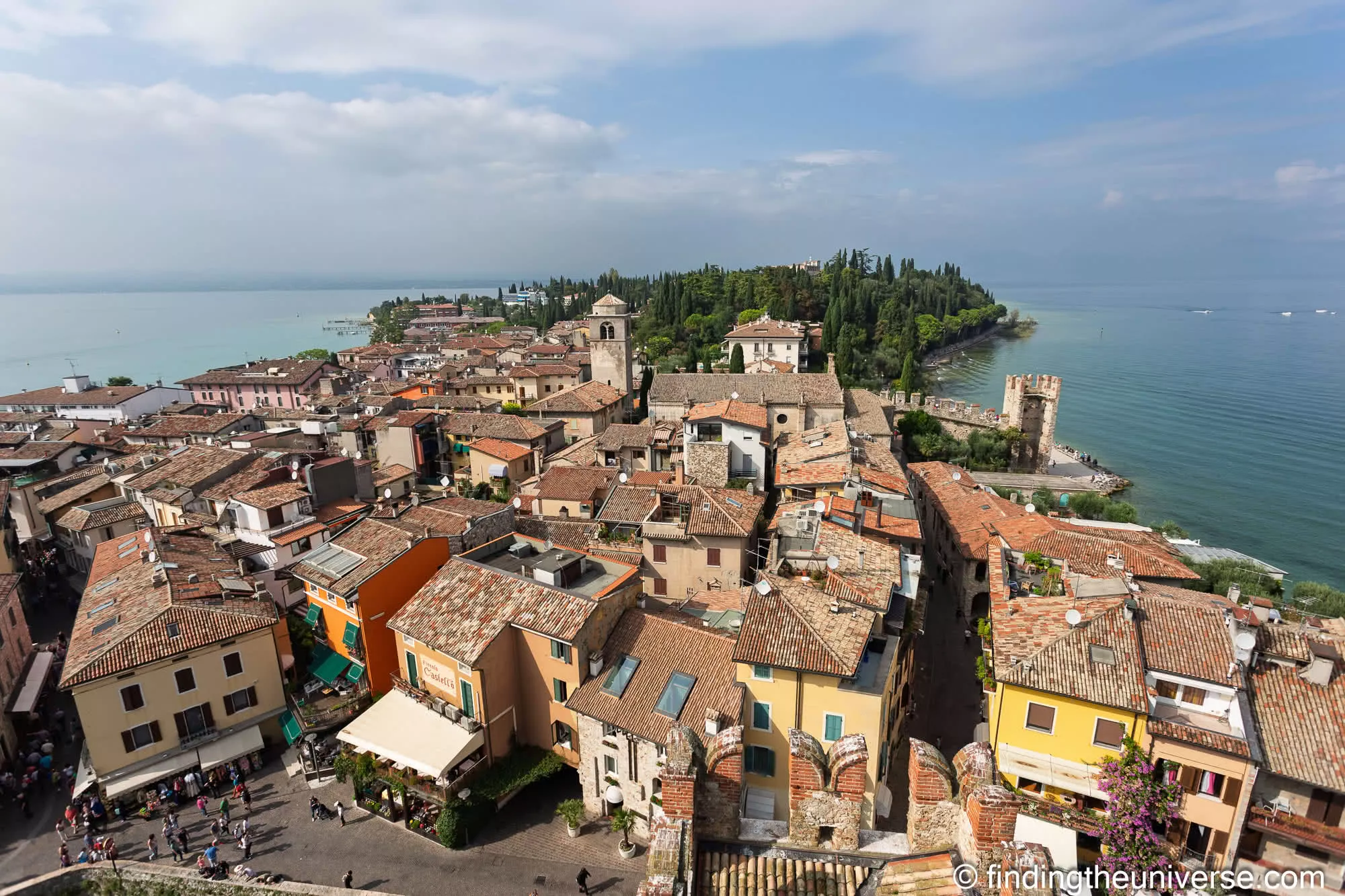
If you want water, a swim and a change of pace from cities, Lake Garda is your trip, and it works best from late spring through early autumn. The usual rail gateway is Peschiera del Garda, which the fast trains reach in about 1 hour 5 minutes from Venice, with slower services taking closer to 2 hours.
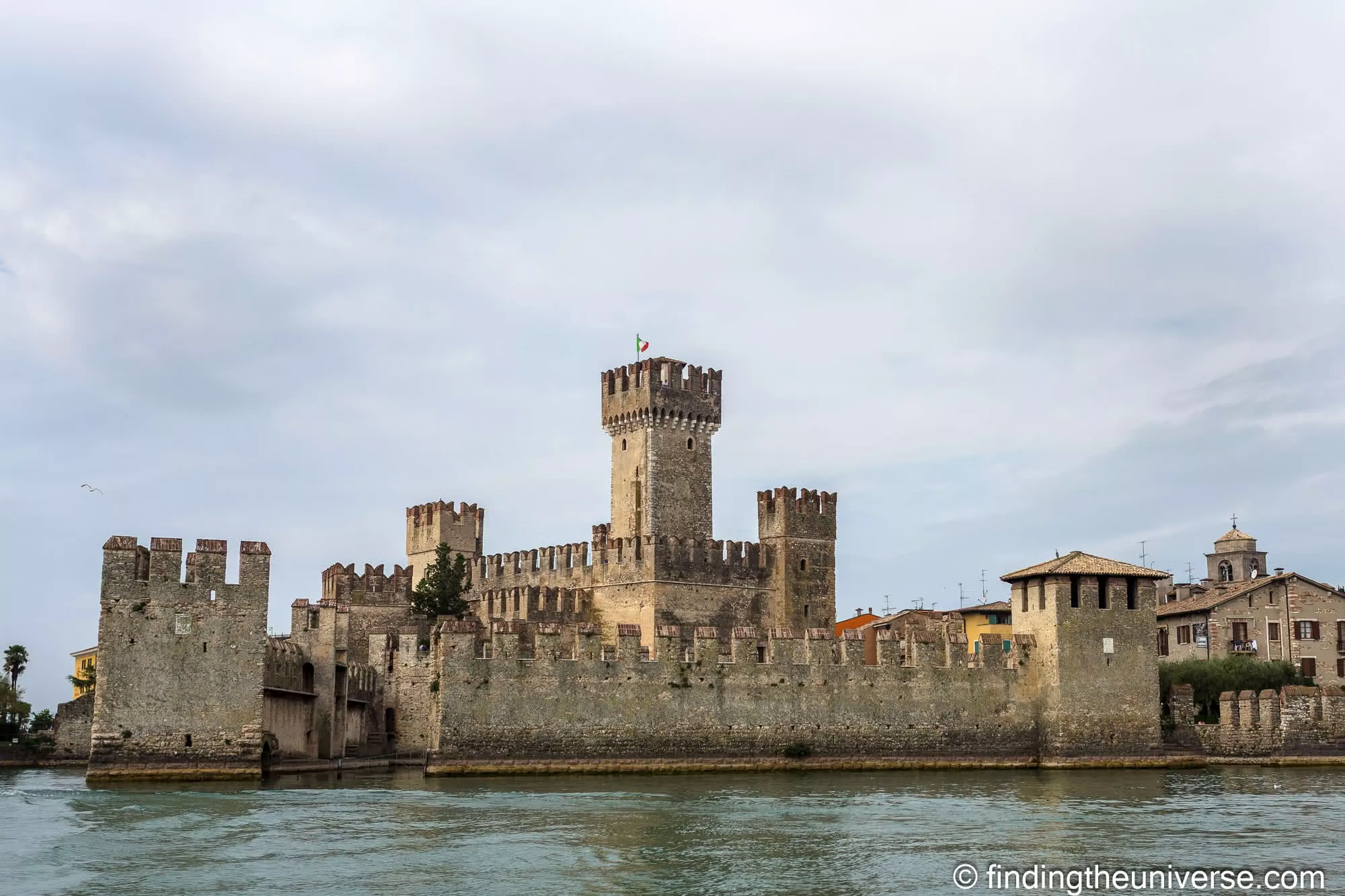
From Peschiera, most people head to Sirmione, a town on a long, narrow peninsula that pokes out into the southern end of the lake. The approach is the postcard: you cross a moat into the historic centre through the Scaligero Castle, a 14th-century fortress built by the Della Scala family, which is the only way in and out of the old town. Cars stay in outlying car parks, so the centre is a pedestrian maze of lanes, gelato and lake views. At the tip of the peninsula are the Grotte di Catullo, the ruins of a vast Roman villa with olive groves and swimming spots nearby.
A word about the trade-off. Garda in July and August is busy, and Sirmione in particular can feel packed in high season. Go for the swimming and the lakeside lunch rather than expecting solitude, and consider a weekday. Out of season, when the lake is quiet, it’s a different and calmer experience, but the swimming window closes. This is a yes from me in summer, and an easy skip in winter.
7. Vicenza: For Anyone Who Loves Buildings
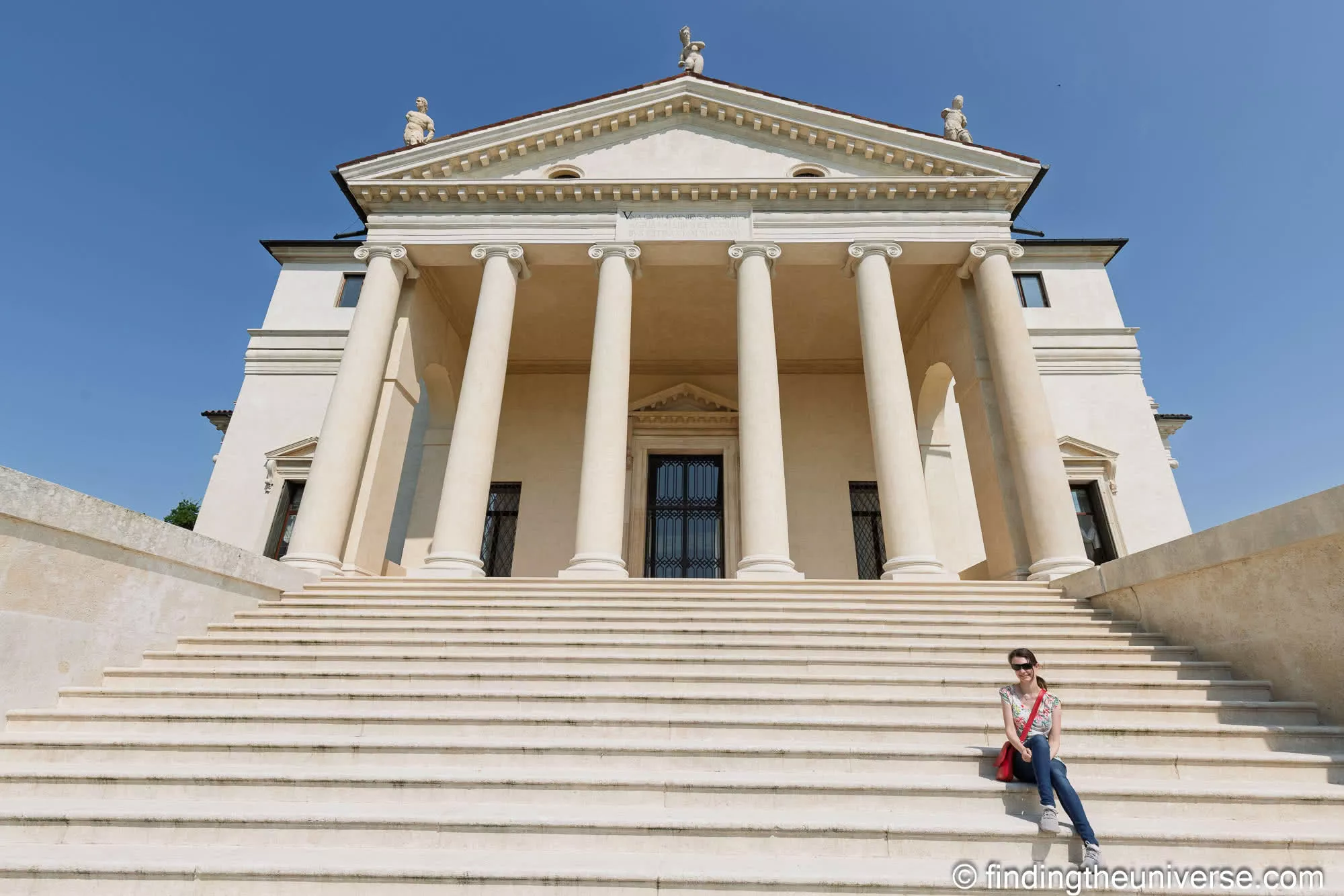
Vicenza is the specialist’s day trip, and I say that as someone who happily spent a day on it. It sits between Venice and Verona, around 25 to 45 minutes away by train, and it exists on this list for one reason: Andrea Palladio. The 16th-century architect whose work shaped country houses from England to Virginia did much of his finest building here, and the city and its surrounding Palladian villas have been a UNESCO World Heritage Site since 1994.
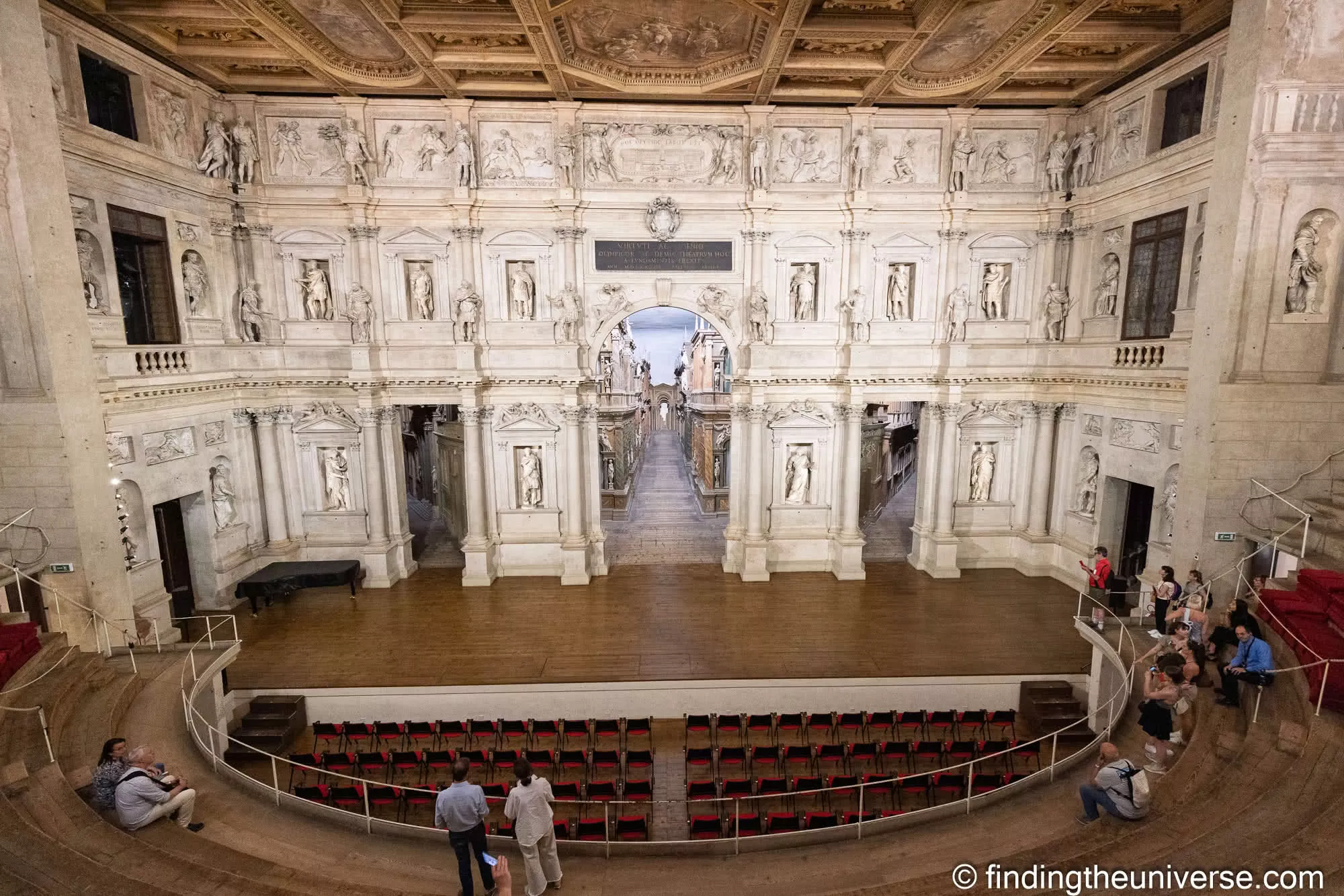
The centrepiece is the Teatro Olimpico, the oldest surviving indoor theatre of its kind. From the seats you look into a permanent wooden stage set of streets built in forced perspective, the buildings shrinking and the floor rising so they seem to run back for hundreds of metres when the real depth is only a few. Seeing the trick work in person is the highlight.
Add the Basilica Palladiana on the main square and a clutch of palaces along the Corso, and you have a half to full day for anyone who finds architecture exciting. If that’s not you, I’d point you at Verona or Bologna instead, but if it is, Vicenza is well worth the short hop.
8. Ravenna: Mosaics Worth the Long Haul
Ravenna is the trip I’m most cautious about recommending, because the journey is long and the appeal is narrow. There’s no direct train from Venice. The realistic route involves a change at Ferrara, or sometimes Bologna, and a total journey of around 3 hours each way. That’s six hours of travel for a day out, so be sure you want what’s at the other end.
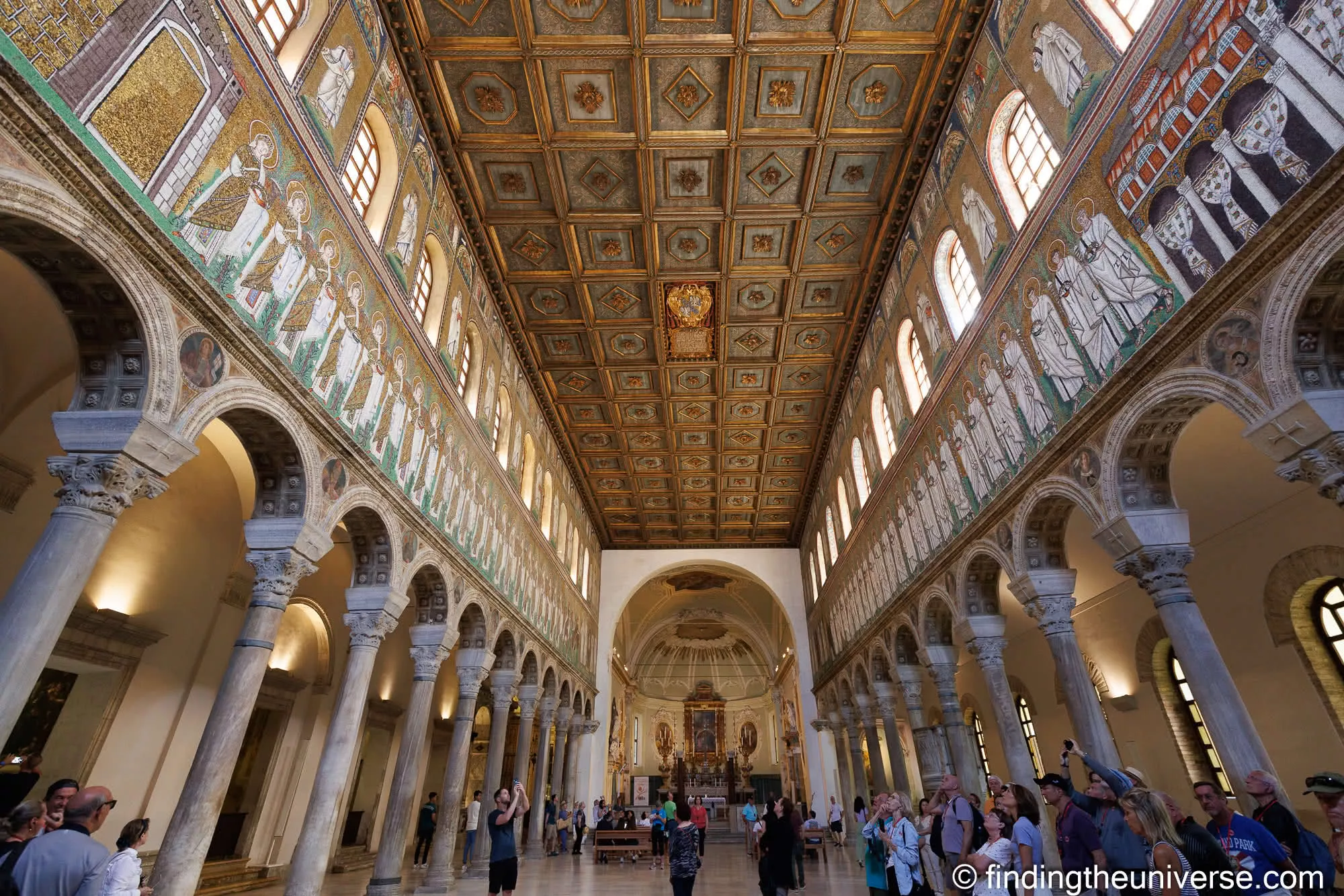
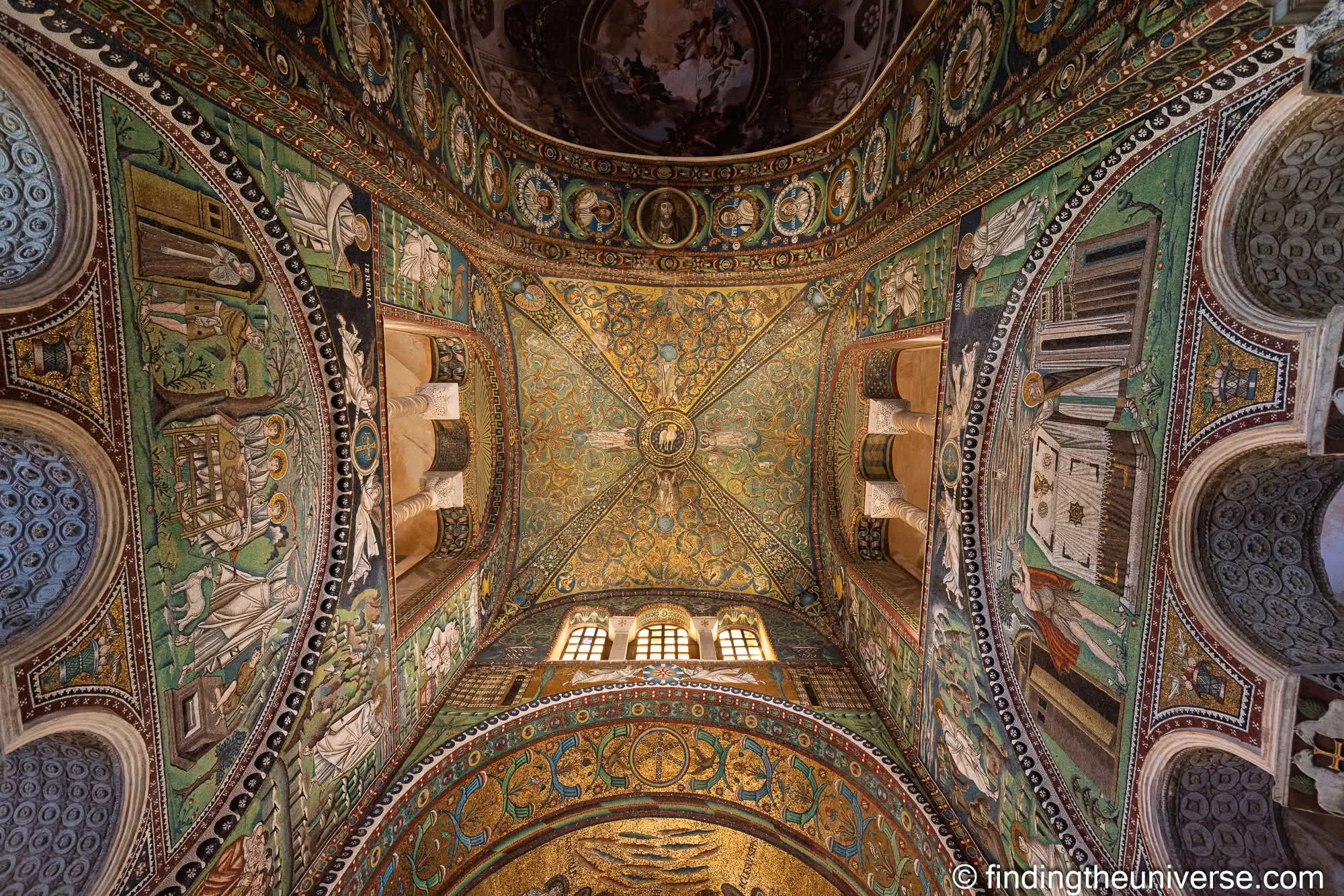
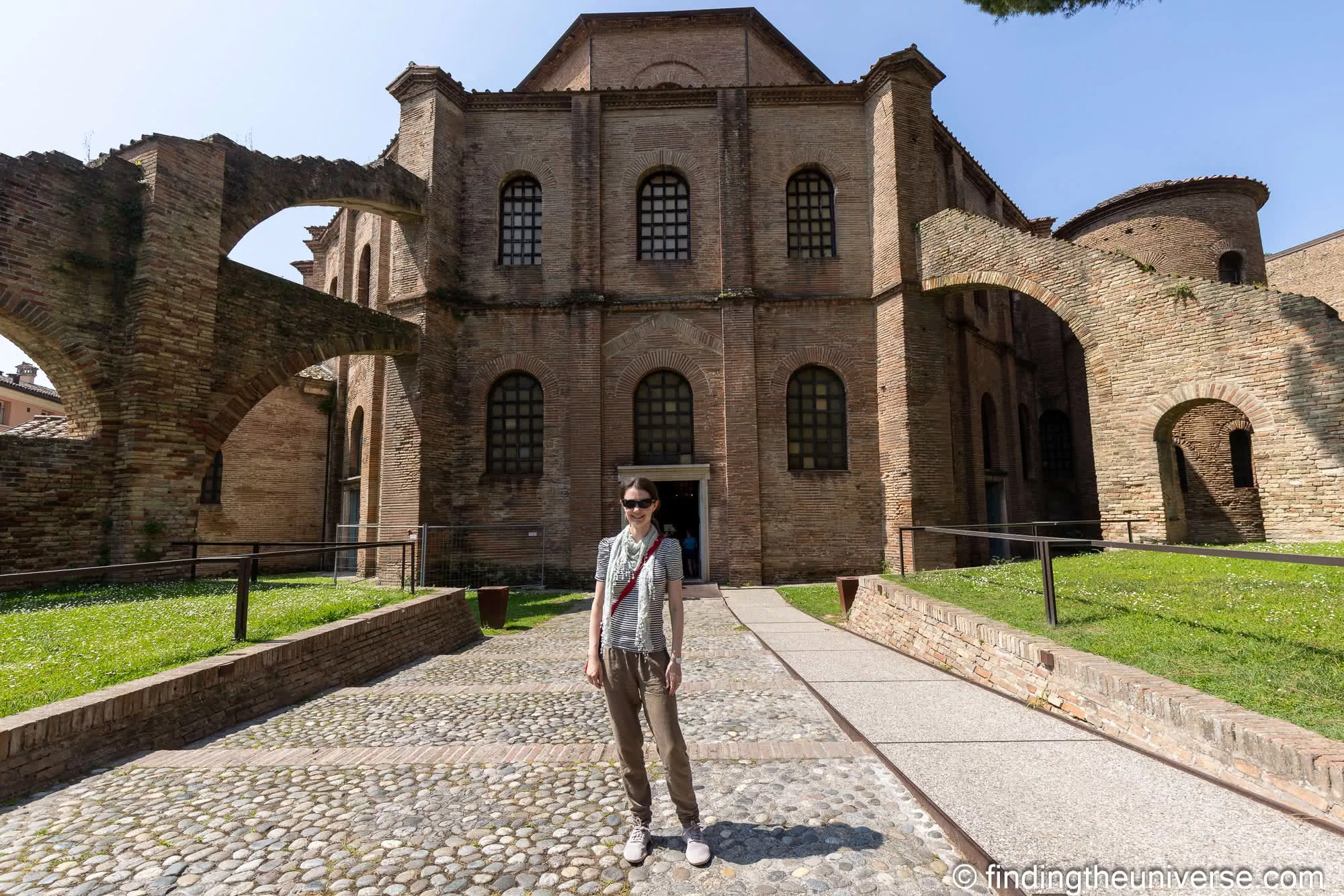
What’s at the other end is, for the right person, unmissable. Ravenna was the capital of the Western Roman Empire in its last years and then a Byzantine stronghold, and it holds the finest early-Christian and Byzantine mosaics in the world, a UNESCO World Heritage Site since 1996. The gold and deep blue of the Mausoleum of Galla Placidia and the shimmering processions in the Basilica of San Vitale and Sant’Apollinare Nuovo are unlike anything in Venice or Florence. A combined Mosaics Pass covers five of the central sites on one ticket, valid for seven days. Note that the church of Sant’Apollinare in Classe out of town and the Mausoleum of Theodoric aren’t on that pass and need separate tickets, so don’t expect one pass to cover everything. Check current details on the Ravenna tourism site.
My verdict: if Byzantine art moves you, Ravenna is one of the best half-days in Italy and worth the travel. If you’re only mildly curious, the round trip will eat your day and you’d get more joy from Verona or Bologna. There’s no shame in that call.
9. The Dolomites and Cortina: The Epic One, With Caveats
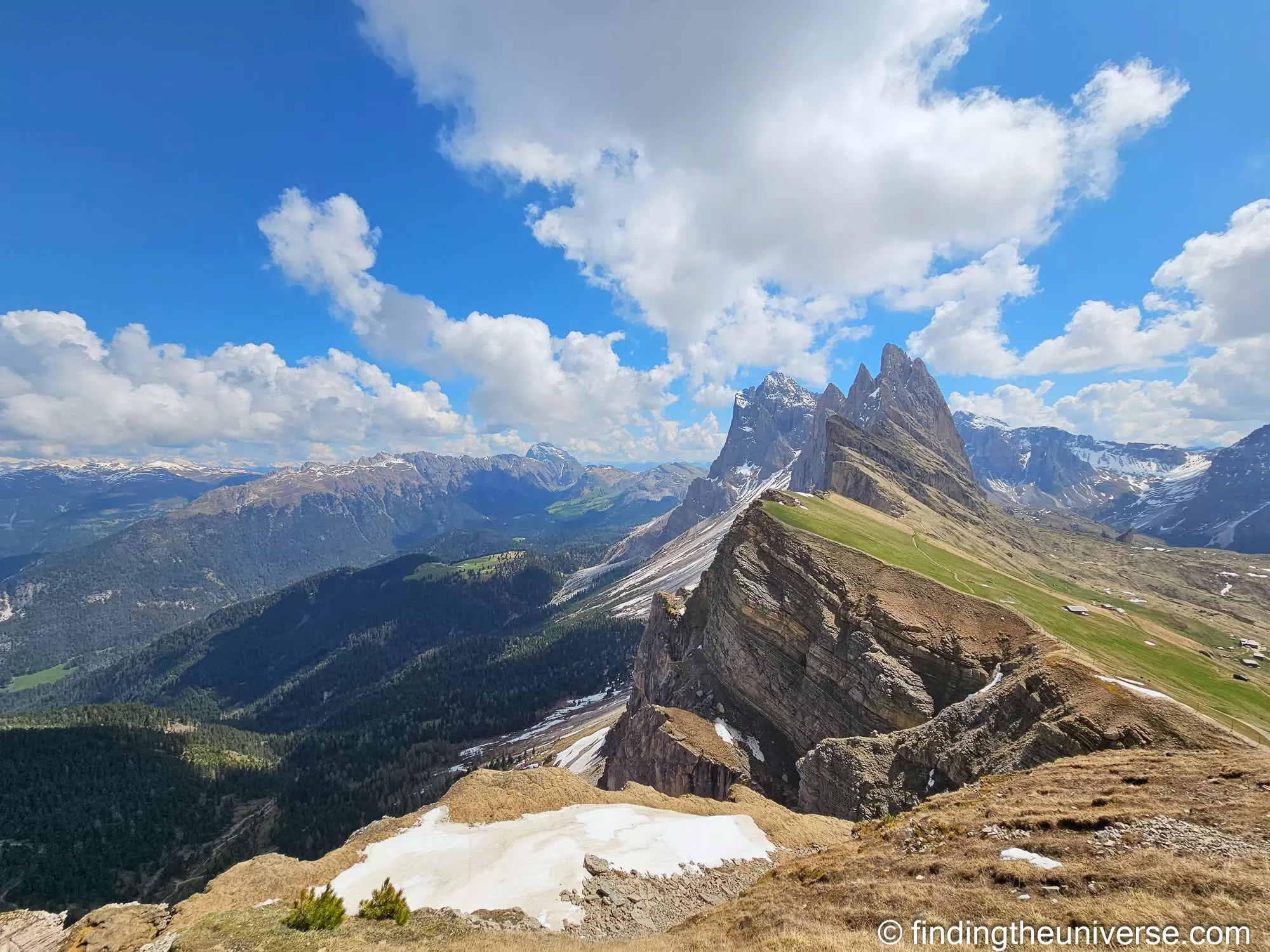
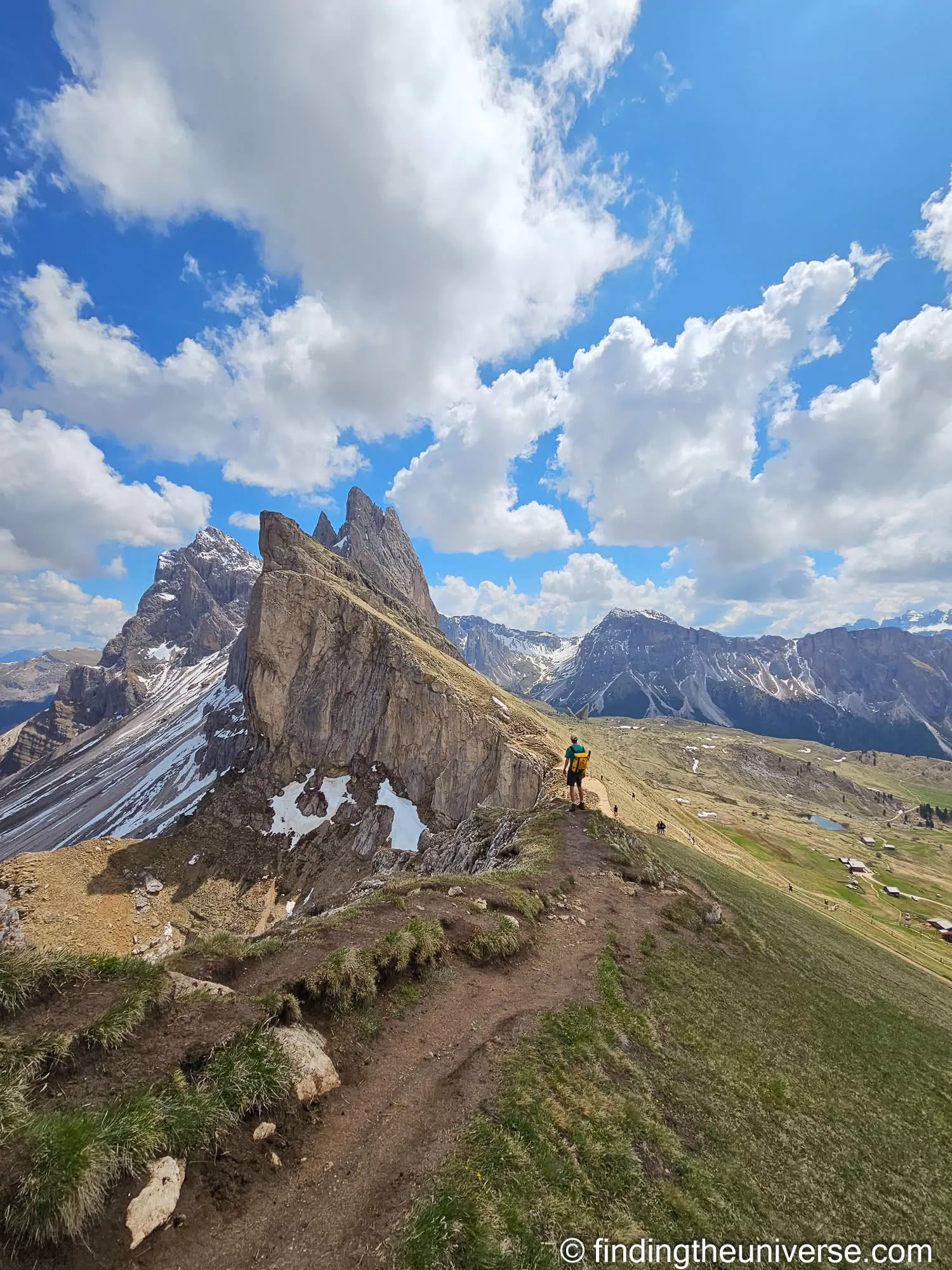
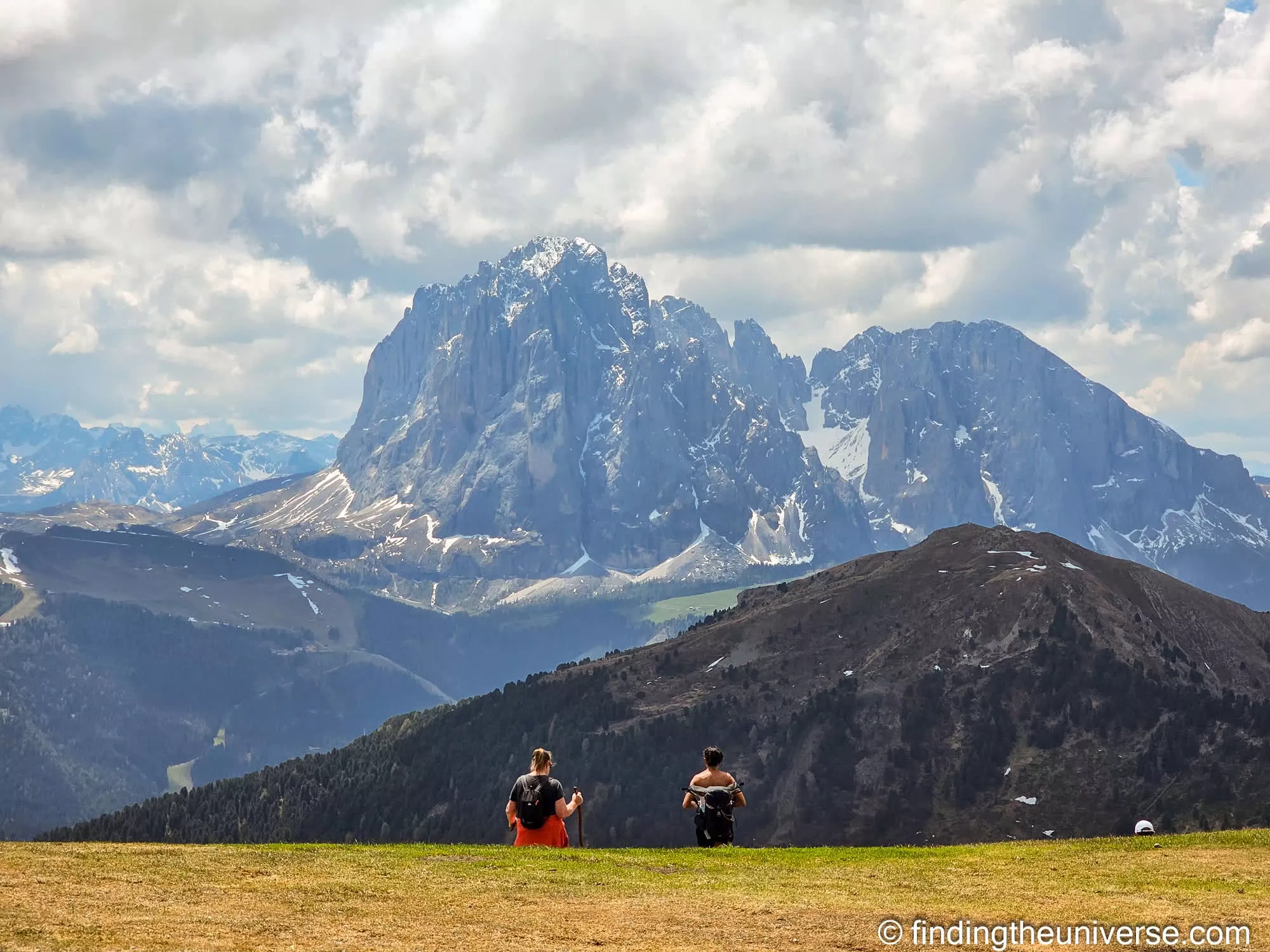
I’ve saved the most spectacular and the most complicated for last. The Dolomites are, to my eye, the most beautiful mountains in Europe, all pale vertical walls and turquoise lakes, and they have been a UNESCO World Heritage Site since 2009. I’ve explored them properly, on a road trip with days to spare, which is exactly why I want to be straight with you about doing them as a day trip from Venice: you can’t really do them justice in a day, and you should go in knowing that.
The practicalities are the issue. There’s no train to Cortina d’Ampezzo, the main Dolomites hub, which co-hosted the 2026 Winter Olympics. Getting there means a bus, with Cortina Express, ATVO or FlixBus taking upwards of 2 hours each way, and bus frequency drops sharply outside the summer season. Doing it independently in a single day leaves you very little time at the top.
So my recommendation here is unambiguous: if you want the Dolomites as a day trip, take an organised tour, and only go between roughly June and September when the high passes and lakes are open and the weather is reliable. A good small-group tour handles the long drive, takes you to the photogenic lakes most independent day-trippers never reach, and gets you back to Venice the same night. This Dolomites and Lake Braies day trip by minivan is the kind of thing I mean, with prices starting around 165 euros per person. Lake Braies, with its boathouse and wooden rowing boats under sheer cliffs, is the image that sells the Dolomites, and it’s worth the early start.
Go in with the right expectations and a day trip to the Dolomites is a long but memorable outing, mostly spent travelling and stopping for photos. Go in expecting to hike or to know the mountains, and you’ll be disappointed. If they grab you, as they grabbed me, come back and give them a proper few days. I cover that kind of trip in my wider 10-day Italy itinerary.
What I’ve Learned About Day Trips from Venice
A few hard-won lessons from years of using Venice as a base. None of these are dramatic, but each of them has saved or rescued a day for us.
- Don’t try to cram two day trips into one day. One real trip plus the travel either side fills a day, and going for two is how you end up seeing neither of them well.
- When you book your return train, make sure it terminates at Venezia Santa Lucia, the station on the island. Venezia Mestre is on the mainland and leaves you a tram or bus ride short of the city.
- Reserve the timed entries before you leave. The Scrovegni Chapel in Padua and Arena opera tickets in Verona both sell out, and both punish people who turn up on spec. Sort them the night before at the latest.
- Treat the mountains as a summer trip. The Dolomites only really work as a day trip from roughly June to September. Out of season the buses thin out, the lakes can be frozen or closed, and the whole day stops making sense.
- Validate paper regional tickets by stamping them in the green machine on the platform before you board. The fast trains are seat-specific and need no stamping, but a regional fare without a stamp can earn you a fine.
- Let someone else drive when wine is involved. Both the Prosecco hills and Valpolicella work far better as tours than as a hire-car mission, because you came to taste, not to nominate a designated driver.
Booking Trains and Tours from Venice
Almost every trip here starts at Venezia Santa Lucia, the train station right on the Grand Canal. For the mainland cities, the official operator is Trenitalia, and you can buy directly from them. I personally find Trainline easier for booking in English and comparing fast versus regional fares, and it also sells the European rail passes if you’re stringing several Italian cities together.
For the two trips that really need a tour, the Dolomites and the wine country, book those ahead in high season because the good small-group operators fill up. For everything else, trains run frequently enough that you can be flexible. If you’re exploring more of the country, my 10-day Italy itinerary and my two-week Europe itinerary both build on this same stretch of the north.
Day Trips from Venice: FAQ
What’s the best day trip from Venice?
Verona is the best all-round day trip from Venice. It’s just over an hour away by fast train, it’s a beautiful and walkable city, and in summer it adds opera in a Roman arena.
If your interest is more specific, go to Bologna for food, the Prosecco hills for wine, or Ravenna for Byzantine mosaics. But if you want one safe, rewarding choice, take the train to Verona.
Can you do a day trip to the Dolomites from Venice?
Yes, but only as a long day, and it works best as an organised tour between June and September. There’s no train to Cortina d’Ampezzo, so independent travel means a bus of 2 hours or more each way with limited time at the top.
A guided small-group tour handles the driving and reaches the photogenic lakes like Lago di Braies that most independent day-trippers miss, getting you back to Venice the same evening. Outside summer, the buses thin out and the trip stops being worthwhile.
What’s the closest day trip to Venice?
Padua is the closest mainland city, reachable in as little as 15 minutes on the fast train and rarely more than 45 minutes on a regional service. Its highlight is the Giotto-frescoed Scrovegni Chapel, which must be booked in advance.
If you count the lagoon islands, Murano is only 10 to 15 minutes from Venice by vaporetto, though it’s really part of the city rather than a true day trip.
Do you need to book trains from Venice in advance?
For the fast Frecciarossa and Italo trains to cities like Verona, Bologna and Florence, booking ahead can save money and guarantees a seat, since these are seat-specific services. Regional trains to nearby towns like Padua and Vicenza don’t need advance booking and run frequently.
If you do buy a paper regional ticket, remember to stamp it in the green validation machine on the platform before you board, or you risk a fine.
Can you visit Murano and Burano in a day from Venice?
Yes, and you can see both comfortably in a half-day. Take ACTV Line 12 from Fondamente Nove. Murano is about 10 to 15 minutes away and Burano around 40 to 45 minutes on the same line.
Go early to beat the day boats, especially for Burano, where the coloured houses photograph best in the soft morning light. Add the quiet island of Torcello if you have time for a third stop.
Is it better to spend more time in Venice or take a day trip?
If you have only two or three days in total, spend them in Venice. The city rewards slow exploration, and a day trip early in a short stay usually means you leave Venice itself half-seen.
Save the day trips for when you’ve given Venice its due, or when you’re basing yourself in the region for a week or more. At that point the Veneto around it is some of the best day-tripping country in Italy.
Further Reading and Resources
If you’re planning a wider Italian trip around Venice, these guides build on the same region:
- One day in Venice and my two days in Venice itinerary, for the city itself and the lagoon islands.
- Two days in Verona, if your favourite day trip turns into an overnight.
- Our 10-day Italy itinerary and two-week Europe itinerary for the bigger picture.
- Heading west afterwards? See two days in Milan and things to do in Milan.
For a paper guidebook to carry along, we’ve used the Rick Steves Italy guide for years. It’s the one I’d pack for a trip that mixes Venice with the towns and regions around it.
Have a favourite day trip from Venice I haven’t covered, or a question about one of these? Leave a comment below and I’ll do my best to help.















 English (US) ·
  French (CA) ·